Thursday, 23 April 2026

Millions Take This Popular Supplement – Scientists Discover a Concerning Link to Heart Failure

From scitechdaily.com

A common sleep supplement may carry unexpected risks when used long-term.

Melatonin has long been marketed as a gentle, “natural” way to improve sleep. But new research is raising questions about what happens when people rely on it for years.

A large international analysis of more than 130,000 adults with chronic insomnia found that those who used melatonin for over a year faced significantly higher risks of serious health problems.

Compared to non-users, long-term users had about an 89–90% greater risk of developing heart failure over five years (4.6% vs. 2.7%). They were also nearly 3.5 times more likely to be hospitalized for heart failure (19.0% vs. 6.6%) and almost twice as likely to die from any cause (7.8% vs. 4.3%).

Early Findings Raise Safety Questions

The findings, presented at the American Heart Association’s Scientific Sessions 2025 in New Orleans, are preliminary and have not yet been peer-reviewed. They do not prove that melatonin causes harm, but they highlight a potential safety gap that researchers say needs urgent attention.

“Melatonin supplements may not be as harmless as commonly assumed. If our study is confirmed, this could affect how doctors counsel patients about sleep aids,” said lead researcher Ekenedilichukwu Nnadi, M.D., of SUNY Downstate/Kings County Primary Care in Brooklyn, New York.

What Melatonin Does in the Body

Melatonin itself is a hormone produced by the brain that helps regulate the body’s internal clock. Levels naturally rise in the evening and fall with daylight, signalling when it is time to sleep and wake. Supplements mimic this process and can help some people fall asleep faster, especially in cases of jet lag or short-term insomnia.

Melatonin

Melatonin is a hormone naturally produced by the brain that helps regulate the body’s sleep–wake cycle, also known as the circadian rhythm. Its levels typically rise in the evening as it gets dark, signaling to the body that it’s time to sleep, and fall again in the morning. Melatonin supplements, often sold as pills or gummies, are commonly used as a sleep aid. Credit: Stock

In the United States and many other countries, melatonin is sold over the counter without strict regulation. That means people can take it without medical supervision, and products may vary in dose and purity. It has become one of the most widely used sleep aids in the country, now ranking among the most popular natural products taken by adults.

Most experts agree that melatonin is generally safe for short-term use, typically up to one or two months. Beyond that, the science becomes much less clear. Despite its popularity, there are surprisingly few long-term studies examining its effects on the heart or other systems.

Researchers used the TriNetX Global Research Network to review five years of electronic health records from adults with chronic insomnia. They compared those with documented melatonin use for at least 12 months to similar patients who had no record of using the supplement. People with prior heart failure or other sleep medication use were excluded.

Heart failure is a serious condition in which the heart cannot pump enough blood to meet the body’s needs, often leading to fatigue, breathlessness, and fluid build-up. New research points to unexpected patterns linked to its development. Credit: Shutterstock

Consistent Signals Across Different Analyses

A separate analysis focusing on prescription records, particularly relevant in countries like the United Kingdom where melatonin requires a prescription, showed similar results. Patients with at least two prescriptions filled 90 days apart had an 82% higher risk of heart failure.

Heart failure itself is a serious condition affecting about 6.7 million adults in the United States. It occurs when the heart cannot pump enough oxygen-rich blood to meet the body’s needs, often leading to fatigue, shortness of breath, and fluid build-up.

While the results may sound alarming, researchers stress that the study shows only an association, not cause and effect. People who take melatonin long-term may differ in important ways from those who do not. For example, more severe insomnia, depression, anxiety, or the use of other medications could contribute to both melatonin use and increased heart risk.

There are also key limitations. The study relied on medical records rather than direct reports from patients, which means some people who used over-the-counter melatonin may have been misclassified as non-users. This is especially likely in countries like the United States, where supplements can be purchased without a prescription.

Expert Reactions and Ongoing Debate

Even so, some experts say the findings should not be ignored.

“These findings challenge the perception of melatonin as a benign chronic therapy and only highlight the need for a prospective trial with a control group to clarify its safety profile,” said Carlos Egea, President of the Spanish Federation of Sleep Medicine Societies, who was not involved in the research.

Other specialists also question the widespread long-term use of melatonin. “I’m surprised that physicians would prescribe melatonin for insomnia and have patients use it for more than 365 days, since melatonin, at least in the U.S., is not indicated for the treatment of insomnia,” said Marie-Pierre St-Onge, Ph.D., of Columbia University Irving Medical Center.

Short-term use is still considered low risk for most adults who are not pregnant or breastfeeding. But even then, melatonin is not completely harmless. Reports of accidental overdoses in children and inconsistent dosing across products have raised concerns about how freely the supplement is used.

Meeting: “Effect of Long-term Melatonin Supplementation on Incidence of Heart Failure in Patients with Insomnia,” 10 November 2025, American Heart Association Scientific Sessions 2025.

https://scitechdaily.com/millions-take-this-popular-supplement-scientists-discover-a-concerning-link-to-heart-failure/ 

Monday, 20 April 2026

Exhausted after 8 hours? 3 red flags you're headed for insomnia, according to experts

From tomsguide.com

By Ruth Jones 

The subtle daytime signs that could signal serious sleep deprivation

Struggling to stay awake at your desk, snapping at a friend and drifting off at the dinner table? It might not be your finest hour but many of us are familiar with these behaviours. You'd probably chalk it up to a bad day.

However, researchers from the University of Maryland have identified thinking, fatigue and mood as red flags for insomnia, noting that monitoring these actions in your day-to-day can help you spot sleep problems you might otherwise overlook.

We spoke to her about how to identify insomnia red flags — and what they signal about your sleep.

Key takeaways: At a glance

  • Thinking, fatigue and mood were identified as 'residual' symptoms of insomnia to be monitored in the treatment of sleep disorders
  • Daytime fatigue describes persistent low energy, often caused by a lack of restorative sleep
  • Mood swings make you irritable and can result from missing out on REM sleep
  • Micro-sleeps are brief dozes that signal your brain is actively struggling to stay awake
  • Focusing on improved sleep hygiene, such as a wind-down routine and bed time, can help improve your overall sleep health

How understanding daytime behaviours help you recognize insomnia

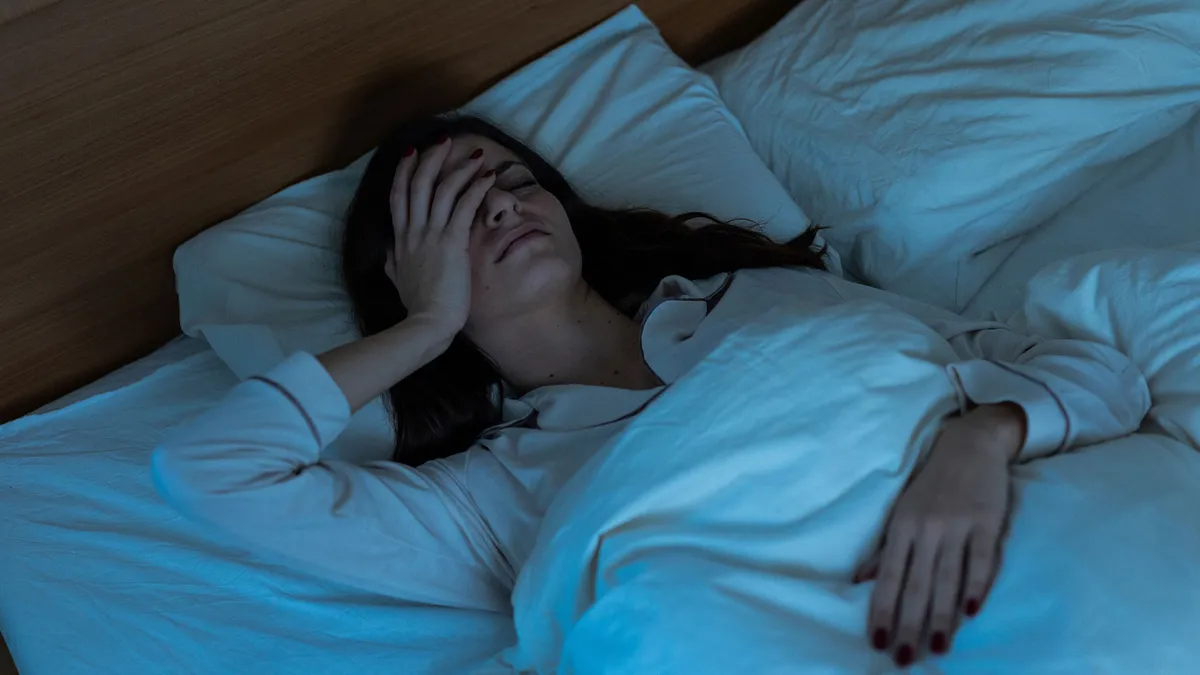
A woman sits up in her bed with her hand on her head looking exhausted and like she hasn't had much sleep

(Image credit: Getty Images)

In a recent study by the University of Maryland School of Medicine, researchers highlighted that treating insomnia can't simply focus on sleep. It's important to understand and address the daytime impact of a bad night's rest as well.

Researchers identified 'thinking, fatigue, and mood' as 'residual symptoms' of sleep deprivation which should be monitored by healthcare professionals to ensure more effective treatment for insomnia.

"These symptoms are often more informative than total sleep hours," says Dr. Saema Tahir, a pulmonary disease specialist. She explains that if you're clocking up enough hours in bed but still don't feel properly rested, your daytime behaviours can help you understand what's going on.

"Fatigue [equals] sleep quantity or quality issue," she says. "Mood swings [equals] neurocognitive / emotional sleep disruption. Micro-sleeps [equals] severe physiological sleep deprivation or disorder."

3 daytime red flags for bad sleep

Even the best sleep trackers can't always paint an accurate picture of what's happening during the night. However, monitoring how you're functioning during the day helps you investigate and recognize the lived impact of your sleep.

Here are three signs your sleep is suffering (and you might not even know it yet)...

Red flag 1: You have no energy

You know those days when everything feels like a slog? You crawl out of bed and can't even find the energy to scroll through Instagram.

"Daytime fatigue is more than just feeling 'tired,'" explains Dr. Tahir. "Clinically, it refers to persistent low energy, reduced alertness, and difficulty sustaining mental or physical effort during the day despite adequate opportunity for sleep."

A tired gray-haired man yawns at his desk.

(Image credit: Getty Images)

So what's causing it? Dr. Tahir notes that daytime fatigue is often a signal that you're missing out on "restorative sleep" — that might mean frequent wake-ups, sleep disorders or "circadian misalignment" (when your time in bed doesn't match when your body expects to sleep.)

"A key clue is disproportion," says Dr. Tahir. "If someone is sleeping an 'adequate' number of hours but still feels drained, we worry about sleep quality rather than quantity."

Red flag 2: Your emotions are a rollercoaster

It's not just you; everyone around you really is more annoying after a bad night's sleep.

"Mood instability, meaning irritability, emotional reactivity, or low frustration tolerance, can be a subtle but powerful marker of sleep disruption," explains Dr. Tahir.

Patients often say, 'I sleep fine,' but report they are snappy, overwhelmed and emotionally labile

Dr. Tahir

And it doesn't have to be a night spent staring at the ceiling that has you snapping at a co-worker for tapping on the keyboard a little too loud.

"Evidence shows even partial sleep restriction impacts emotional regulation circuits in the prefrontal cortex and amygdala reactivity (our emotional response centre of the brain)," says Dr. Tahir.

She notes that patients often say "I sleep fine" but describe being snappy, overwhelmed and "emotionally labile" — "that mismatch is a red flag for impaired sleep architecture or insufficient deep/REM sleep."

Red flag 3: You can't keep your eyes open

You're halfway through an email when it occurs to you you don't know how long you've spent on one sentence. In fact, you can't remember the last few seconds at all. What you've experienced might be a microsleep.

"Microsleeps are brief, involuntary episodes of sleep lasting seconds," describes Dr. Tahir. "They often present as: 'zoning out' while driving or reading, dropping attention mid-task or head nodding or blank spells."

A sleep deprived man in a green shirt falls asleep for a second on his sofa, having what is called a microsleep

(Image credit: Getty Images)

Sometime a microsleep is so fast, you might not even notice its happened. But it shouldn't be ignored, as Dr. Tahir explains it's a sign your brain is "actively failing to maintain wakefulness."

"Clinically, microsleeps are a significant safety warning, most commonly associated with sleep deprivation or untreated sleep disorders (OSA, behaviour disorders of sleep, insomnia, hypersomnia, movement disorders of sleep)," she says.

What to do if you notice these red flags

These 'red flags' are often an indication that your sleep is suffering, even if you're happy with the amount of hours you spend in bed.

You don’t measure sleep health by time in bed, you measure it by daytime function

Dr. Tahir

"A key principle in sleep medicine is that you don’t measure sleep health by time in bed, you measure it by daytime function," explains Dr. Tahir.

"So someone can sleep 7–8 hours and still have clinically significant sleep dysfunction."

When these red flags start to impact your daily function, it's time to take a look at your sleep hygiene. Building good habits can improve your overall sleep quality, ensuring you're enjoying truly restorative rest. We've spoken to experts about improving sleep quality, and their top tips include:

However, when lack of sleep is having a notable impact on your day, we advise speaking to a healthcare professional, who can help you identify the cause and work on viable solutions.

https://www.tomsguide.com/wellness/sleep/3-red-flags-that-youre-headed-for-insomnia-from-mood-swings-to-micro-sleeps