Showing posts with label Tai Chi. Show all posts

Monday, 13 July 2026

8 facts about sleep you probably didn’t know and why shut-eye affects every aspect of life

From scmp.com

From the science behind sleep paralysis to lucid dreams and memory making, experts help us understand little-known but vital aspects of sleep 

Little was known about sleep until modern science revolutionised our understanding. It turns out that what happens while you are unconscious dictates almost every aspect of your waking health, mood and brainpower.

While knowing how to get better sleep and why you need it is vital, the nocturnal world holds some interesting secrets. Here we look at eight things you probably did not know about sleep.


1. Testy times

If young men don’t get enough sleep, they have a level of testosterone that is equivalent to that of someone 10 years older, says British neuroscientist and renowned sleep expert Matthew Walker. That is because a big chunk of testosterone release happens while sleeping. Low testosterone levels affect energy levels and mood – and sperm production.
In women, too little sleep changes the way reproductive hormones are regulated, although the science is more complicated than a simple “less sleep equals less oestrogen” formula. They may experience a breakdown in the delicate monthly timing system that keeps their reproductive health and moods stable. Those who get fewer than six hours of sleep can see up to a 20 per cent reduction in ovulation-inducing hormones.
Lack of sleep disrupts our metabolic systems quickly. Getting only five hours of sleep for four nights in a row can negatively affect blood sugar levels, reducing insulin sensitivity to the extent that one could be classified as pre-diabetic, Walker says.
The immune system is also affected: restricting a healthy person to just four hours of sleep for a single night results in an alarming 70 per cent drop in the activity of natural killer cells – cytotoxic white blood cells that act as the immune system’s first line of defence.

2. Justice for owls

Some sleep scientists feel that modern society discriminates against those whose circadian rhythms – or internal clocks – make them night owls rather than larks who are up at the crack of dawn and go to bed early in the evening.
Since the Industrial Revolution in the 18th and 19th centuries, work has started early, and those who find it difficult to be in top form in the morning are looked down upon. This is considered unfair, as it is not possible to change your circadian rhythm.

A change in perception could be positive for businesses, Dr Stefan Volk of the University of Sydney Business School told this writer in a 2018 interview. Volk’s paper, “Chronotype Diversity in Teams: Toward a Theory of Team Energetic Asynchrony”, published in the Academy of Management Review, argued it would be productive to introduce a shift system so larks start work early and night owls start later, enabling everyone to work at their peak capacity.

Sadly for night owls, that is not on the horizon.

3. Memory making

Sleep is essential for forming memories; in deep sleep, bursts of activity in the hippocampus, which stores short-term memories, send information to the cortex, which stores long-term memories. Photo: Dreamstime/TNS
An important function of sleep is to consolidate memory; it turns short-term memory into long-term memory and stabilises new memories so that they stick.

In deep sleep, bursts of activity in the hippocampus, which stores short-term memories, send information to the cortex, which stores long-term memories.

The brain also cross-indexes memories and links them together during sleep, and adds new information gained in the day to what we already know by replaying recent experiences.

After a good night’s sleep, your memories will seem clearer and more coherent.

Sleep also consolidates learning by connecting facts into knowledge, notes Dr Barbara Oakley, a professor of engineering at Oakland University in Rochester, in the US state of Michigan, in her course “Learning How To Learn” on the online learning platform Coursera.

That is why a good night’s sleep before an exam is better than staying up all night cramming. Simply reading over your notes before going to sleep can be beneficial.

4. Connecting with the past

Dreams play an important part in our mental well-being. Sigmund Freud, the founder of psychoanalysis, believed the cause of a patient’s neurosis – usually a repressed traumatic childhood experience – could be determined by analysing their dreams.

That idea has generally been discredited, but sleep researchers still think dreams play a big role in our state of mind, changing our emotional relationship with our memories in a way that makes us feel better about them when we wake up.

The late sleep researcher and psychologist Rosalind Cartwright – known as the “queen of dreams” – said dreams are an important part of grieving and can take away the pain associated with the memory of a loss.

Through dreaming, we can gradually come to think of a deceased loved one more objectively, without the pain that comes with grief.

The same is true when something shocks us. If we see someone injured, or worse, in an accident or as the victim of a violent crime, dreaming will help us eventually be able to replay the event in our minds without the accompanying horror we felt when it occurred.

5. Dreams as therapy

The brain knows it is good for you to wake up in a calm mood, and uses dreaming to achieve that goal – dreams act as a kind of internal therapy.

“When all goes well, we awake refreshed with a modified strategy for guiding our behaviour,” wrote Cartwright in her 2010 book, The Twenty-four Hour Mind: The Role of Sleep and Dreaming in Our Emotional Lives.

Dreams help the mind work through the emotional business of the day, away from the stress of waking life.

6. Fright night

During the transition between wakefulness and sleep, some people see ghosts and demons – or think they see them. While falling asleep, some become paralysed and sense an evil or macabre intruder in the room watching them.

Sometimes things get physical, and there are reports of women feeling like they are being sexually assaulted by a strange creature – an “incubus”, as they are called in mythology – while being physically unable to flee.

But as “anomalistic psychologist” Professor Chris French explains in his 2024 book The Science of Weird S***, there is nothing supernatural in play; it is a well-documented scientific phenomenon called sleep paralysis.
This occurs when the mind is awake but the body is sleeping. Dreams occur mainly in REM (rapid eye movement) sleep, when the body is paralysed to stop the sleeper physically acting out those dreams – a state that is called REM atonia.

Due to a biological glitch, the paralysis can occur while the mind is awake.

Psychologist Chris French explains the science of sleep paralysis in his book The Science of Weird S***. Photo: gold.ac.uk

Researchers suggest the demons appear because we have evolved to subconsciously monitor the outside world for threats at all times while we are awake. Our brain is still focused on this task during sleep paralysis, but it becomes confused by the situation and invents the demons.

French says that few doctors are aware of sleep paralysis, and many people suffer unnecessarily because they think they are going mad – or really seeing evil intruders.

7. Living the dream

It is possible to control your dreams and influence their direction. This is called “lucid dreaming”, a term coined by Dutch psychiatrist Frederik van Eeden in 1913 in the journal Proceedings of the Society for Psychical Research.

The ability comes naturally to some people, although others have to practise by keeping dream journals to train the brain. Essentially, sleepers become aware they are dreaming, and some then consciously take control of the dream.

As with sleep paralysis, it is believed to be made possible by the interplay between REM sleep and wakefulness, although scientists are still figuring out how that works.

Some enjoy lucid dreaming and find it useful in inspiring creativity. It may even have been a factor in The Beatles’ classic song “Yesterday”. Paul McCartney is reported to have composed the melody for it after hearing it in a dream. Upon waking, he immediately played the tune on a piano next to his bed to capture it before it faded.

8. Moving for better sleep

Research suggests that tai chi and yoga can help you sleep and stay asleep for longer.

Tai chi practitioners can extend their nightly sleep by more than 50 minutes and can fall asleep 25 minutes faster than non-practitioners, according to a study published in BMJ Evidence-Based Medicine.

Yoga can add up to two hours of sleep each night and reduce the number of times you wake up.

In a similar vein, a study from the University of Hong Kong found that tai chi may provide as much relief as talk therapy does for those suffering from insomnia. 

The next time you are tempted to stay up a little later when it is time to turn in, remember that sleep is much more than a passive break from reality. It is an active, dynamic state in which our minds heal, memories lock in and bodies reset.


https://www.scmp.com/lifestyle/health-wellness/article/3359982/8-facts-about-sleep-you-probably-didnt-know-and-why-shut-eye-affects-every-aspect-life

Thursday, 5 February 2026

Experts reveal the ancient wellbeing practice proven to help fight insomnia during menopause — and how to do it

From tomsguide.com

By Frances Daniels

The benefits are massive for better sleep in older adults 

Major hormonal changes and sleep do not mix well, and one of the biggest changes a woman can face is menopause.

While there are many symptoms of menopause, trouble sleeping is one of the most common. For some women, menopause insomnia can be caused or worsened by night sweats, hot flashes, and nocturia. For others, the triggers aren't so clear cut.

A headshot of Dr Audrey Wells
Dr Audrey Wells

Dr Audrey Wells is the Chief Medical Officer of SLIIP, a healthcare company that offers sleep consultations online via video. Dr Wells is board-certified in sleep medicine and is an advocate for woman's sleep health.

A headshot of Dr Alyssa Dweck
Dr Alyssa Dweck

Dr. Alyssa Dweck is a board-certified gynaecologist. She is a certified menopause provider and serves as the Chief Medical Officer at Bonafide Health.

A headshsot of Dr Michelle Sands.
Dr Michelle Sands

Dr. Michelle Sands is a licensed naturopathic physician (ND) and is board-certified in anti-aging medicine. She specializes in women' health, particularly female hormones. She is the founder and CEO of Glow Natural Wellness.

How Tai Chi reduces insomnia during menopause

Many women's health experts endorse Tai Chi for its low intensity, accessibility, and stress relief. As Dr Alyssa Dweck explains, other studies prove that mind-body exercises such as Tai Chi positively influences sleep quality during menopause.

"Mind body exercises can improve sleep through reducing anxiety and depression, both of which are related to menopause and related sleep disruption," says Dr Dweck.

"This practice, including Tai Chi, decreases fatigue which may help regulate sleep-wake cycles."

A mature menopausal woman practices Tai Chi outdoors.

(Image credit: Getty Images)

Tai Chi doesn't cause cortisol spikes

According to the Dr Dweck, another plus is Tai Chi's suitability for middle and older-aged adult, even among those with a lower fitness level.

'Instead of asking women to sit still and 'empty their minds', which rarely works when hormones are shifting, it gives the brain something gentle and rhythmic to focus on'

Dr Michelle Sands, women's health specialist

Dr Michelle Sands, a women's health specialist at Glow Natural Wellness, agrees. "Unlike high-intensity workouts, tai chi doesn’t spike cortisol. For many women in midlife, late-day intense exercise actually worsens insomnia.

"Tai chi supports movement, circulation, and relaxation without overstimulating the system."

Accessibility isn't the only benefit that comes from the martial art's low intensity; its gentleness also helps to ease the common menopausal symptoms of night-time anxiety and frequent wakings.

"The slow, intentional movements combined with steady breathing signal safety to the nervous system," says Dr Sands.

"Instead of asking women to sit still and 'empty their minds', which rarely works when hormones are shifting, it gives the brain something gentle and rhythmic to focus on."

An instructor shows a mature woman how to practice Tai Chi on a hillside.

(Image credit: Getty Images)

Sleep experts are highlighting the positive effects on menopause insomnia too. Board-certified sleep doctor at Sliiip Dr Audrey Wells explains that menopause increases activity in the sympathetic nervous system (which triggers fight-or-flight response). Tai Chi heightens the parasympathetic system (which calms the body after stress).

According to Dr Wells: "Tai Chi combines slow movement, breath regulation, and focused attention, which lowers cortisol, improves parasympathetic tone, and reduces cognitive and physical hyperarousal, all major drivers of menopausal insomnia."

The longterm sleep benefits of Tai Chi

Dr Dweck tells us there's plenty of long-term sleep benefits to practicing Tai Chi, such as educed anxiety and depression, as well as more indirect positive results.

"If sleep is improved, downstream effects can be associated with reduced risk of heart disease, cognitive decline and general well being," she points out.

Long lasting results

However, benefits aren't always instant as the study shows that Tai Chi was initially an inferior method to CBT-I at managing insomnia, but non-inferior after 15 months of practice. So why did it become more effective after a year's worth of practice?

According to Certified Menopause Coach at Cape Concierge Physical Therapy Kara McKeown, unlocking all the sleep benefits of Tai Chi requires consistency.

"The longer you practice Tai chi, the easier it becomes to enter the meditative state that it can induce," she explains.

"You can get the benefits in a shorter period of time and the results are long lasting. While the insomnia study itself was only for a 12 week period, the benefits remained at a 24-month follow up."

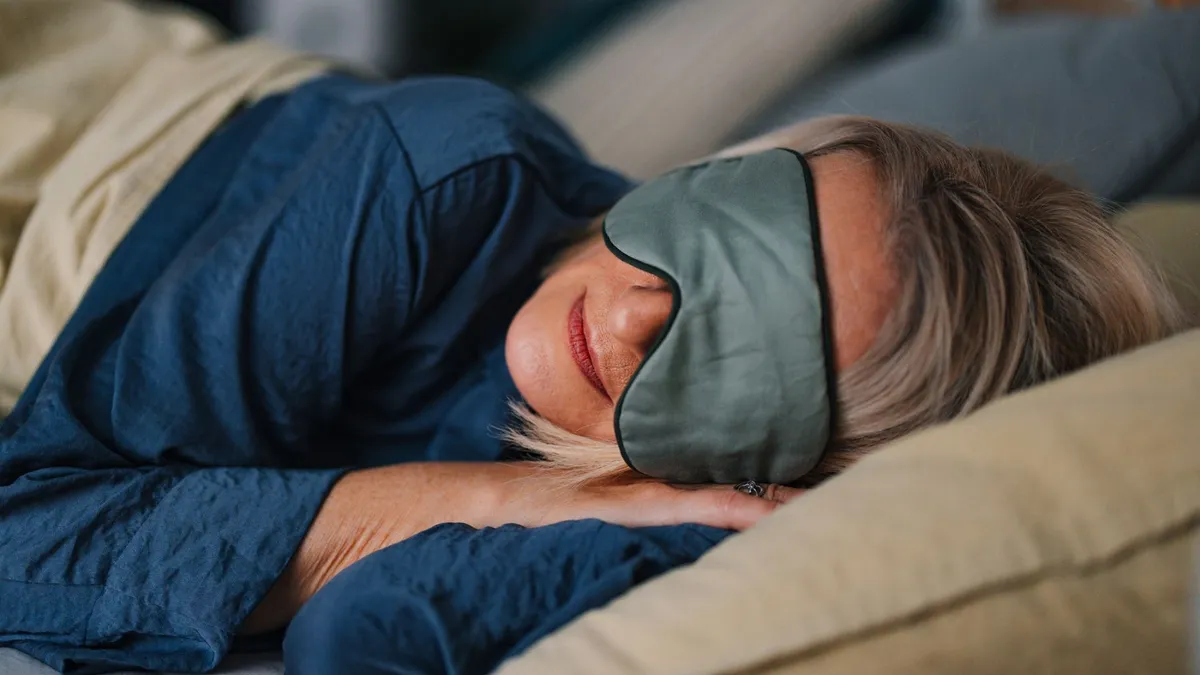
A woman sleeping on her side wearing an eye mask

(Image credit: Getty Images)

Dr Sands agrees. "Over time, consistent practice improves sleep quality, stress resilience, balance, and overall body awareness," she says.

"Chronic insomnia is rarely just a sleep problem—it’s a whole-body stress pattern. Tai chi helps unwind that pattern over months, not just nights."

According to Dr Sands and McKeown, long-term advantages are also seen because of a very simple reason: People stick with Tai Chi.

"It’s low-impact, accessible, and doesn’t punish your joints or nervous system," says Dr Sands.

"It is sustainable for most people in that it doesn't require much for space or equipment and is cost effective," McKeown explains. "Once the techniques are learned, they can be performed without being in a class or with an instructor."

Effective, but not a complete solution for all

While Dr Wells agrees that Tai Chi is an excellent foundation for many people with menopause, it's not a "complete solution" for everyone as some symptoms can be too severe for Tai Chi to treat alone.

"Tai Chi works best as part of a layered approach rather than a standalone fix," the sleep doctor says.

"Women with severe insomnia, untreated sleep apnoea, significant depression or anxiety, trauma-related sleep disruption, or intense hot flashes may also need CBT-I, targeted medical treatment, or hormone therapy."

How to practice Tai Chi to manage insomnia during menopause

A head shot of Dr Mao Shing Ni.
Dr. Mao Shing Ni

Dr. Mao Shing Ni (Dr Mao) is a doctor of Chinese medicine, and a Tai Chi master and instructor who has authored books on Harmony Tai Chi and managing menopause symptoms.

If you're thinking of using Tai Chi to help ease menopause insomnia but aren't sure where to start, we've called upon Dr. Maoshing Ni, a Tai Chi master and author of exercise program Dr. Mao's Harmony Tai Chi: Simple Practice for Health and Well-Being to answer some common questions.

First of all, what exactly is Tai Chi? "Tai Chi is a traditional Chinese mind–body practice based on the Taoist principles of balance, flow and harmony," says Dr Mao.

"It combines slow, flowing movements with breath and focused awareness."

However, he explains that some forms of Tai Chi, such as the physically-demanding, martial arts-oriented styles, are not suited for menopause-related fatigue and insomnia.

A mature woman practices Tai Chi next to a serene lake.

(Image credit: Getty Images)

Choosing the right Tai Chi practice for menopause

"Practices that emphasize slow transitions, soft joints, and coordinated breathing—rather than strength or martial precision—are ideal during times of hormonal fluctuation," he advises.

"For example, Harmony Style Tai Chi combines the best of Chen, Yang and Wu for health and balance."

To get the sleep-boosting benefits of Tai Chi, Dr Mao recommends practicing in the morning or late afternoon, up to fours before bedtime.

"This timing helps discharge stress, regulate cortisol, and transition the body into parasympathetic (rest-and-digest) mode without overstimulating the system right before sleep," he suggests.

Dr. Mao’s Harmony Tai Chi online video instruction is tailored towards fatigued days and menopause symptoms. It integrates Traditional Chinese Medicine principles with accessible movement for improving sleep naturally.

Another natural method that Dr Mao recommends to ease menopause insomnia is guided meditation.

"Train the mind to let go of words, thoughts, and images as you consciously welcome inner awareness and the stillness of deep sleep."

How to improve sleep during menopause

As Dr Wells mentions above, Tai Chi is beneficial but not a one-size-fits-all solution for menopause insomnia. "In menopause, sleep improves when the environment supports cooling, predictability, and nervous system safety."

"That means keeping your bedroom cool and dark, using breathable bedding, avoiding alcohol close to bedtime, maintaining consistent sleep and wake times, and getting morning daylight exposure."

Dr Wells still thinks Tai Chi is an invaluable way to treat the sleep challenges that come with menopause, though.

"Regular movement, stress-reducing practices like Tai Chi or yoga, and addressing hot flashes or sleep apnoea medically are just as important as traditional ‘sleep hygiene’ tips."

https://www.tomsguide.com/wellness/sleep/experts-reveal-the-ancient-wellbeing-practice-proven-to-help-fight-insomnia-during-menopause-and-how-to-do-it