Showing posts with label dreams. Show all posts

Monday, 13 July 2026

8 facts about sleep you probably didn’t know and why shut-eye affects every aspect of life

From scmp.com

From the science behind sleep paralysis to lucid dreams and memory making, experts help us understand little-known but vital aspects of sleep 

Little was known about sleep until modern science revolutionised our understanding. It turns out that what happens while you are unconscious dictates almost every aspect of your waking health, mood and brainpower.

While knowing how to get better sleep and why you need it is vital, the nocturnal world holds some interesting secrets. Here we look at eight things you probably did not know about sleep.


1. Testy times

If young men don’t get enough sleep, they have a level of testosterone that is equivalent to that of someone 10 years older, says British neuroscientist and renowned sleep expert Matthew Walker. That is because a big chunk of testosterone release happens while sleeping. Low testosterone levels affect energy levels and mood – and sperm production.
In women, too little sleep changes the way reproductive hormones are regulated, although the science is more complicated than a simple “less sleep equals less oestrogen” formula. They may experience a breakdown in the delicate monthly timing system that keeps their reproductive health and moods stable. Those who get fewer than six hours of sleep can see up to a 20 per cent reduction in ovulation-inducing hormones.
Lack of sleep disrupts our metabolic systems quickly. Getting only five hours of sleep for four nights in a row can negatively affect blood sugar levels, reducing insulin sensitivity to the extent that one could be classified as pre-diabetic, Walker says.
The immune system is also affected: restricting a healthy person to just four hours of sleep for a single night results in an alarming 70 per cent drop in the activity of natural killer cells – cytotoxic white blood cells that act as the immune system’s first line of defence.

2. Justice for owls

Some sleep scientists feel that modern society discriminates against those whose circadian rhythms – or internal clocks – make them night owls rather than larks who are up at the crack of dawn and go to bed early in the evening.
Since the Industrial Revolution in the 18th and 19th centuries, work has started early, and those who find it difficult to be in top form in the morning are looked down upon. This is considered unfair, as it is not possible to change your circadian rhythm.

A change in perception could be positive for businesses, Dr Stefan Volk of the University of Sydney Business School told this writer in a 2018 interview. Volk’s paper, “Chronotype Diversity in Teams: Toward a Theory of Team Energetic Asynchrony”, published in the Academy of Management Review, argued it would be productive to introduce a shift system so larks start work early and night owls start later, enabling everyone to work at their peak capacity.

Sadly for night owls, that is not on the horizon.

3. Memory making
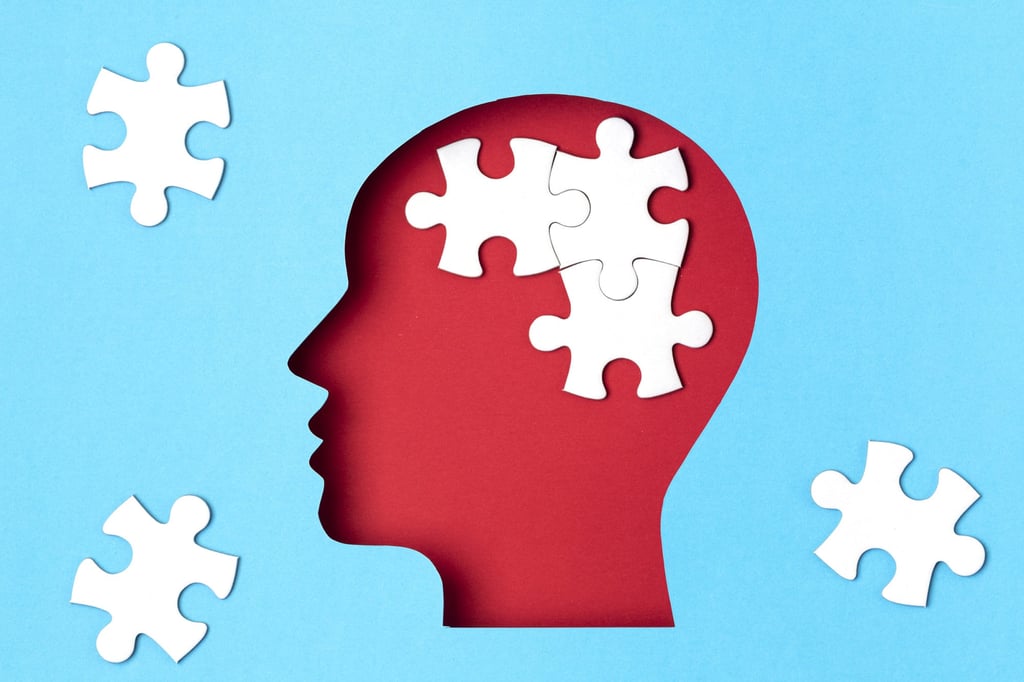
Sleep is essential for forming memories; in deep sleep, bursts of activity in the hippocampus, which stores short-term memories, send information to the cortex, which stores long-term memories. Photo: Dreamstime/TNS
An important function of sleep is to consolidate memory; it turns short-term memory into long-term memory and stabilises new memories so that they stick.

In deep sleep, bursts of activity in the hippocampus, which stores short-term memories, send information to the cortex, which stores long-term memories.

The brain also cross-indexes memories and links them together during sleep, and adds new information gained in the day to what we already know by replaying recent experiences.

After a good night’s sleep, your memories will seem clearer and more coherent.

Sleep also consolidates learning by connecting facts into knowledge, notes Dr Barbara Oakley, a professor of engineering at Oakland University in Rochester, in the US state of Michigan, in her course “Learning How To Learn” on the online learning platform Coursera.

That is why a good night’s sleep before an exam is better than staying up all night cramming. Simply reading over your notes before going to sleep can be beneficial.

4. Connecting with the past

Dreams play an important part in our mental well-being. Sigmund Freud, the founder of psychoanalysis, believed the cause of a patient’s neurosis – usually a repressed traumatic childhood experience – could be determined by analysing their dreams.

That idea has generally been discredited, but sleep researchers still think dreams play a big role in our state of mind, changing our emotional relationship with our memories in a way that makes us feel better about them when we wake up.

The late sleep researcher and psychologist Rosalind Cartwright – known as the “queen of dreams” – said dreams are an important part of grieving and can take away the pain associated with the memory of a loss.

Through dreaming, we can gradually come to think of a deceased loved one more objectively, without the pain that comes with grief.

The same is true when something shocks us. If we see someone injured, or worse, in an accident or as the victim of a violent crime, dreaming will help us eventually be able to replay the event in our minds without the accompanying horror we felt when it occurred.

5. Dreams as therapy

The brain knows it is good for you to wake up in a calm mood, and uses dreaming to achieve that goal – dreams act as a kind of internal therapy.

“When all goes well, we awake refreshed with a modified strategy for guiding our behaviour,” wrote Cartwright in her 2010 book, The Twenty-four Hour Mind: The Role of Sleep and Dreaming in Our Emotional Lives.

Dreams help the mind work through the emotional business of the day, away from the stress of waking life.

6. Fright night

During the transition between wakefulness and sleep, some people see ghosts and demons – or think they see them. While falling asleep, some become paralysed and sense an evil or macabre intruder in the room watching them.

Sometimes things get physical, and there are reports of women feeling like they are being sexually assaulted by a strange creature – an “incubus”, as they are called in mythology – while being physically unable to flee.

But as “anomalistic psychologist” Professor Chris French explains in his 2024 book The Science of Weird S***, there is nothing supernatural in play; it is a well-documented scientific phenomenon called sleep paralysis.
This occurs when the mind is awake but the body is sleeping. Dreams occur mainly in REM (rapid eye movement) sleep, when the body is paralysed to stop the sleeper physically acting out those dreams – a state that is called REM atonia.

Due to a biological glitch, the paralysis can occur while the mind is awake.

Psychologist Chris French explains the science of sleep paralysis in his book The Science of Weird S***. Photo: gold.ac.uk

Researchers suggest the demons appear because we have evolved to subconsciously monitor the outside world for threats at all times while we are awake. Our brain is still focused on this task during sleep paralysis, but it becomes confused by the situation and invents the demons.

French says that few doctors are aware of sleep paralysis, and many people suffer unnecessarily because they think they are going mad – or really seeing evil intruders.

7. Living the dream

It is possible to control your dreams and influence their direction. This is called “lucid dreaming”, a term coined by Dutch psychiatrist Frederik van Eeden in 1913 in the journal Proceedings of the Society for Psychical Research.

The ability comes naturally to some people, although others have to practise by keeping dream journals to train the brain. Essentially, sleepers become aware they are dreaming, and some then consciously take control of the dream.

As with sleep paralysis, it is believed to be made possible by the interplay between REM sleep and wakefulness, although scientists are still figuring out how that works.

Some enjoy lucid dreaming and find it useful in inspiring creativity. It may even have been a factor in The Beatles’ classic song “Yesterday”. Paul McCartney is reported to have composed the melody for it after hearing it in a dream. Upon waking, he immediately played the tune on a piano next to his bed to capture it before it faded.

8. Moving for better sleep

Research suggests that tai chi and yoga can help you sleep and stay asleep for longer.

Tai chi practitioners can extend their nightly sleep by more than 50 minutes and can fall asleep 25 minutes faster than non-practitioners, according to a study published in BMJ Evidence-Based Medicine.

Yoga can add up to two hours of sleep each night and reduce the number of times you wake up.

In a similar vein, a study from the University of Hong Kong found that tai chi may provide as much relief as talk therapy does for those suffering from insomnia. 

The next time you are tempted to stay up a little later when it is time to turn in, remember that sleep is much more than a passive break from reality. It is an active, dynamic state in which our minds heal, memories lock in and bodies reset.

https://www.scmp.com/lifestyle/health-wellness/article/3359982/8-facts-about-sleep-you-probably-didnt-know-and-why-shut-eye-affects-every-aspect-life

Friday, 1 May 2026

Why Your Brain “Dreams” Even When You’re Awake

From neurosciencenews.com 

Summary: We usually think of wakefulness and sleep as two separate worlds, but new research proves the boundary is an illusion. Using an experimental setup inspired by Thomas Edison, researchers analysed 92 participants drifting into sleep and found that “dreaming” isn’t exclusive to the night.

By identifying four distinct mental states, including a “bizarre” dream state, the team discovered that these experiences occur across all levels of alertness. Whether you’re fully awake or in light sleep, your brain can flip into a “dream narrative” at any moment, suggesting that the content of our thoughts is independent of our state of vigilance.

Key Facts

  • The Edison Technique: Following the legend of Thomas Edison, participants held a bottle that would drop as they drifted off, waking them at the precise threshold of sleep to report their immediate “hypnagogic” thoughts.
  • The Four Mental States: An unbiased AI algorithm identified four distinct clusters of thought:
    • C1: Fleeting, isolated recollections.
    • C2: High connection to the external environment (street sounds, room temperature).
    • C3: The “Dream State”, bizarre, vivid, and spontaneous (e.g., “aliens” or “ants on crossword puzzles”).
    • C4: Goal-oriented, voluntary control (planning tomorrow’s schedule).
  • The Major Finding: All four states, including the bizarre C3 dream state, occurred while participants were fully awake, in sleep onset, and in light sleep. You can “dream” while awake and “plan” while asleep.
  • Neural Fingerprint of Bizarreness: The dream-like C3 state has a specific brain signature: reduced long-range connectivity between the frontal (reasoning) and occipital (visual) regions. This essentially allows the visual brain to “run wild” without the logical brain’s oversight.
  • Paradoxical Insomnia: The study offers a breakthrough for insomnia patients who feel they “didn’t sleep a wink” despite clinical data saying they did. Their brains may simply be spending too much time in the “environment-connected” C2 state, making sleep feel like wakefulness.

By convention, wakefulness and sleep are regarded as physiologically distinct states. It is therefore tempting to assume that the images, sensations, and ideas that cross our minds while we are awake are fundamentally different in nature from those we experience while we sleep, and especially while we dream.

“Yet this is far from obvious. Being awake is not synonymous with being attentive, fully aware of one’s surroundings, or able to act and think rationally,” explains Delphine Oudiette, co-leader of the DreamTeam.

“We now know that there is a continuum between wakefulness and sleep, with intermediate states such as mind-wandering or mind-blanking, during which certain regions of the brain may be asleep. What remained to be determined was whether the content of our thoughts also varies independently of our state of vigilance.”

To answer this question, the researchers chose to study sleep onset, the transitional stage between wakefulness and sleep.

“Sleep onset allows us to capture, within a very short time span, fluctuations in our state of vigilance, from wakefulness to sleep, and to observe the mental experiences associated with them,” says Nicolas Decat, a PhD student at the Paris Brain Institute and first author of the study.

“As we drift toward sleep, sensations, visions, and snippets of speech unfold—what are commonly called hypnagogic experiences. Tracing the evolution from ordinary thought to dream-like narrative can help us understand how a dream emerges.”

Nap experts to the rescue

To explore the transition between wakefulness and sleep, the team conducted a study with 92 participants who were accustomed to napping and trained to report the content of their thoughts upon interruption.

The researchers used an experimental setup inspired by Thomas Edison. According to legend, the inventor had a habit of falling asleep in his armchair while holding a heavy object, the fall of which would wake him at the threshold of sleep; he would then make use of the whirlwind of creative ideas that flooded his mind during this critical moment.

After each interruption of their nap—either by dropping a bottle held in the hand or by an alarm—participants were asked to describe their mental experience of the previous ten seconds, then rate it on four dimensions: bizarreness, fluidity, spontaneity, and perceived level of wakefulness. In parallel, their brain activity was continuously recorded with an EEG cap.

The researchers then let the data speak for themselves, applying a clustering algorithm that imposed no preconceived categories.

“This data-driven approach was essential for us, because in research, there is no consensus on what hypnagogic experiences actually are. It was important not to bias this exploration with our own definitions or beliefs,” says Nicolas Decat.

A brain signature of dream-like states

The analysis revealed not the two mental states one might expect—dreaming and waking thought—but four. The first (C1) was characterized by fleeting recollections (“An image of my dad crossed my mind”); the second (C2), by a high level of connection to the surrounding environment (“I was listening to the street sounds”); the third (C3), by its bizarreness (“I saw images of small aliens”); and the last (C4), by a high level of voluntary control (“I was thinking about what I would do tomorrow”).

Each of these four mental states appeared across all three vigilance stages measured: wakefulness, sleep onset, and light sleep.

“This is the major finding of our study. The mental states traditionally associated with dreaming can arise just as well when we are asleep as when we are awake. In other words, the content of our thoughts does not follow the boundaries between waking and sleep!

“One of our participants, while awake, reported seeing ants crawling on her body against a backdrop of crossword puzzles. Conversely, another participant mentally went through his schedule for the next day while he was fully asleep,” adds the researcher.

The team then went further, searching for neurophysiological markers specific to each mental state. By analysing the complexity of the EEG signal, its spectral power, and the functional connectivity between brain regions, the researchers identified distinctive signatures.

They show that there is a specific brain signature for the “bizarre” C3 mental content—that is, the dream-like state. It is characterized by reduced long-range connectivity between the frontal and occipital regions of the brain.

“This signature may well be the correlate of what we feel in such a state: lucid reasoning is overtaken by a whirlwind of vivid sensations characteristic of dreams,” suggests Nicolas Decat.

Mental activity and introspection

If dreaming is not specific to sleep, why do we have the impression that extravagant mental content occurs only in the depths of the night, when we are oblivious to the world around us?

“This preconception probably stems from a memory bias. We mainly remember dreams that come with strong emotions or those to which we attach particular meaning. Yet it is just as common to dream that we are working!” notes Nicolas Decat.

“Conversely, some people report that fanciful daytime thoughts—elusive, like fragments of a dream—sometimes surface during their everyday activities. Because these thoughts are seen as incongruous, they may well be more frequent than we imagine, but we tend to dismiss them.”

Potential applications for sleep disorders

We are generally not very good at judging our own level of vigilance or describing the content of our thoughts. As a result, some people suffering from insomnia regularly complain of spending entire nights without sleeping, even though polysomnographic measurements taken in sleep clinics indicate otherwise.

This is what we call paradoxical insomnia: a mismatch between the patient’s experience and clinical observations based on conventional sleep-stage criteria.

“These criteria are probably inadequate. Our study proposes a new one—mental content— which may be better aligned with what these patients actually experience. Through this lens, some of them may spend an unusually long time in an alert state (C2), hyperconnected to the outside world, or, conversely, very little time in a dream-like state (C3), blurring the line between their waking and sleeping lives,” explains Delphine Oudiette.

“Beyond giving patients’ reports the weight they deserve, this approach paves the way to identifying objective markers of insomnia.”

Key Questions Answered:

Q: If I’m “dreaming” while awake, why don’t I notice it?

A: We often dismiss these flashes of “bizarre” thought as mind-wandering or simple distractions. Because they are fleeting and lack the heavy emotional weight of a 3:00 AM nightmare, we tend to filter them out of our memory.

Q: Can I use this “Edison method” to be more creative?

A: Yes. The transition state between wakefulness and sleep is a “creative sweet spot.” By catching yourself right as you drift off, you can access the C3 bizarre state where the brain makes unusual associations that your logical, waking brain would normally reject.

Q: Does this mean “daydreaming” is actually dreaming?

A: Scientifically, yes. This study suggests that the brain’s internal narrative doesn’t check your “vigilance status.” If the connectivity between your frontal and occipital lobes drops, you are technically in a dream state, regardless of whether your eyes are open or closed.

https://neurosciencenews.com/dream-continuum-wake-sleep-consciousness-30637/

Saturday, 6 July 2024

‘My stress dreams are out of control. So, what do they mean?’

From womenshealthmag.com

By Chloe Gray

With things getting weird in her subterranean consciousness, one writer goes in search of answers 

My housemate and I have a new ritual. Each morning, we stand at the bathroom sink, eyes at half mast, and, between brushing our teeth and rinsing our mouths out, discuss our dreams.

Had one of us tried to spark up the same conversation every single day even a month ago, we'd have been bored. After all, talking the fabric of your nocturnal adventures has a bit of a naval gaze-y reputation, the analysis broadly understood of as being deeply boring to the unfortunate person on the receiving end.

But then we each went through two weeks of horror. It was one of those times where bad stuff – things I'm not at liberty to share with the Internet – just kept on happening, everywhere, all around us.

That was when the weird dreams started. It began with my own visceral storyline of a miscarriage so bloody that I squirm when I think back to it now. I’m not pregnant, nor hoping to be, but it was so terrifying I shared every last detail with my housemate, when she asked me how I slept.

A morning or so after, she came to tell me of a dream in which the pair of us committed murder: another noteworthy vision to share as we squeezed stripy squares of Colgate onto our toothbrushes. And on and on it went, both of us waking up with cinematic stories to share in the bathroom.

Does stress cause weird dreams?

It turns out, my housemate and I aren’t alone in this development of strange and scary dreams during challenging times. People with generalised anxiety disorder have been found to be over three times as likely to report bad dreams as those without – 22% of anxiety suffers were having them at least once a week, compared to just 6% of non-anxious participants – according to study from the Behaviour & Sleep Medicine journal.

‘Stress can increase nightmare frequency, but not all dreams with stressful content are nightmares,’ says Dr Kat Lister, a sleep specialist and author of Sleep Sense. ‘The topic of these nightmares might not resemble what stresses you in waking life, but will typically reflect the emotional tone of the waking life experience.’

For instance, if you are feeling betrayed, you may dream about a betrayal, though it will likely be an altogether different – and less logical – experience of this emotion.

Why do we get stress dreams?

One reason why dreams can become more trippy or violent in times of stress is because the emotion causes the brain to spend longer in rapid eye movement (REM) sleep. This is the sleep stage in which dreams appear, so it stacks up that hard times mean more dreams, which then ups your chance of having a particularly weird one.

But that effect likely isn't an accident. Dreaming has a purpose, says Dale Mathers, a psychiatrist and author of Dreams: The Basics, so there is also a reason why we would spend longer doing it when we're overwhelmed.

‘Dreams are symbolic communications from our unconscious mind to our conscious mind,’ he says. ‘This is why we all wake very briefly after a dream - to upload it into consciousness, and then we fall asleep again.’

He says that there are three main reasons why we dream:

  1. To make and consolidate memories: ‘We remember best when we are able to sleep after learning something new. In dreams we review old memories and then remake them, connecting to new information. We also "delete" memories we don’t need – especially important in resolving painful emotional experiences. If you have a severe trauma and you can’t dream about it, it never resolves.’
  2. To learn empathy: ‘This is the most important function of dreams – and essential for normal emotional development. Dreams often contain strong feelings – anxieties, fears, dread. This allows our unconscious to work on them, so that we can integrate them, find new ‘dreamed’ solutions to emotional problems and develop our sense of self and who we are. This often happens in a paradoxical way – as a dream means both the things we see in it as well as the opposite of these. For instance, dreaming of a tiger might be scary, or suggest we need a tiger’s courage, or both.’
  3. To creatively solve problems: ‘There are many examples of this – one is Paul McCartney’s great hit ‘Yesterday’, which came to him during sleep. Many scientific discoveries also happened because the person dreamed the answer. Writers use dreams to create plots – Malorie Blackman dreamed the end of ‘noughts and crosses’ and was upset because it wasn’t the ending she’d imagined.’

Bearing these factors in mind, it makes sense that we would dream intensely during periods of stress, trauma or anxiety.

‘Stressful waking experiences – or rather the memory that is created in the brain from these experiences – may be ‘tagged’ in some way with neurotransmitters such as cortisol. This could serve to highlight that these memories need further processing via dreams at night, giving the brain more to do in sleep,’ agrees Dr Lister.

annoyed woman suffering insomnia at night, uncomfortable sleeping conditions
                                                                                               MOTORTION//GETTY IMAGES

But perhaps the best question isn’t what does stress do to our dreams, but what do our dreams do to stress? According to a study from 2022, students who reported a high frequency of nightmares had better stress management in their waking life. Meanwhile, another paper found a 34% reduction in dream recall in people who were depressed.

‘Dreams process events, they link it to memories of how we managed this stress last time, they connect the feeling about the stress to all the times we felt stress before,' says Mathers. 'Soldiers with post-traumatic stress disorder often can’t dream about what they’ve seen at all. This is a disaster – and once they learn to dream, they can begin to process their survivor’s guilt and trauma.’

How to deal with stress dreams

Waking up from stress dreams can feel scary, and some research suggests that although nightmares might be useful, they can cause higher levels of anxiety if they are unexpected or not understood.

If you are distressed by some of the images you see in your dreams, ‘give yourself compassion,’ Dr Lister says. You may feel triggered or tired, especially as stress impacts your sleep in ways beyond your dreams such as ‘keeping you in the lighter stages of sleep as the brain continues to think – so take time to calm yourself in the morning.

Try not to Google your dreams, either: ‘No one else can interpret a dream for you. There are no key symbols and every dream is unique to the dreamer at the moment they dream it. If I dream about a dragon on Monday it does not mean the same thing as if I dream about it on Tuesday – and the meanings always change and evolve over time,’ says Mathers.

Dr Lister also recommends managing stress in your daily life which isn't always easy, so instead try to balance moments of chaos or sadness with calm or joy. ‘The continuity between waking and sleep means how you spend your waking time will impact your dreams. As such, having more fun or relaxing moments in the day will also be picked up in your dreams,’ she says.

But most importantly, start to think of these weird, worrying or wacky dreams as a good thing, says Mathers. ‘It is the mind's natural way of processing events. Not having stress dreams would be a bigger problem, so encourage them,’ he explains.

Some people find that writing down their dreams may help them pinpoint what emotions they are processing in their sleep, and Mathers recommends asking yourself what your dreams may be telling you about what you feel and need.

While I am willing for a less adventurous and scary night, it's quite comforting to know that these dreams are my brains way of working through my distress. It's also valuable for me to think about how well my body and mind are trying to protect me, and to think of the free therapy I'm giving myself while I snooze.

And, when our dreams go back to mundane stories or unmemorable moments, I'll miss my morning dissection with my housemate.

https://www.womenshealthmag.com/uk/health/mental-health/a61471396/stress-dreams/