Experts reveal the habits to adopt and the ones to drop if you want to get at least seven hours of good quality sleep a night
We've all been there. You arrive at work feeling tired and bleary-eyed after a night plagued by insomnia, only to be greeted by your bright-eyed co-worker who's running on a full sleep. Pouring yourself an extra-strong black coffee, you ask yourself, "What's the difference between me and them?"
Turns out, there can be a number of key differences between an insomniac and someone who gets at least seven hours of sleep a night. "People who consistently sleep well don't necessarily have perfect routines, but they often share certain behaviours," says Sam Sadighi, a certified sleep practitioner at Get Laid Beds.
Although everyone's experience is different, Sadighi says that people with insomnia also "often share some common patterns" that can disrupt sleep.
Here Saighi and Mike Wakeman, a pharmacist and sleep researcher at Evera Nutrition, reveal the key habits that separate the sleep deprived from those getting plenty of rest. Here are the five habits of insomniacs vs the top three habits for better sleep...
Key takeaways
Insomniacs often worry about not getting enough sleep and clock watch, which can exacerbate their sleep issues.
Irregular betimes and wake-up times are also common among insomniacs.
People who consistently get 7 hours+ sleep a night often get enough daylight and establish a consistent sleep schedule and relaxing night-time routine.
However, good sleep habits aren't always enough to treat chronic insomnia. Anyone experiencing persistent sleep problems should speak to a doctor.
5 key differences: What insomniacs do
1. They try to force sleep
(Image credit: Future)
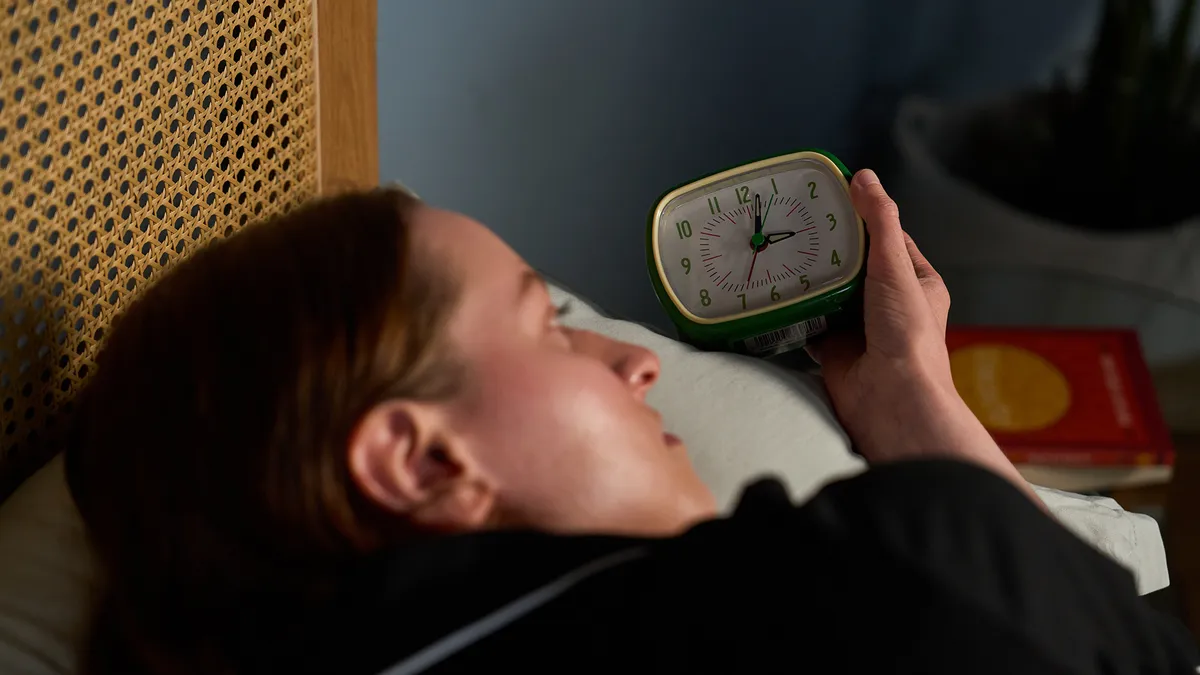
If you've ever found yourself, in the middle of the night, clock watching or calculating how much time you have left before you need to get up, then you're likely just making the problem worse.
2. They have irregular sleep patterns
One of the most common sleep habits associated with insomnia is going to bed and waking up at different times every day.
"Going to bed at 10 p.m. one night and 1 a.m. the next makes it difficult for the body's internal clock to establish a consistent rhythm," says Wakeman.
"Trying to grab sleep whenever they can (understandably), means that they disrupt their circadian rhythm, which has been shown to actually make it all harder," agrees Sadighi.
3. They skip the wind-down routine
Nighttime routines should help you to relax and prepare you for bed, but not all activities that help you relax should be part of yours.
Parents want to know how much their teenager’s phone is really disrupting sleep, mood and daily functioning. Experts on adolescent sleep and media use are pointing to specific ways screen time reshapes stress hormones, mental health and nightly routines.
How Does Phone Use Affect Teen Sleep?
Cellphone use before bed delays the natural drop in cortisol that teenagers need to fall asleep, according to Alice Hoagland, PhD, director of the Insomnia Clinic at the Rochester Regional Sleep Disorder Center.
“Cellphones will further delay an adolescent’s sleeping phase,” Hoagland said, per Rochester Regional Health. “The moment someone gets on a cellphone, they are essentially preventing their cortisol levels from naturally declining because they are becoming stimulated by the phone itself or the content on the phone.” A 2021 study also found teens who used social media more frequently had later bedtimes a year later, with problematic use linked to delayed sleep. Puberty already shifts melatonin release later in the day, so many teens do not feel tired until near midnight even though their bodies need about nine hours of sleep.
What Is Problematic Media Use in Adolescents?
Problematic media use is excessive or dysregulated screen use that starts interfering with a teen’s daily functioning, according to Sarah Domoff, assistant professor in the Department of Psychology at the University at Albany.
“Problematic media use includes excessive or dis-regulated use of screens, including social media or other forms of digital media such as gaming,” Domoff told Campus Insights Media. She said the behaviour crosses into concerning territory when it disrupts sleep, school performance or relationships. Design choices on many apps actively push teens to keep scrolling. “Even though someone only wanted to be on the phone for 15 minutes to watch one short video, all of a sudden, it’s 45-60 minutes later and they are still ‘going down the rabbit hole’ of watching videos,” Hoagland said.
Can Social Media Affect a Teen’s Mental Health?
A 2025 CDC study of nearly 2,000 U.S. teenagers found those who logged four or more hours a day of recreational screen time were more likely to report anxiety and depression symptoms, poorer sleep and less physical activity than peers with lower screen use.
The study also linked heavier non-schoolwork screen use to irregular sleep routines, weight concerns and weaker peer support. Domoff cautioned that the picture is not entirely negative. “It’s very complicated, the relationship between social media use and mental health,” she told Campus Insights Media. Positive engagement, like building connections or learning new skills, can benefit some youth, while social comparison and triggering content can worsen mental health concerns for others, she said.
How Can Parents Talk to Teens About Phone Use?
Start with curiosity rather than confrontation, Yann Poncin, MD, a child psychiatrist, told Yale Medicine. He suggested asking teens what they think, such as, “It seems like you’re on the phone so much that I don’t see you just doing homework like you used to do, so I’m just worried how healthy this is for you in terms of getting your stuff done. What do you think about that?”
Linda Mayes, MD, chair of the Yale Child Study Center, compared the approach to how families once handled TV. “Research showed that watching TV in and of itself wasn’t bad, but it began to have potentially negative effects on kids’ behaviour when it was used as a babysitter,” Mayes said. She recommended asking teens how social media is working for them rather than banning it outright, so they feel comfortable coming to a parent when something goes wrong. Hoagland offered a simple night-time fix. “Keep the phone away from the bedside is a good way of avoiding that situation,” she said.
The summer solstice falls in late June, marking the longest day of the year. In Ogden, the sun rises before 6 a.m. and sets after 9 p.m., with twilight lingering past 10 p.m.. For an animal whose biology evolved to fall asleep when it gets dark, this presents a problem.
Many people assume summer should be a season of better sleep — warmer evenings, no school, vacation time. In practice, sleep clinics see a noticeable uptick in summer insomnia complaints. The reasons are biological, behavioural, and environmental. Long evenings delay the body’s release of melatonin, warm bedrooms interfere with the nightly drop in core body temperature that initiates sleep, and looser summer schedules erode the consistency that keeps circadian rhythms aligned.
This week’s column looks at why summer can be quietly hard on sleep, what the research says about light, heat, and schedule, and what to do if you find yourself wide awake at midnight while the sky is still glowing.
Steven A. Szykula
Q: Why does it feel harder to fall asleep in summer even when I’m tired?
A: Sleep onset is regulated by two interacting systems: a homeostatic drive that builds across the day and a circadian system that times when sleep should happen. The circadian system is exquisitely sensitive to light. When you receive bright light at 9 or 10 p.m. in the evening, the brain delays its release of melatonin, pushing your biological “bedtime” later regardless of how tired you feel. Tiredness and sleepiness are not the same thing.
Q: Should I use blackout curtains?
A: For most adults with summer sleep problems, yes. The goal is not total cave-like darkness but elimination of the light dose that suppresses melatonin in the bedroom. Even modest evening and morning light through a window can shift the rhythm. If full blackout feels disorienting, consider blackout curtains plus a sunrise alarm clock that brings light back in at a chosen time.
Q: Is the heat really a problem, or am I imagining it?
A: It is a real problem. Sleep onset depends on a small but reliable drop in core body temperature, and a hot bedroom blocks this. Research generally points to a bedroom temperature around 65 to 68 degrees Fahrenheit as optimal for most adults. Fans, lighter bedding, and a cool shower before bed help. Sleeping with windows open in Utah summers often traps warm air; air conditioning, where available, usually wins on sleep quality.
Q: My kids are wrecking my sleep schedule because there’s no school. What do I do?
A: Protect a consistent wake time even if bedtime drifts later. Wake time is the single most powerful anchor for the circadian system; bedtime tends to follow. A summer schedule that lets bedtime slide by an hour but holds wake time within thirty minutes will preserve most of the rhythm. A schedule in which both float freely produces the chronically tired, irritable child many parents recognize by August.
Q: Is melatonin a good idea in the summer?
A: For circadian adjustment — not for sedation — low-dose melatonin (often 0.3 to 1 milligram) taken several hours before desired sleep can help reset a delayed rhythm. The high-dose drugstore melatonin (5 to 10 milligrams) is generally not necessary and can produce next-day grogginess. Melatonin is not regulated as a medication in the United States, which means quality varies significantly by brand. Talk to a clinician before starting it long term, particularly for children.
Q: I’m drinking more on summer evenings. Could that be affecting my sleep?
A: Almost certainly. Alcohol shortens sleep latency in the short term but disrupts the architecture of sleep, suppressing REM sleep and increasing night-time awakenings, particularly in the second half of the night. Many people experience the classic pattern of falling asleep quickly after drinks and then waking at three in the morning unable to return to sleep. Two to three drinks is enough to produce this pattern in most adults.
Q: My phone is the problem, isn’t it?
A: It is part of the problem, but not for the reason most people think. The blue light effect on melatonin, while real, is modest at typical phone distances. The bigger issue is content — social media, news, and email keep the brain in a vigilant, problem-solving mode that is fundamentally incompatible with the slowing required for sleep onset. A book or a podcast in a dim room beats a phone, even with night mode enabled.
Q: I’m exhausted but my mind races the moment I lie down. What’s that about?
A: This pattern is called sleep-onset insomnia, and it usually reflects a conditioned association between the bed and wakefulness rather than ongoing exhaustion. The behavioural fix is counterintuitive: do not go to bed until you are sleepy, not just tired, and if you cannot fall asleep within about 20 minutes, get up and do something quiet in dim light until sleepiness returns. This approach, called stimulus control, is a core component of cognitive-behavioural therapy for insomnia.
Q: When does insomnia become a clinical problem rather than just a bad week?
A: The standard threshold is difficulty falling or staying asleep at least three nights per week for at least three months, with daytime consequences such as fatigue, mood disturbance, or impaired functioning. Below that threshold, sleep hygiene adjustments are usually sufficient. Above it, the most effective intervention is cognitive-behavioural therapy for insomnia, which outperforms medication in long-term outcomes.
Conclusion
Sleep is not a luxury that adjusts itself around our schedules; it is a biological process governed by light, temperature, and routine. The summer solstice is a useful reminder that even something as basic as sleep is contextual and seasonal.
The good news is that summer insomnia is among the more responsive sleep problems. Most people who address light exposure, bedroom temperature, and wake-time consistency see improvement within two to three weeks. For those whose sleep problems persist, structured evaluation and treatment work well.
The longest day of the year does not have to mean the shortest night of sleep.