Showing posts with label sleep quality. Show all posts

Sunday, 5 July 2026

What to eat for insomnia during menopause, according to an expert

From vogue.in

Sleep disturbances tend to increase during menopause. Here’s how you can address them through diet 

During menopause, the quality of sleep can also change. Sleep disturbances are very common, with an overall prevalence of 51.6%. In some cases, insomnia during menopause can become particularly severe, leading to chronic fatigue, a decline in quality of life and long-term consequences for mental and physical health. In particular, the risk is higher for people who sleep less than five hours a night.

Sleep deprivation is associated with the development of various chronic conditions, including cardiovascular disease, diabetes and cancer and it also increases the risk of being overweight. Changes in sleep and circadian rhythm can also exacerbate digestive disorders. “Sleep deprivation negatively affects calorie intake and glucose utilisation, appetite, nutrient absorption and metabolism as a whole,” explains Dr Valeria Galfano, surgeon—specialist in food science and dietetics, author of the book Diet and Exercise During Menopause (Edizioni Lswr).

The importance of nutrition in sleep quality

To promote better sleep quality, it is essential to adopt a healthy eating pattern, which can also have an impact on body weight. “Studies conducted on perimenopausal and postmenopausal women have shown that greater adherence to the Mediterranean diet is associated with reduced inflammation and improved sleep quality and duration, as well as fewer symptoms of insomnia during menopause,” adds the specialist.

It is also advisable to focus on foods that naturally contain melatonin, as they can directly influence sleep quality. “An adequate intake of tryptophan (melatonin’s precursor) also has positive effects on night-time rest. In fact, variations in tryptophan content across different foods can lead to changes in melatonin levels,” the specialist points out, adding: “Some studies have observed improvements in certain sleep parameters, such as increased sleep duration, following an adequate intake of tryptophan, while a reduction in tryptophan intake has been associated with a decline in sleep quality.”

Where can you find melatonin?

“Among animal-based sources, eggs and fish have relatively high levels, while among plant-based foods, the highest concentration is found in dried fruit. Among the various types of fruit, cherries, strawberries and wine grape skins are among the richest sources. Studies conducted on different varieties of cherries have shown a particularly high melatonin content, suggesting that this fruit may be suitable for the development of functional foods,” the dietitian emphasises.

Where can you find tryptophan?

“In saltwater fish such as cod, in molluscs and crustaceans, in algae (including spirulina), in eggs (particularly the egg white), soy, sesame, sunflower and pumpkin seeds, cheeses and yeast.”
Several vitamins and trace minerals act as cofactors in melatonin synthesis and must therefore be included in the diet of a woman going through menopause: “folic acid, vitamins B6 and B12, magnesium and zinc.”

What regulates the sleep-wake cycle

Regular meal times play a key role in maintaining the circadian rhythm, as Dr Galfano points out. “Irregular eating habits tend to disrupt the biorhythm, causing a shift in the sleep-wake cycle and a decline in sleep quality. In particular, sleep is most affected by the timing and composition of the evening meal: it's advisable to eat dinner at least two hours before bedtime. Drinking large amounts of fluids immediately before going to bed is also not recommended: daily fluid intake should be spread evenly throughout the day and water is the best choice for quenching thirst.”

In general, meals that provide adequate amounts of protein, carbohydrates and fats are important for promoting a good night’s rest. “It’s not just the quantity that matters, but also the quality of the nutrients. Scientific evidence points to the beneficial role of omega-3 fatty acids, which can positively influence serotonin secretion. It's also recommended to prioritise meals with a low glycaemic load and high fibre content.”

https://www.vogue.in/content/what-to-eat-for-insomnia-during-menopause

Wednesday, 1 July 2026

Melatonin may ease chronic pain, study finds

From medicalxpress.com 

A sleep supplement widely used to treat insomnia could help reduce reliance on some of the most common and potentially harmful pain medications, new research from the University of Sydney suggests.

Published in PAIN, the study found melatonin can reduce chronic musculoskeletal pain, with effects in a similar range to medications such as opioids, nonsteroidal anti-inflammatory drugs (NSAIDs) and paracetamol.

With musculoskeletal pain affecting up to 47% of people globally, the findings point to a low-cost, widely available option that could shift how chronic pain is managed.

                                                                                                  Credit: Kindel Media from Pexels

Melatonin for chronic pain

"Melatonin is already in people's homes, it's inexpensive, and we know it's safe," said lead author and Ph.D. student Kangchao Wu from the Musculoskeletal Research Hub at the Charles Perkins Center and the School of Health Sciences.

"What's exciting is that melatonin may also help manage chronic pain, opening the door to reducing reliance on medications that come with more risks."

The research highlights the growing potential of drug repurposing—using existing treatments in new ways to deliver faster, more accessible health benefits.

"We're taking a medication we already understand and applying it to a problem that affects a huge proportion of the global population," said co-author Professor Paulo Ferreira, director of the Musculoskeletal Research Hub.

The study analysed data from 2,028 adults across 23 randomized controlled trials conducted in countries including the United States, Russia, Brazil, Egypt and China. Participants included people with conditions such as low back pain, osteoarthritis and fibromyalgia, as well as those recovering from surgeries including joint replacements and spinal procedures.

On average, the study found that melatonin reduced pain by around 9 points on a 0–100 scale, with the most rigorous trials showing reductions closer to 10 points, a similar magnitude to widely used pain medications.

The supplement also improved sleep quality, reinforcing the well-established link between pain and sleep.

"For many patients, pain doesn't exist in isolation and is closely tied to poor sleep," Wu said.

"Melatonin appears to target both, which makes it particularly useful for people managing chronic pain."

Across the trials, the dose and timing of melatonin varied depending on the condition and setting. For chronic musculoskeletal pain, doses typically ranged from 3 to 10 mg, with 3 mg per day the most commonly used. For postoperative pain, doses ranged from 1 to 10 mg, with 5 to 6 mg most common. Melatonin was generally taken at bedtime or up to one hour before sleep.

The researchers did not find evidence of a clear dose-response relationship, meaning no single "best" dose can be recommended from the current evidence.

https://medicalxpress.com/news/2026-06-melatonin-ease-chronic-pain.html

Wednesday, 24 June 2026

Dr. Roach: How certain 'sleep' medications affect sleep quality and stages

From eu.detroitnews.com

Dear Dr. Roach: I have occasional difficulty when going to sleep and/or getting back to sleep. I have tried Ambien, trazodone, clonazepam and Lunesta. All have their pros and cons.

My question regards sleep quality. I know there are several stages of sleep that we should go through and that the brain cleans out junk during sleep. Do these sleep aids still allow a person to go through the needed sleep stages and also allow the brain to clean itself? Are any of these meds better or worse than the others for occasional use? — S.H. 

Dear S.H.: How much time we spend in the different stages of sleep is called sleep architecture. Just being asleep isn't enough; people need to have enough time in the different phases of sleep for optimal health.

For example, you refer to the body's waste removal system from the brain, called the glymphatic system. This system removes waste materials from the brain, including amyloid and tau proteins, and it's predominantly active in the N3 stage of non-rapid-eye-movement sleep (non-REM sleep, also called slow-wave sleep or deep sleep). You're quite right that many sleep medications affect sleep architecture, which is one major reason why many sleep experts recommend against the habitual use of sleep medications.

All the medicines you've used can affect sleep architecture. Ambien (zolpidem) and Lunesta (eszopiclone) are in the Z-drug class, which have small to moderate effects on sleep architecture with modest decreases in both REM and N3 sleep. Many people quickly become accustomed to using these drugs, but the occasional use of them presents a low risk.

Clonazepam is a benzodiazepine, which are among the worst offenders against sleep architecture due to their significant reduction in REM and N3 sleep. A reduction in REM sleep is associated with worsened heart disease and overall mortality, as well as emotional problems and dementia. I strongly recommend against the habitual use of benzodiazepines for sleep.

Trazodone actually increases N3 sleep and has no consistent effect on REM sleep, so it's commonly been recommended for sleep. Unfortunately, more recent studies have shown that some people can get used to the drug after only a few weeks, so it stops working as well. Furthermore, studies have only shown very small improvements (a few minutes' worth) in sleep duration. Many people feel very drowsy the following day, and older people are particularly at risk for falls. There are other uncommon but serious side effects, and I've mostly stopped prescribing trazodone to my patients.

Whenever possible, I avoid drugs for the treatment of insomnia. Cognitive behavioural therapy for insomnia is, at least, as effective as medication and has none of the medication-associated risks. There are free cognitive behaviourial therapy programs for insomnia (CBT-I) for mobile devices.

For people who don't do well with CBT-I or people who can't receive it, the medications that are currently considered the safest are low-dose doxepin and dual orexin receptor antagonists (DORAs), such as suvorexant (Belsomra). Both of these medications have minimal negative effects on sleep architecture, and they increase REM sleep. Unfortunately, DORAs are very expensive (around $500 per month, not often covered by insurance), compared to doxepin (less than $50 per month without insurance). 

https://eu.detroitnews.com/story/life/advice/2026/06/23/dr-roach-how-certain-sleep-medications-affect-sleep-quality-and-stages/90570052007/

Friday, 19 June 2026

Women report poor sleep despite a good night's rest, while men overestimate their own sleep quality

From medicalxpress.com

edited by Gaby Clark, reviewed by Andrew Zinin 

Disturbed sleep is a common problem—and one that has many serious consequences beyond feeling tired the next day. Research has linked insomnia and poor sleep to early mortality and diseases including diabetes and cardiovascular disease.

Women often report experiencing disturbed sleep more frequently than men. They also constitute the majority of patients in sleep clinics. Yet, strangely, some studies show worse objective sleep quality in men—a bit of a paradox.

To understand what might explain the paradox, my colleagues and I conducted a study that directly compared sleep quality ratings and objective sleep measures between men and women.

We found that women complained more of sleep problems—but slept objectively much better than men. We think this paradox can probably be explained by men overestimating their sleep quality because they are less able to perceive how often they wake up at night.

A total of 238 randomly selected women participated in the study, plus 238 men who were matched on age and BMI with the women to ensure similar participants were compared with each other.

Sleep was recorded in each participant's home using a recorder that measured brain waves (electroencephalography—EEG), muscle tension (electromyography—EMG) and eye movements (electrooculography—EOG). These devices tracked what stage of sleep a participant was in and for how long, how much time they spent awake and how quickly they fell asleep.

A researcher visited the participant's home in the evening, mounted the recording equipment and left. The participant went to bed and awoke at their usual time.

In the morning, the participant rated the degree of difficulty they had falling asleep, whether their sleep was restless, whether they woke up early, how often they thought they had woken up, how long it took them to fall asleep, how long they slept and their overall sleep quality.

The sleep recording was scored by a sleep technician based on visual inspection of the EEG, EOG and EMG recordings. The data was then analysed to understand the objective quality of each participant's sleep and its relation to gender and age.

Analyses were also adjusted for factors such as gender, age, alcohol consumption and smoking, which may affect sleep.

                                                                                                            Credit: CC0 Public Domain

Sleep quality

The results show that women subjectively reported significantly lower sleep quality than men. Yet women actually had considerably fewer night-time awakenings, less stage one (superficial) sleep and higher sleep efficiency (they spent more time asleep while in bed). Women also experienced more stage three (deep) sleep and slept longer (400 minutes versus 382 minutes for men).

The results suggest that women objectively had a good night's sleep, compared with men. The only variable that suggests worse sleep in women was that when they did wake up at night, they spent more time awake than men did—around nine minutes each time for women versus just under seven minutes each time for men.

It only takes around five minutes of being awake at night for a person to remember it the next morning. This may explain why women were better able to remember whether they had woken up the night before and estimate how many times they had. Men, on the other hand, grossly underestimated their number of awakenings (by 72% compared with women's 37%).

For other quantitative measures, like time to fall asleep, sleep duration and time awake, men and women were equally good at estimating their objective values. And they were relatively correct.

We took this further and found that men who woke up only for a short period during the night (around eight minutes or so each time they woke up) often didn't remember they had.

When this group of men was removed, no gender difference in subjective sleep quality remained. This suggests that men with short night-time awakenings report better sleep quality than would be expected from their objective sleep measures because they didn't remember they had woken up.

It's also noteworthy that men's objective sleep deteriorated faster with age than women's. This was particularly obvious for stage three sleep. While women older than 65 got around 80 minutes of stage three sleep each night, men had only 53 minutes. Among those between 30 and 50 years of age, the amount was similar for men and women (around 70 minutes).

Sleep and well-being

A key reason women may complain of having a worse night's sleep than they objectively had may therefore be the amount of time they spent awake when they woke up, making it easier for them to notice. Likewise, men may overestimate their sleep quality because they spend less time awake when they wake up, so they don't remember it happening.

Both findings would work toward reducing subjective sleep quality in women and increasing it in men. We assume, then, that the experience of awakenings has an important influence on subjective sleep quality.

As our study was conducted over only one night, it will be important for future research to investigate whether these findings remain when participants are studied over longer periods.

Future studies may also want to explore the reasons for poor sleep in men—especially since common sources of disturbed sleep, such as alcohol, smoking and BMI, were all adjusted for in our analysis. Researchers may also want to investigate why men's sleep becomes objectively worse as they get older.

Our research illustrates how sleep quality doesn't just involve the physiological aspects of sleep. It also includes our own subjective experiences, which can affect our well-being and how rested we feel.

It also suggests that because many men overestimate their sleep quality, they may overlook any sleep problems they are experiencing. This could mean that some men aren't getting help for conditions that could be affecting their health and well-being.

https://medicalxpress.com/news/2026-06-women-poor-good-night-rest.html

Monday, 20 April 2026

Exhausted after 8 hours? 3 red flags you're headed for insomnia, according to experts

From tomsguide.com

By Ruth Jones 

The subtle daytime signs that could signal serious sleep deprivation

Struggling to stay awake at your desk, snapping at a friend and drifting off at the dinner table? It might not be your finest hour but many of us are familiar with these behaviours. You'd probably chalk it up to a bad day.

However, researchers from the University of Maryland have identified thinking, fatigue and mood as red flags for insomnia, noting that monitoring these actions in your day-to-day can help you spot sleep problems you might otherwise overlook.

We spoke to her about how to identify insomnia red flags — and what they signal about your sleep.

Key takeaways: At a glance

  • Thinking, fatigue and mood were identified as 'residual' symptoms of insomnia to be monitored in the treatment of sleep disorders
  • Daytime fatigue describes persistent low energy, often caused by a lack of restorative sleep
  • Mood swings make you irritable and can result from missing out on REM sleep
  • Micro-sleeps are brief dozes that signal your brain is actively struggling to stay awake
  • Focusing on improved sleep hygiene, such as a wind-down routine and bed time, can help improve your overall sleep health

How understanding daytime behaviours help you recognize insomnia

A woman sits up in her bed with her hand on her head looking exhausted and like she hasn't had much sleep

(Image credit: Getty Images)

In a recent study by the University of Maryland School of Medicine, researchers highlighted that treating insomnia can't simply focus on sleep. It's important to understand and address the daytime impact of a bad night's rest as well.

Researchers identified 'thinking, fatigue, and mood' as 'residual symptoms' of sleep deprivation which should be monitored by healthcare professionals to ensure more effective treatment for insomnia.

"These symptoms are often more informative than total sleep hours," says Dr. Saema Tahir, a pulmonary disease specialist. She explains that if you're clocking up enough hours in bed but still don't feel properly rested, your daytime behaviours can help you understand what's going on.

"Fatigue [equals] sleep quantity or quality issue," she says. "Mood swings [equals] neurocognitive / emotional sleep disruption. Micro-sleeps [equals] severe physiological sleep deprivation or disorder."

3 daytime red flags for bad sleep

Even the best sleep trackers can't always paint an accurate picture of what's happening during the night. However, monitoring how you're functioning during the day helps you investigate and recognize the lived impact of your sleep.

Here are three signs your sleep is suffering (and you might not even know it yet)...

Red flag 1: You have no energy

You know those days when everything feels like a slog? You crawl out of bed and can't even find the energy to scroll through Instagram.

"Daytime fatigue is more than just feeling 'tired,'" explains Dr. Tahir. "Clinically, it refers to persistent low energy, reduced alertness, and difficulty sustaining mental or physical effort during the day despite adequate opportunity for sleep."

A tired gray-haired man yawns at his desk.

(Image credit: Getty Images)

So what's causing it? Dr. Tahir notes that daytime fatigue is often a signal that you're missing out on "restorative sleep" — that might mean frequent wake-ups, sleep disorders or "circadian misalignment" (when your time in bed doesn't match when your body expects to sleep.)

"A key clue is disproportion," says Dr. Tahir. "If someone is sleeping an 'adequate' number of hours but still feels drained, we worry about sleep quality rather than quantity."

Red flag 2: Your emotions are a rollercoaster

It's not just you; everyone around you really is more annoying after a bad night's sleep.

"Mood instability, meaning irritability, emotional reactivity, or low frustration tolerance, can be a subtle but powerful marker of sleep disruption," explains Dr. Tahir.

Patients often say, 'I sleep fine,' but report they are snappy, overwhelmed and emotionally labile

Dr. Tahir

And it doesn't have to be a night spent staring at the ceiling that has you snapping at a co-worker for tapping on the keyboard a little too loud.

"Evidence shows even partial sleep restriction impacts emotional regulation circuits in the prefrontal cortex and amygdala reactivity (our emotional response centre of the brain)," says Dr. Tahir.

She notes that patients often say "I sleep fine" but describe being snappy, overwhelmed and "emotionally labile" — "that mismatch is a red flag for impaired sleep architecture or insufficient deep/REM sleep."

Red flag 3: You can't keep your eyes open

You're halfway through an email when it occurs to you you don't know how long you've spent on one sentence. In fact, you can't remember the last few seconds at all. What you've experienced might be a microsleep.

"Microsleeps are brief, involuntary episodes of sleep lasting seconds," describes Dr. Tahir. "They often present as: 'zoning out' while driving or reading, dropping attention mid-task or head nodding or blank spells."

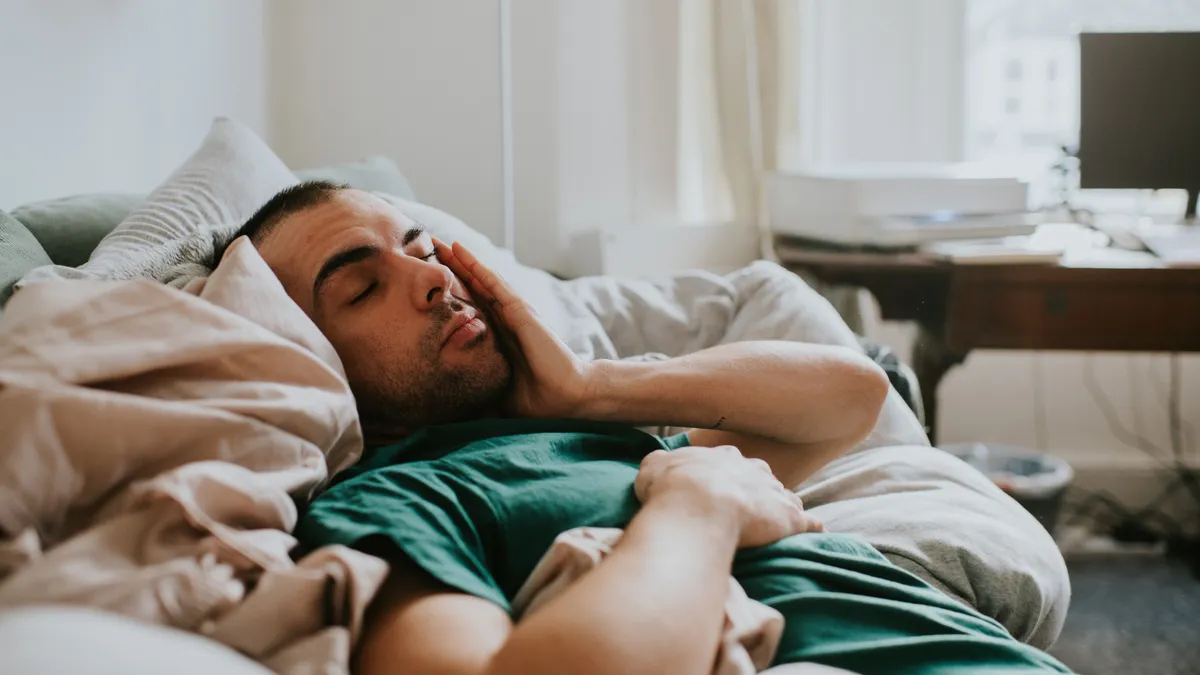
A sleep deprived man in a green shirt falls asleep for a second on his sofa, having what is called a microsleep

(Image credit: Getty Images)

Sometime a microsleep is so fast, you might not even notice its happened. But it shouldn't be ignored, as Dr. Tahir explains it's a sign your brain is "actively failing to maintain wakefulness."

"Clinically, microsleeps are a significant safety warning, most commonly associated with sleep deprivation or untreated sleep disorders (OSA, behaviour disorders of sleep, insomnia, hypersomnia, movement disorders of sleep)," she says.

What to do if you notice these red flags

These 'red flags' are often an indication that your sleep is suffering, even if you're happy with the amount of hours you spend in bed.

You don’t measure sleep health by time in bed, you measure it by daytime function

Dr. Tahir

"A key principle in sleep medicine is that you don’t measure sleep health by time in bed, you measure it by daytime function," explains Dr. Tahir.

"So someone can sleep 7–8 hours and still have clinically significant sleep dysfunction."

When these red flags start to impact your daily function, it's time to take a look at your sleep hygiene. Building good habits can improve your overall sleep quality, ensuring you're enjoying truly restorative rest. We've spoken to experts about improving sleep quality, and their top tips include:

However, when lack of sleep is having a notable impact on your day, we advise speaking to a healthcare professional, who can help you identify the cause and work on viable solutions.

https://www.tomsguide.com/wellness/sleep/3-red-flags-that-youre-headed-for-insomnia-from-mood-swings-to-micro-sleeps