Showing posts with label sleep apnea. Show all posts

Friday, 14 August 2026

5 differences between an insomniac and someone who gets 7+ hours sleep a night — and why sleep experts say it matters

From tomsguide.com

By Frances Daniels

Experts reveal the habits to adopt and the ones to drop if you want to get at least seven hours of good quality sleep a night 

We've all been there. You arrive at work feeling tired and bleary-eyed after a night plagued by insomnia, only to be greeted by your bright-eyed co-worker who's running on a full sleep. Pouring yourself an extra-strong black coffee, you ask yourself, "What's the difference between me and them?"

Turns out, there can be a number of key differences between an insomniac and someone who gets at least seven hours of sleep a night. "People who consistently sleep well don't necessarily have perfect routines, but they often share certain behaviours," says Sam Sadighi, a certified sleep practitioner at Get Laid Beds.

Although everyone's experience is different, Sadighi says that people with insomnia also "often share some common patterns" that can disrupt sleep.

Here Saighi and Mike Wakeman, a pharmacist and sleep researcher at Evera Nutrition, reveal the key habits that separate the sleep deprived from those getting plenty of rest. Here are the five habits of insomniacs vs the top three habits for better sleep...

Key takeaways

  • Insomniacs often worry about not getting enough sleep and clock watch, which can exacerbate their sleep issues.
  • Irregular betimes and wake-up times are also common among insomniacs.
  • People who consistently get 7 hours+ sleep a night often get enough daylight and establish a consistent sleep schedule and relaxing night-time routine.
  • However, good sleep habits aren't always enough to treat chronic insomnia. Anyone experiencing persistent sleep problems should speak to a doctor.

5 key differences: What insomniacs do

1. They try to force sleep
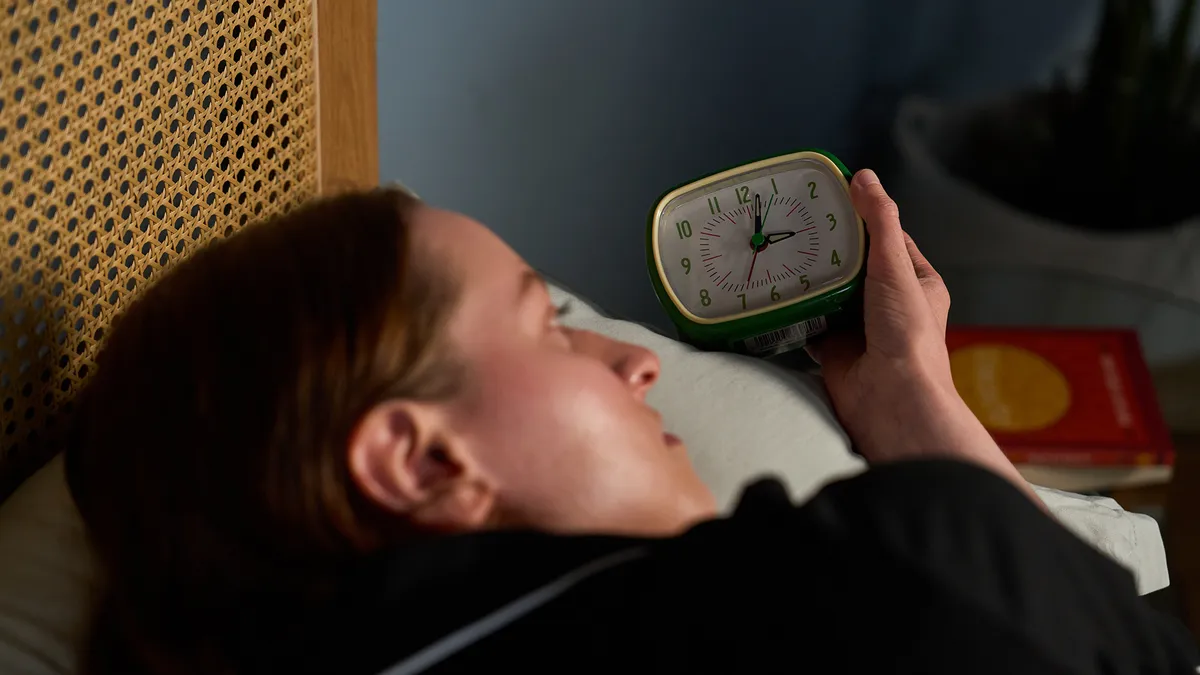
A woman with long dark brown hair lies in bed holding a green alarm clock that reads 3 a.m.

(Image credit: Future)

If you've ever found yourself, in the middle of the night, clock watching or calculating how much time you have left before you need to get up, then you're likely just making the problem worse.

2. They have irregular sleep patterns

One of the most common sleep habits associated with insomnia is going to bed and waking up at different times every day.

"Going to bed at 10 p.m. one night and 1 a.m. the next makes it difficult for the body's internal clock to establish a consistent rhythm," says Wakeman.

"Trying to grab sleep whenever they can (understandably), means that they disrupt their circadian rhythm, which has been shown to actually make it all harder," agrees Sadighi.

3. They skip the wind-down routine

Nighttime routines should help you to relax and prepare you for bed, but not all activities that help you relax should be part of yours.

Tuesday, 7 July 2026

How to Travel Confidently When You Live With Sleep Apnoea

From everydayhealth.com 

Making sure that you pack everything you need for a trip can be challenging, but there's an extra level of prep needed when you have sleep apnoea because treating the condition often involves the use of a continuous positive airway pressure (CPAP) machine.

"Using a CPAP while traveling can be difficult," says Chafen Hart, MD, a sleep medicine specialist at National Jewish Health in Denver. "You need a voltage converter for foreign travel, and the machine itself can be bulky. Also, while it counts as medical equipment, which allows you to bring it as a carry-on, lugging the machine around can be problematic."

Other factors — jet lag in particular — can disrupt your sleep schedule, she says, and eating heavy meals and drinking alcohol on vacation may worsen sleep apnoea symptoms. But certain strategies can ease common travel issues so you can enjoy your trip without losing sleep in the process.

                                                                                                                                                                                          iStock; Everyday Health

1. Consider a Travel CPAP

If you're taking a road trip, bringing your regular CPAP machine is easy, but for other types of travel, it may be worth investing in a model that's designed specifically for travel, says Sarathi Bhattacharyya, MD, a pulmonologist, a sleep medicine specialist, and the medical director of the MemorialCare sleep disorders center at Long Beach Medical Center in California.

"These machines are smaller and more easily transported," he says. "They typically don't use distilled water for humidification, so that's one less thing to think about when you get to your destination."

Because some models are ultralightweight and compact, and can use battery power instead of being plugged in, a travel CPAP can often be used during a flight, which is useful if you're trying to sleep on a plane, says Dr. Bhattacharyya.

One sticking point is that these machines are not usually covered by insurance, so they might be a pricey investment, Dr. Hart says. However, because they're medical devices, it's possible to use your flexible spending account or health savings account funds to purchase one.

"Other treatment options are mandibular advancement devices and hypoglossal nerve stimulators," says Madeleine Basist, MD, a pulmonologist at Northwell Health’s Lenox Hill Hospital in New York City. "These may be easier to travel with, since they are more compact and require less equipment."

2. Pack a Sleep Apnoea Travel Kit

It's helpful to bring items that you use to sleep comfortably at home, says Dr. Basist, for example, an eye mask, pillow, and white noise machine. Even packing your favourite pyjamas can give you a sense of familiarity and comfort.

"Maintaining your bedtime routine and sleep habits while traveling can help with adjusting to a new sleep environment," she says. Also bring your doctor's contact information and a letter of medical necessity for your CPAP, which will make it easier to bring through airport security and customs.

3. Adjust to the Time Zone in Advance

Traveling to a time zone that's only an hour or two off your normal schedule usually doesn't result in sleep challenges, but more than that can be disruptive. You may have insomnia, wake up excessively early, experience daytime fatigue or brain fog, or have gastrointestinal upset.

"When jet lag results in insufficient sleep, it can have a rebound effect that may cause more significant sleep apnoea symptoms," says Hart. "Jet lag can also lead to eating at weird times, and drinking more caffeine or alcohol, which can affect sleep quality."

Prepping for a different time zone in advance can be helpful because you can adjust faster to that schedule, she says. If you’re traveling east, several days before your departure date, try going to bed earlier than usual, and get exposure to morning sunlight as soon as possible when you wake up. This will help reset your body clock for a new time zone.

4. Get More Physical Activity

When you're at your destination, avoid the urge to sleep in as a way to catch up, because this may delay how your body adjusts to a different time zone, says Bhattacharyya.

Other tips for getting better sleep: Avoid large meals, particularly in the evening, and get some light to moderate activity during the day, as that can promote sleep and help with the adjustment to a different time zone, he says.

Even if you're not in a new time zone, physical activity can be a boon for getting more high-quality sleep when you have sleep apnoea. Research on sleep disorders, including sleep apnoea, finds that engaging in exercise enhances sleep quality in multiple ways: Physical activity during the day (but not in the evening) increases the production of melatonin, the hormone associated with drowsiness and sleep onset, for example.
Even a small amount of physical activity can improve sleep, and that can have a ripple effect on daytime fatigue and general well-being.

If you're concerned about travel and how it will affect your sleep apnoea treatment, talk with your healthcare provider before your trip.