Experts reveal the habits to adopt and the ones to drop if you want to get at least seven hours of good quality sleep a night
We've all been there. You arrive at work feeling tired and bleary-eyed after a night plagued by insomnia, only to be greeted by your bright-eyed co-worker who's running on a full sleep. Pouring yourself an extra-strong black coffee, you ask yourself, "What's the difference between me and them?"
Turns out, there can be a number of key differences between an insomniac and someone who gets at least seven hours of sleep a night. "People who consistently sleep well don't necessarily have perfect routines, but they often share certain behaviours," says Sam Sadighi, a certified sleep practitioner at Get Laid Beds.
Although everyone's experience is different, Sadighi says that people with insomnia also "often share some common patterns" that can disrupt sleep.
Here Saighi and Mike Wakeman, a pharmacist and sleep researcher at Evera Nutrition, reveal the key habits that separate the sleep deprived from those getting plenty of rest. Here are the five habits of insomniacs vs the top three habits for better sleep...
Key takeaways
Insomniacs often worry about not getting enough sleep and clock watch, which can exacerbate their sleep issues.
Irregular betimes and wake-up times are also common among insomniacs.
People who consistently get 7 hours+ sleep a night often get enough daylight and establish a consistent sleep schedule and relaxing night-time routine.
However, good sleep habits aren't always enough to treat chronic insomnia. Anyone experiencing persistent sleep problems should speak to a doctor.
5 key differences: What insomniacs do
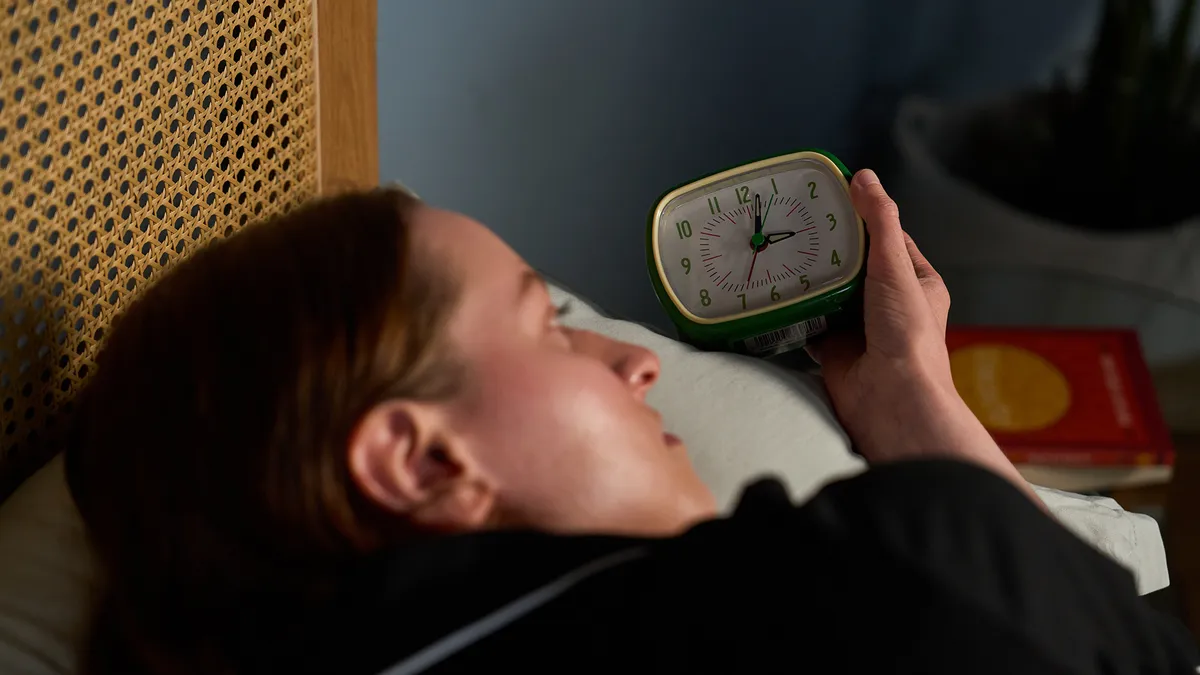
1. They try to force sleep
(Image credit: Future)
If you've ever found yourself, in the middle of the night, clock watching or calculating how much time you have left before you need to get up, then you're likely just making the problem worse.
2. They have irregular sleep patterns
One of the most common sleep habits associated with insomnia is going to bed and waking up at different times every day.
"Going to bed at 10 p.m. one night and 1 a.m. the next makes it difficult for the body's internal clock to establish a consistent rhythm," says Wakeman.
"Trying to grab sleep whenever they can (understandably), means that they disrupt their circadian rhythm, which has been shown to actually make it all harder," agrees Sadighi.
3. They skip the wind-down routine
Nighttime routines should help you to relax and prepare you for bed, but not all activities that help you relax should be part of yours.
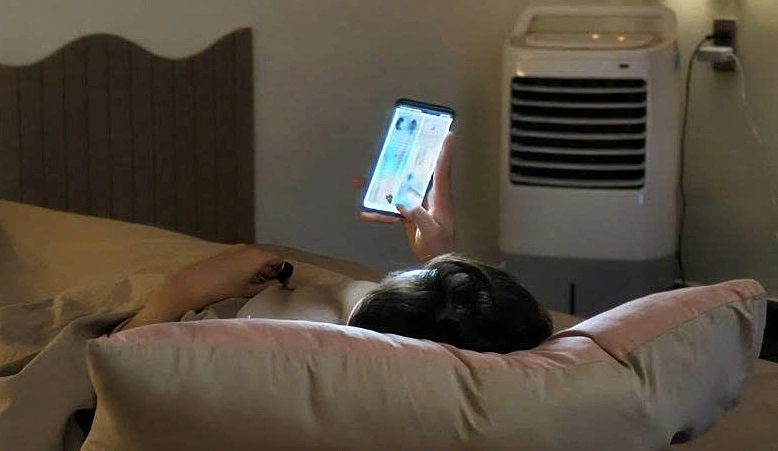
Nguyen Nam's rented room in HCMC is pitch black at midnight, except for the faint blue light from his phone screen shining on his sleep-deprived face.
After a 10-hour shift, his back ached and a pain pulsed through his temples; he knew he needed sleep and wanted to go to bed, but kept scrolling on his phone until 3 a.m.
"At that point, my mind is completely blank. Nothing I watch stays with me," the 28-year-old programmer says.
Tran Mai, a 32-year-old fashion store owner in Tay Ninh Province, stays up late for a different reason. During the day, she focuses on work and family responsibilities, and the only time she has for herself is late at night.
"I'm afraid to close my eyes because I know tomorrow will arrive immediately," she says.
She spends hours switching between dance videos on TikTok, exposé posts on Facebook and personal confessions from strangers on Threads. She often stays awake until 3 a.m., sleeps poorly and wakes up at 7 a.m. feeling drained before the day even begins.
Nam scrolls through his phone late at night in his rented room in Ho Chi Minh City. Photo courtesy of Nam
A 2022 study published in Sleep Medicine Reviews, a peer-reviewed medical journal focusing on sleep research, found that more than 70% of adults aged 18 to 35 use mobile devices within 30 minutes of bedtime. Most respondents said they were aware that the habit negatively affects sleep quality.
Researchers refer to the phenomenon as bedtime procrastination, the intentional delay of sleep.
Vuong Nguyen Toan Thien, director of professional services at Lumos Psychological Counseling and Therapy Center, says the behaviour is not caused by laziness or a lack of discipline.
"This is an uphill battle between a brain that has run out of energy and psychologically manipulative algorithms designed by some of the world's top engineers."
From a neuroscience perspective, he says, the issue stems from competition between two systems in the brain: the prefrontal cortex, responsible for planning and self-control, and the habit-reward system associated with dopamine pathways.
During the day, the prefrontal cortex has enough energy to signal a stop and regulate behaviour. At night, after hours of stress and mental effort, its ability to do so weakens. Scrolling through social media before sleep then becomes habitual. Users no longer make conscious decisions as their brains switch from relying on thoughts to automatic responses.
The exhaustion also makes users more vulnerable to short-video platforms such as TikTok, Reels, and Shorts, which rely on a variable reward schedule, a mechanism similar to slot machines. Users do not know whether the next video will be entertaining or disappointing so the brain constantly releases dopamine, encouraging them to keep watching.
A 2023 study by Stanford University in the U.S. found that variable rewards are highly effective at sustaining repetitive behaviour, especially when people are tired and psychologically vulnerable.
The effects extend beyond fatigue. By the time users turn off their screens, their brains have been continuously stimulated by high-intensity content, while blue light suppresses the production of melatonin, the hormone that signals sleepiness. As a result, people may feel physically exhausted while remaining mentally alert, leading to restless sleep.
The following morning often brings brain fog, a condition marked by slower thinking, forgetfulness and reduced concentration.
According to a study by the University of Pennsylvania, sleeping fewer than six hours a night for 14 consecutive days can impair cognitive performance to a level comparable to staying awake for 24 hours straight. Researchers also found that people often fail to recognize the extent of their mental decline. Over time, chronic sleep deprivation increases the risk of depression, anxiety, and occupational burnout.
Thien says relying solely on willpower is unlikely to solve the problem in the long run. Instead, he recommends changing the environment to reduce triggers, starting with charging phones entirely outside the bedroom. When users must physically leave the bed to access their devices, most unconscious scrolling habits become easier to interrupt.
He also recommends a digital curfew of 30 to 60 minutes before bedtime. Filling that time with activities such as reading printed books or listening to relaxing music can help reduce stimulation and prepare the body for sleep.
Maintaining a consistent wake-up time, including on weekends, and getting 15 to 30 minutes of morning sunlight can also help restore disrupted circadian rhythms, he says.
Thien says the distinction between entertainment and addiction is relatively clear. Healthy entertainment helps people relax and sleep easier. But when people finish watching content feeling guilty and regretful, physically drained yet unable to put down their devices, the behaviour has shifted from choice to loss of control.
Nam says he understands the distinction but has not found a way to stop. He continues scrolling late into the night despite knowing it comes at the expense of his sleep.