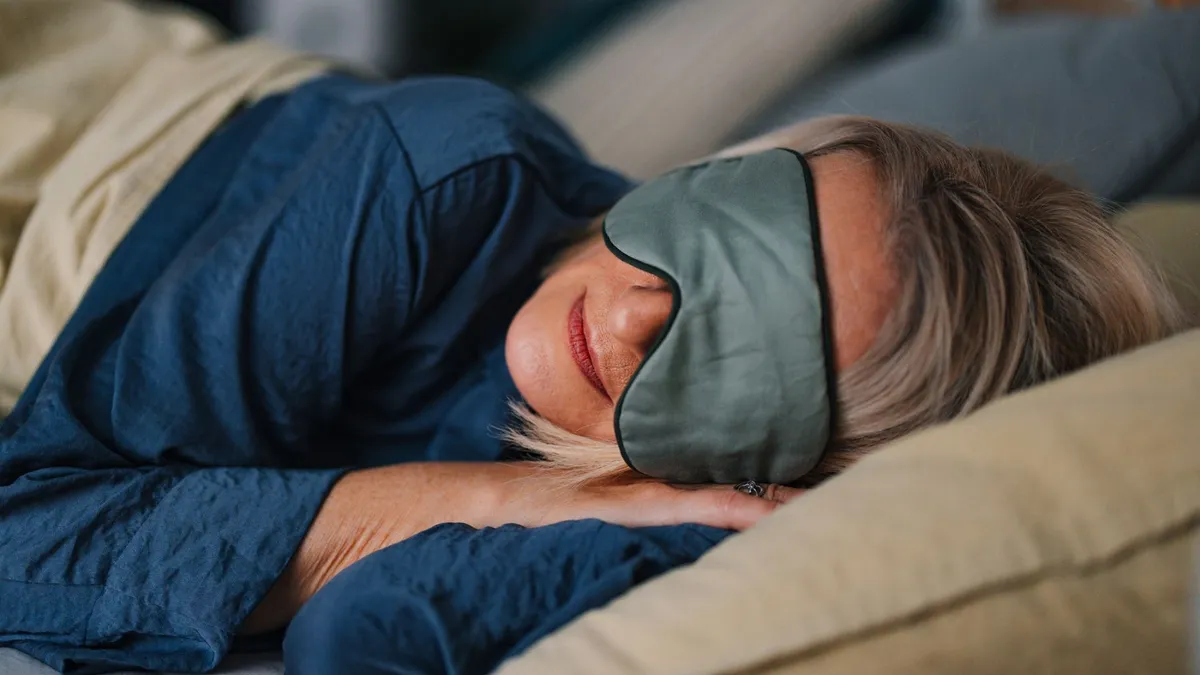
If getting a good night’s sleep seems harder than it used to be, you’re not imagining it.
Adults over 50 frequently report getting less sleep — and often find themselves waking earlier, sleeping more lightly, or getting up several times throughout the night.
“While older adults may find it harder to obtain adequate sleep, the biological need for sleep does not significantly decrease as you age,” says Saema Tahir, MD, a board-certified sleep medicine physician and pulmonologist with a private practice in New York City. “Changes in sleep duration and quality are common with age, but should not be considered simply ‘normal’ or ignored — they carry real health consequences.” Poor sleep has been linked to a higher risk of heart disease, cognitive decline, and mental health conditions like depression.
Fortunately, understanding age-related biological changes — including shifts in metabolism, hormones, and the body’s internal clock — can help you take steps to improve your sleep and support healthy aging.
iStock
1. Metabolism Changes Can Interfere With Sleep — Support Both With Healthy Daily Habits
As you age, your metabolism naturally changes. Muscle mass tends to decline, fat distribution shifts, and age-related changes in fat tissue can contribute to insulin resistance, which makes it harder for the body to regulate blood sugar efficiently.
Your metabolism is also closely linked with sleep. Poor or insufficient sleep can disrupt blood sugar regulation, appetite hormones, and other metabolic processes — potentially contributing to insulin resistance and weight gain. In turn, metabolic conditions such as obesity and type 2 diabetes are commonly linked to sleep disorders like obstructive sleep apnoea. Over time, this can create a cycle in which poor sleep contributes to poorer metabolic health, which may further interfere with healthy sleep.
“What I really emphasize is that no hack, pillow, or supplement will fix sleep,” Dr. Tahir says. “Eating your last meal at least three hours before bed, reducing refined carbohydrates and alcohol, and maintaining physical activity all have evidence supporting improved sleep quality through metabolic pathways.”
2. Melatonin Naturally Declines With Age, but You Can Still Strengthen Your Body’s Sleep Signals
Melatonin is a hormone that helps regulate your body’s internal clock by signalling when it’s time to feel sleepy. Its production is closely tied to light exposure, rising in response to darkness to promote sleepiness and falling with morning light to help you wake up.
Beginning around age 40, the body gradually produces less melatonin at night, and the timing of its release may also shift — making it harder to fall and stay asleep.
Rather than relying on melatonin supplements alone, which can interfere with medications and cause daytime drowsiness in older adults, experts recommend strengthening your body’s natural sleep signals through light exposure and daily routines.
“Get bright outdoor light during the day, especially in the morning, and keep your evenings dim and relaxing by reducing bright screens and overhead lights close to bedtime,” says Junxin Li, PhD, RN, an associate professor at Johns Hopkins School of Nursing in Baltimore, who researches the impact of aging on sleep. “A regular sleep-wake schedule, consistent meal timing, and limiting alcohol near bedtime can also support the circadian system.”
3. Addressing Hormonal Changes Can Help Relieve Sleep Issues in Menopause and Beyond
For many women, declining oestrogen, which helps regulate body temperature, and progesterone, which has sleep-promoting effects, can contribute to night sweats, night-time awakenings, and difficulty falling asleep. Mood changes and other menopause-related symptoms can further disrupt sleep. And these sleep issues may persist years after your final menstrual period.
“Often what happens is that hormonal changes and other symptoms, like hot flashes, first cause insomnia to develop during menopause,” says Philip Gehrman, PhD, a professor of clinical psychology in psychiatry at the Hospital of the University of Pennsylvania in Philadelphia, and a behavioural sleep medicine research expert who has researched sleep disorders in older adults. “But then the insomnia takes on a life of its own, persisting into the postmenopausal period.”
Dr. Gehrman suggests tailoring sleep strategies to symptoms. For night sweats, consider tactics like keeping your bedroom cool, choosing lightweight bedding and sleepwear, and discussing persistent symptoms with your healthcare provider. Treatments like cognitive behavioural therapy for insomnia (CBT-I) involve working short-term with a healthcare professional to work on your bedtime routine and other sleep-related behaviours and can help improve sleep over time.
4. If You’re Getting Less Deep Sleep Than You Used to, Focus on Sleep Quality
The structure of your sleep naturally changes with age. Beginning in midlife, adults gradually spend less time in deep, slow-wave sleep — the sleep stage most associated with physical recovery and feeling refreshed — and may wake more often throughout the night.
This shift is thought to stem, in part, from age-related changes in the brain’s sleep-regulating neurons, Tahir explains. Research suggests that aging can weaken the body’s internal clock and its ability to build up the pressure needed to sleep, which contributes to earlier and more fragmented sleep. As a result, even spending enough hours in bed can leave you feeling tired the next day.
Although researchers haven’t identified an evidence-backed way to restore the deep sleep lost with aging, healthy habits can help you get more restorative sleep. Exercise may promote deeper sleep, while limiting alcohol near bedtime and treating sleep disorders can prevent disruptions that fragment sleep.
Many older adults can train their brains for more effective sleep. Gehrman says CBT-I uses behavioural strategies to train the brain to associate the bed with sleep rather than wakefulness and establish a more consistent sleep-wake pattern.
“Cognitive behavioural strategies can help reduce time spent awake — including keeping a regular sleep and wake schedule, winding down before bed, and getting out of bed to do relaxing activities if you’re unable to sleep,” he adds.
5. Cortisol Level Shifts Can Be Managed With Stress Relief Techniques
Cortisol, a main stress hormone, normally follows a daily cycle — dropping at night to promote sleep and rising in the morning to wake you up. For some, this rhythm may become altered during menopause, prompting higher evening cortisol levels that can contribute to difficulty falling asleep or night-time awakenings.
To support a healthy cortisol rhythm for sleep, Li underscores the importance of sticking to a set bedtime and prioritizing stress management in your daily routine.
“A calming wind-down routine before bed — such as slow breathing, meditation, gentle stretching, reading, or other relaxing activities — can help signal safety and reduce night-time alertness,” Li says. “It’s also helpful to avoid stressful work, intense conversations, news, TV shows, or problem-solving right before bed.”
6. Bladder Changes Can Be Mitigated by Tweaking Your Fluid Intake
Getting up to use the bathroom more than once, known as nocturia, is a common reason adults over 50 wake up during the night.
Age-related changes in the bladder and kidneys can increase night-time urine production, making bathroom trips more frequent.
Shifts in hormones that regulate fluid balance, along with medical conditions that are common with age, like an enlarged prostate and obstructive sleep apnoea, can also contribute to nocturia.
“Nocturia is one of the most common causes of sleep fragmentation in this age group,” Tahir says. “Evidence-based strategies include restricting fluids after 6 p.m., reducing caffeine and alcohol intake, treating underlying contributors like prostate or bladder issues, and timing any diuretic medications to the morning rather than evening.”
Sleep disturbances tend to increase during menopause. Here’s how you can address them through diet
During menopause, the quality of sleep can also change. Sleep disturbances are very common, with an overall prevalence of 51.6%. In some cases, insomnia during menopause can become particularly severe, leading to chronic fatigue, a decline in quality of life and long-term consequences for mental and physical health. In particular, the risk is higher for people who sleep less than five hours a night.
Sleep deprivation is associated with the development of various chronic conditions, including cardiovascular disease, diabetes and cancer and it also increases the risk of being overweight. Changes in sleep and circadian rhythm can also exacerbate digestive disorders. “Sleep deprivation negatively affects calorie intake and glucose utilisation, appetite, nutrient absorption and metabolism as a whole,” explains Dr Valeria Galfano, surgeon—specialist in food science and dietetics, author of the book Diet and Exercise During Menopause (Edizioni Lswr).
The importance of nutrition in sleep quality
To promote better sleep quality, it is essential to adopt a healthy eating pattern, which can also have an impact on body weight. “Studies conducted on perimenopausal and postmenopausal women have shown that greater adherence to the Mediterranean diet is associated with reduced inflammation and improved sleep quality and duration, as well as fewer symptoms of insomnia during menopause,” adds the specialist.
It is also advisable to focus on foods that naturally contain melatonin, as they can directly influence sleep quality. “An adequate intake of tryptophan (melatonin’s precursor) also has positive effects on night-time rest. In fact, variations in tryptophan content across different foods can lead to changes in melatonin levels,” the specialist points out, adding: “Some studies have observed improvements in certain sleep parameters, such as increased sleep duration, following an adequate intake of tryptophan, while a reduction in tryptophan intake has been associated with a decline in sleep quality.”
Where can you find melatonin?
“Among animal-based sources, eggs and fish have relatively high levels, while among plant-based foods, the highest concentration is found in dried fruit. Among the various types of fruit, cherries, strawberries and wine grape skins are among the richest sources. Studies conducted on different varieties of cherries have shown a particularly high melatonin content, suggesting that this fruit may be suitable for the development of functional foods,” the dietitian emphasises.
Where can you find tryptophan?
“In saltwater fish such as cod, in molluscs and crustaceans, in algae (including spirulina), in eggs (particularly the egg white), soy, sesame, sunflower and pumpkin seeds, cheeses and yeast.” Several vitamins and trace minerals act as cofactors in melatonin synthesis and must therefore be included in the diet of a woman going through menopause: “folic acid, vitamins B6 and B12, magnesium and zinc.”
What regulates the sleep-wake cycle
Regular meal times play a key role in maintaining the circadian rhythm, as Dr Galfano points out. “Irregular eating habits tend to disrupt the biorhythm, causing a shift in the sleep-wake cycle and a decline in sleep quality. In particular, sleep is most affected by the timing and composition of the evening meal: it's advisable to eat dinner at least two hours before bedtime. Drinking large amounts of fluids immediately before going to bed is also not recommended: daily fluid intake should be spread evenly throughout the day and water is the best choice for quenching thirst.”
In general, meals that provide adequate amounts of protein, carbohydrates and fats are important for promoting a good night’s rest. “It’s not just the quantity that matters, but also the quality of the nutrients. Scientific evidence points to the beneficial role of omega-3 fatty acids, which can positively influence serotonin secretion. It's also recommended to prioritise meals with a low glycaemic load and high fibre content.”
Sleep problemsare one of the most common complaints during the menopause transition,affects up to 60%of perimenopausal and postmenopausal women. Night sweats or hot flashes often get the blame for disrupting sleep, but the real issue may be what happensaftera woman wakes up (aka the stress, the racing thoughts, the desperate effort to fall back asleep). Over time, these patterns can amount to insomnia.
Anew pilot trialtested whether a form of cognitive behavioural therapy designed specifically for menopause could break this cycle and help midlife women sleep better without medication.
Researchers tested a therapy that targets both insomnia and hot flashes
Cognitive behavioural therapy for insomnia (CBT-I) is already considered a go-to treatment for chronic sleep problems by the American College of Physicians. But standard CBT-I wasn't built with menopause in mind. This trial adapted the approach specifically for midlife women dealing with both insomnia and nightly hot flashes.
Researchers enrolled 43 perimenopausaland postmenopausal women who had been diagnosed with insomnia and reported at least one hot flash per night. Participants were randomly assigned to receive either the menopause-adapted therapy (four 50-minute sessions over eight weeks) or a single menopause education session.
The therapy combined standard CBT-I techniques (like limiting time in bed, only using the bed for sleep, and reframing unhelpful thoughts about sleep) with strategies designed specifically for hot flashes, including slow breathing exercises and techniques for changing how women react to night-time symptoms.
Image by Addictive Creatives / Stocksy
CBT-MI improved sleep
Women who received CBT-MI showed significantly greater improvements in sleep than those who received menopause education alone.
Insomnia severity scores dropped more in the CBT-MI group immediately after treatment (about a 10-point reduction vs. 6 points in the control group), and improvements were maintained at the 1-month follow-up.
The CBT group also reported less disruption from night sweats and higher sleep self-efficacy, meaning greater confidence in their ability to sleep despite symptoms.
Some sleep benefits, particularly night-time symptoms, were still present at 3 months, suggesting the skills learned may have lasting effects beyond the intervention period.
How you respond to waking up may matter as much as the hot flash itself
The study's findings line up with a well-known model of how insomnia becomes a long-term problem. According to this model, insomnia often starts with a combination of a natural tendency toward sleep trouble (like being a light sleeper or having high stress reactivity) paired with a triggering event (like menopause or night-time hot flashes). But what keeps insomnia going are the habits and thought patterns that develop afterward: spending more time in bed trying to force sleep, worrying about not sleeping, and starting to associate the bed with stress rather than rest.
This is where the therapy steps in. By teaching women to change how they respond to night-time awakenings and hot flashes, it breaks the cycle of stress and hypervigilance. Research suggests that women who feel more in control of their reactions to hot flashes tend to report fewer and less bothersome menopause symptoms overall.
CBT-I techniques you can try tonight
If you're struggling with menopause-related sleep problems, the techniques used in this study offer a helpful starting point:
Sleep restriction:Limit your time in bed to match the amount of sleep you're actually getting, then gradually expand it as your sleep improves
Stimulus control:Use the bed only for sleep (and sex); if you can't fall asleep within 15 to 20 minutes, get up and do something quiet in another room until you feel drowsy
Avoid clock-watching:Checking the time only adds to the anxiety about not sleeping; turn your clock away from view
Slow breathing:Deep, slow breaths from your belly can help calm your nervous system during a hot flash or when you wake at night
Reframe unhelpful thoughts:Notice when you're thinking things like "I'll never function tomorrow" and practice replacing them with more balanced thoughts
Keep the bedroom cool:A cooler room may help reduce the intensity of night-time hot flashes
Limit alcohol and caffeine:Both candisrupt sleepand worsen hot flashes, especially when consumed later in the day
If these strategies aren't enough on their own, working with a trained CBT-I therapist may be a worthwhile next step. Many now offer virtual sessions, and CBT-I is considered a first-line treatment for chronic insomnia before sleep medications.
The takeaway
This pilot trial suggests that cognitive behavioural therapy tailored for menopause can meaningfully improve sleep and reduce the impact of hot flashes without medication. The key insight: how you respond to night-time awakenings may matter as much as the awakenings themselves.
It’s 2:17 a.m. You’re exhausted, but wide awake. Your mind races. A sudden wave of heat rises through your body. You finally drift off—only to wake again an hour later. By morning, you feel depleted, foggy, and irritable. And yet, when you mention it to a provider, you’re told it’s “just stress” or “part of getting older.” Instead, you may simply be experiencing insomnia.
Up to two-thirds of people occasionally experience symptoms of insomnia, according to the National Sleep Foundation. But insomnia is more than just a few nights of poor sleep. It is a common sleep disorder characterized by difficulty falling asleep, staying asleep, or achieving restorative sleep—even when there is adequate time and an environment conducive to rest.
While insomnia can be triggered by trauma, stress, life transitions, or medications, researchers are increasingly examining another powerful and often overlooked contributor: menopause.
Sleep disturbances, including insomnia, are common during and after the menopause transition.
According to the World Health Organization, menopause marks the end of menstrual cycles, typically occurring between ages 45 and 55 as oestrogen levels decline. It is associated with symptoms such as hot flashes, mood changes, and sleep disruption, while also increasing long-term risks for conditions like osteoporosis and heart disease. These changes often occur during midlife—a period generally spanning ages 35 to 65—when many women are already managing significant personal and professional responsibilities.
Woman In Bed With Menopausal Insomnia. getty
1. Midlife Is A Significant Risk Factor For Insomnia
As people age, the body’s internal clock (circadian rhythm) may become less resilient to stress and schedule changes. While sleep deprivation at any stage of life can be harmful, chronic insomnia during midlife carries additional emotional and physical consequences.
The National Institute on Aging notes that increased responsibilities during middle age—demanding careers, caring for aging parents, and supporting children—significantly contribute to sleep disruption. Heightened stress and emotional arousal during this period often make it harder to fall or stay asleep.
Menopause can compound these challenges. Hot flashes and other vasomotor symptoms frequently interrupt sleep, and studies suggest that women report higher levels of caregiving-related sleep problems compared to men. A 2026 review published in Menopause found that sleep disturbances remain highly prevalent during postmenopausal years—even among women without significant vasomotor symptoms—and can substantially affect quality of life.
Given these overlapping stressors, tailored treatment strategies are essential. Approaches may include cognitive behavioural therapy, mindfulness practices, yoga, acupuncture or acupressure, dietary improvements, and short-term pharmacologic support when appropriate. Addressing both physiological and psychological contributors is key to improving sleep outcomes.
2. Hormonal Changes May Contribute To Insomnia
Healthy sleep habits—such as maintaining good sleep hygiene and keeping a cool bedroom environment—are important during menopause. However, insomnia is a clinical sleep disorder, not simply “poor sleep,” and often requires targeted treatment.
Menopausal insomnia is influenced by hormonal changes, including increased cortisol and reduced levels of progesterone and melatonin—hormones that play essential roles in regulating body temperature, mood, and sleep cycles. For example, declining oestrogen can trigger night sweats and hot flashes while also contributing to increased anxiety, depression, and irritability. Together, these shifts make it more difficult to relax and fall asleep.
Managing menopausal insomnia requires targeted and effective strategies, one of the most evidence-based being cognitive behavioural therapy for insomnia (CBT-I).
Cognitive Behavioural Therapy for Insomnia (CBT-I) is widely recognized as a first-line, non-pharmacological treatment. A recent study published in Women’s Health Nursing concluded that CBT-I significantly improves sleep quality and reduces insomnia severity in menopausal women. Importantly, its effectiveness was consistent regardless of delivery method (in-person or remote), follow-up duration, or initial insomnia severity.
Because insomnia is so common during midlife and menopause, integrating CBT-I into routine clinical care could greatly benefit patients. Expanding standardized training programs and clinical protocols would help make this evidence-based therapy more widely accessible.
3. Negative Beliefs About Hot Flashes May Worsen Insomnia
While severe hot flashes are known to disrupt sleep, emerging research suggests that beliefs about hot flashes may also play an important role.
A recent study in Menopause examined whether hot flash beliefs were independently associated with insomnia severity. The findings indicated that negative beliefs about hot flashes may heighten physiological arousal and interfere with sleep—regardless of the actual intensity of the symptoms.
In other words, how women interpret and mentally respond to hot flashes may influence the degree of sleep disturbance they experience. This supports a broader mind–body framework, highlighting that cognitive and emotional factors can amplify physical symptoms.
Reframing menopause as a natural life transition rather than a personal failure or pathology may reduce distress and, in turn, improve sleep quality.
Moving Beyond Menopausal Insomnia
Treating insomnia becomes more complex when layered with menopausal symptoms. As research continues to evolve, women can take proactive steps by advocating for comprehensive care, asking informed questions, and seeking providers who approach health holistically rather than offering one-size-fits-all solutions.
While systemic change in women’s health care is still needed, self-advocacy remains powerful. Navigating menopausal insomnia with knowledge, support, and dignity is not only possible—it is essential for long-term well-being.
The benefits are massive for better sleep in older adults
Major hormonal changes and sleep do not mix well, and one of the biggest changes a woman can face is menopause.
While there are many symptoms of menopause, trouble sleeping is one of the most common. For some women, menopause insomnia can be caused or worsened by night sweats, hot flashes, and nocturia. For others, the triggers aren't so clear cut.
More focus has been placed on finding alternative, cheaper and more natural methods in recent years, and one of the frontrunners so far is Tai Chi.
In fact, a study recently discovered that Tai Chi is nearly as effective as CBT-i for helping older adults to manage their insomnia.
To learn more, we spoke to experts in sleep disorders, menopause, and Tai Chi for their thoughts on how this ancient Chinese practice can help people to fight off insomnia triggered by menopause. Here's what they said...
Dr Audrey Wells
Dr Audrey Wells is the Chief Medical Officer of SLIIP, a healthcare company that offers sleep consultations online via video. Dr Wells is board-certified in sleep medicine and is an advocate for woman's sleep health.
Dr Alyssa Dweck
Dr. Alyssa Dweck is a board-certified gynaecologist. She is a certified menopause provider and serves as the Chief Medical Officer at Bonafide Health.
Dr Michelle Sands
Dr. Michelle Sands is a licensed naturopathic physician (ND) and is board-certified in anti-aging medicine. She specializes in women' health, particularly female hormones. She is the founder and CEO of Glow Natural Wellness.
How Tai Chi reduces insomnia during menopause
Many women's health experts endorse Tai Chi for its low intensity, accessibility, and stress relief. As Dr Alyssa Dweck explains, other studies prove that mind-body exercises such as Tai Chi positively influences sleep quality during menopause.
"Mind body exercises can improve sleep through reducing anxiety and depression, both of which are related to menopause and related sleep disruption," saysDr Dweck.
"This practice, including Tai Chi, decreases fatigue which may help regulate sleep-wake cycles."
(Image credit: Getty Images)
Tai Chi doesn't cause cortisol spikes
According to the Dr Dweck, another plus is Tai Chi's suitability for middle and older-aged adult, even among those with a lower fitness level.
'Instead of asking women to sit still and 'empty their minds', which rarely works when hormones are shifting, it gives the brain something gentle and rhythmic to focus on'
Dr Michelle Sands, women's health specialist
Dr Michelle Sands, a women's health specialist at Glow Natural Wellness, agrees. "Unlike high-intensity workouts, tai chi doesn’t spike cortisol. For many women in midlife, late-day intense exercise actually worsens insomnia.
"Tai chi supports movement, circulation, and relaxation without overstimulating the system."
Accessibility isn't the only benefit that comes from the martial art's low intensity; its gentleness also helps to ease the common menopausal symptoms of night-time anxiety and frequent wakings.
"The slow, intentional movements combined with steady breathing signal safety to the nervous system," says Dr Sands.
"Instead of asking women to sit still and 'empty their minds', which rarely works when hormones are shifting, it gives the brain something gentle and rhythmic to focus on."
(Image credit: Getty Images)
Sleep experts are highlighting the positive effects on menopause insomnia too. Board-certified sleep doctor at Sliiip Dr Audrey Wells explains that menopause increases activity in the sympathetic nervous system (which triggers fight-or-flight response). Tai Chi heightens the parasympathetic system (which calms the body after stress).
According to Dr Wells: "Tai Chi combines slow movement, breath regulation, and focused attention, which lowers cortisol, improves parasympathetic tone, and reduces cognitive and physical hyperarousal, all major drivers of menopausal insomnia."
The longterm sleep benefits of Tai Chi
Dr Dweck tells us there's plenty of long-term sleep benefits to practicing Tai Chi, such as educed anxiety and depression, as well as more indirect positive results.
"If sleep is improved, downstream effects can be associated with reduced risk of heart disease, cognitive decline and general well being," she points out.
Long lasting results
However, benefits aren't always instant as the study shows that Tai Chi was initially an inferior method to CBT-I at managing insomnia, but non-inferior after 15 months of practice. So why did it become more effective after a year's worth of practice?
According to Certified Menopause Coach at Cape Concierge Physical Therapy Kara McKeown, unlocking all the sleep benefits of Tai Chi requires consistency.
"The longer you practice Tai chi, the easier it becomes to enter the meditative state that it can induce," she explains.
"You can get the benefits in a shorter period of time and the results are long lasting. While the insomnia study itself was only for a 12 week period, the benefits remained at a 24-month follow up."
(Image credit: Getty Images)
Dr Sands agrees. "Over time, consistent practice improves sleep quality, stress resilience, balance, and overall body awareness," she says.
"Chronic insomnia is rarely just a sleep problem—it’s a whole-body stress pattern. Tai chi helps unwind that pattern over months, not just nights."
According to Dr Sands and McKeown, long-term advantages are also seen because of a very simple reason: People stick with Tai Chi.
"It’s low-impact, accessible, and doesn’t punish your joints or nervous system," says Dr Sands.
"It is sustainable for most people in that it doesn't require much for space or equipment and is cost effective," McKeown explains. "Once the techniques are learned, they can be performed without being in a class or with an instructor."
Effective, but not a complete solution for all
While Dr Wells agrees that Tai Chi is an excellent foundation for many people with menopause, it's not a "complete solution" for everyone as some symptoms can be too severe for Tai Chi to treat alone.
"Tai Chi works best as part of a layered approach rather than a standalone fix," the sleep doctor says.
"Women with severe insomnia, untreated sleep apnoea, significant depression or anxiety, trauma-related sleep disruption, or intense hot flashes may also need CBT-I, targeted medical treatment, or hormone therapy."
How to practice Tai Chi to manage insomnia during menopause
Dr. Mao Shing Ni
Dr. Mao Shing Ni (Dr Mao) is a doctor of Chinese medicine, and a Tai Chi master and instructor who has authored books on Harmony Tai Chi and managing menopause symptoms.
First of all, what exactly is Tai Chi? "Tai Chi is a traditional Chinese mind–body practice based on the Taoist principles of balance, flow and harmony," says Dr Mao.
"It combines slow, flowing movements with breath and focused awareness."
However, he explains that some forms of Tai Chi, such as the physically-demanding, martial arts-oriented styles, are not suited for menopause-related fatigue and insomnia.
(Image credit: Getty Images)
Choosing the right Tai Chi practice for menopause
"Practices that emphasize slow transitions, soft joints, and coordinated breathing—rather than strength or martial precision—are ideal during times of hormonal fluctuation," he advises.
"For example, Harmony Style Tai Chi combines the best of Chen, Yang and Wu for health and balance."
To get the sleep-boosting benefits of Tai Chi, Dr Mao recommends practicing in the morning or late afternoon, up to fours before bedtime.
"This timing helps discharge stress, regulate cortisol, and transition the body into parasympathetic (rest-and-digest) mode without overstimulating the system right before sleep," he suggests.
Dr. Mao’s Harmony Tai Chi online video instruction is tailored towards fatigued days and menopause symptoms. It integrates Traditional Chinese Medicine principles with accessible movement for improving sleep naturally.
Another natural method that Dr Mao recommends to ease menopause insomnia is guided meditation.
"Train the mind to let go of words, thoughts, and images as you consciously welcome inner awareness and the stillness of deep sleep."
How to improve sleep during menopause
As Dr Wells mentions above, Tai Chi is beneficial but not a one-size-fits-all solution for menopause insomnia. "In menopause, sleep improves when the environment supports cooling, predictability, and nervous system safety."
"That means keeping your bedroom cool and dark, using breathable bedding, avoiding alcohol close to bedtime, maintaining consistent sleep and wake times, and getting morning daylight exposure."
Dr Wells still thinks Tai Chi is an invaluable way to treat the sleep challenges that come with menopause, though.
"Regular movement, stress-reducing practices like Tai Chi or yoga, and addressing hot flashes or sleep apnoea medically are just as important as traditional ‘sleep hygiene’ tips."