From healthline.com
Good sleep is incredibly important.
It helps you feel good and makes your body and brain function properly.
Some people have no problem falling asleep. However, many others have severe difficulty falling and staying asleep through the night.
Poor sleep can have negative effects on many parts of your body and brain, including learning, memory, mood, emotions, and various biological functions.
Your body temperature changes as you fall asleep. Your body cools down when you lie down and warms up when you get upTrusted Source.
If your room is too warm, you might have a hard time falling asleep. Setting your thermostat to a cool temperature between 60–67°F (15.6–19.4°C) could help.
Individual preferences will vary, so find the temperature that works best for you.
Taking a warm bath or shower could also help speed up the body’s temperature changes. As your body cools down afterward, this can send a signal to your brain to go to sleep.
One literature review found that taking a hot bath or shower before bed could improve certain sleep parameters, such as sleep efficiency and sleep quality.
Sleep efficiency refers to the amount of time you spend asleep in bed as opposed to lying awake.
People who took baths or showers measuring between 104°F–108.5°F (40.0°C–42.5°C) 1 to 2 hours before bedtime experienced positive results.
They reported improvements in their sleep even if their baths or showers lasted for as little as 10 minutes.
More research is needed, but these findings are promising.
The “4-7-8” method that Dr. Andrew Weil developed is a simple but powerful breathing method that promotes calmness and relaxation. It might also help you unwind before bed.
It’s based on breath control techniques learned from yoga, and it consists of a breathing pattern that relaxes the nervous system. It can be practiced any time you feel anxious or stressed.
Here are the steps:
- First, place the tip of your tongue behind your upper front teeth.
- Exhale completely through your mouth and make a “whoosh” sound.
- Close your mouth, and inhale through your nose while mentally counting to 4.
- Hold your breath, and mentally count to 7.
- Open your mouth and exhale completely, making a “whoosh” sound and mentally counting to 8.
- Repeat this cycle at least three more times.
This technique can relax you and help you fall asleep quickly.
Many people find that setting a sleep schedule helps them fall asleep easier.
Your body has its own regulatory system called the circadian rhythm. This internal clock cues your body to feel alert during the day but sleepy at nightTrusted Source.
Waking up and going to bed at the same times each day can help your internal clock keep a regular schedule.
Once your body adjusts to this schedule, it’ll be easier to fall asleep and wake up around the same time every dayTrusted Source.
It’s also important to get 7 to 9 hours of sleep each night. This has been shown to be the optimal sleep duration for adultsTrusted Source.
Lastly, give yourself 30–45 minutes to wind down in the evening before getting in bed. This allows your body and mind to relax and prepare for sleep.
Light can influence your body’s internal clock, which regulates sleep and wakefulness.
Irregular light exposure can lead to the disruption of circadian rhythms, making it harder to fall asleep and stay awakeTrusted Source.
During the day, exposing your body to bright light tells it to stay alert. Both natural daylight and artificial light, such as the kind emitted from an e-reader, have this effect on your alertness.Trusted Sour12Trusted Source
At night, darkness promotes feelings of sleepiness. In fact, research shows that darkness boosts the production of melatonin, an essential hormone for sleep. In fact, the body secretes very little melatonin during the day.
Get out and expose your body to sunlight or artificial bright light throughout the day. If possible, use blackout curtains to make your room dark at night.
When people are stressed, they tend to have difficulty falling asleepTrusted Source.
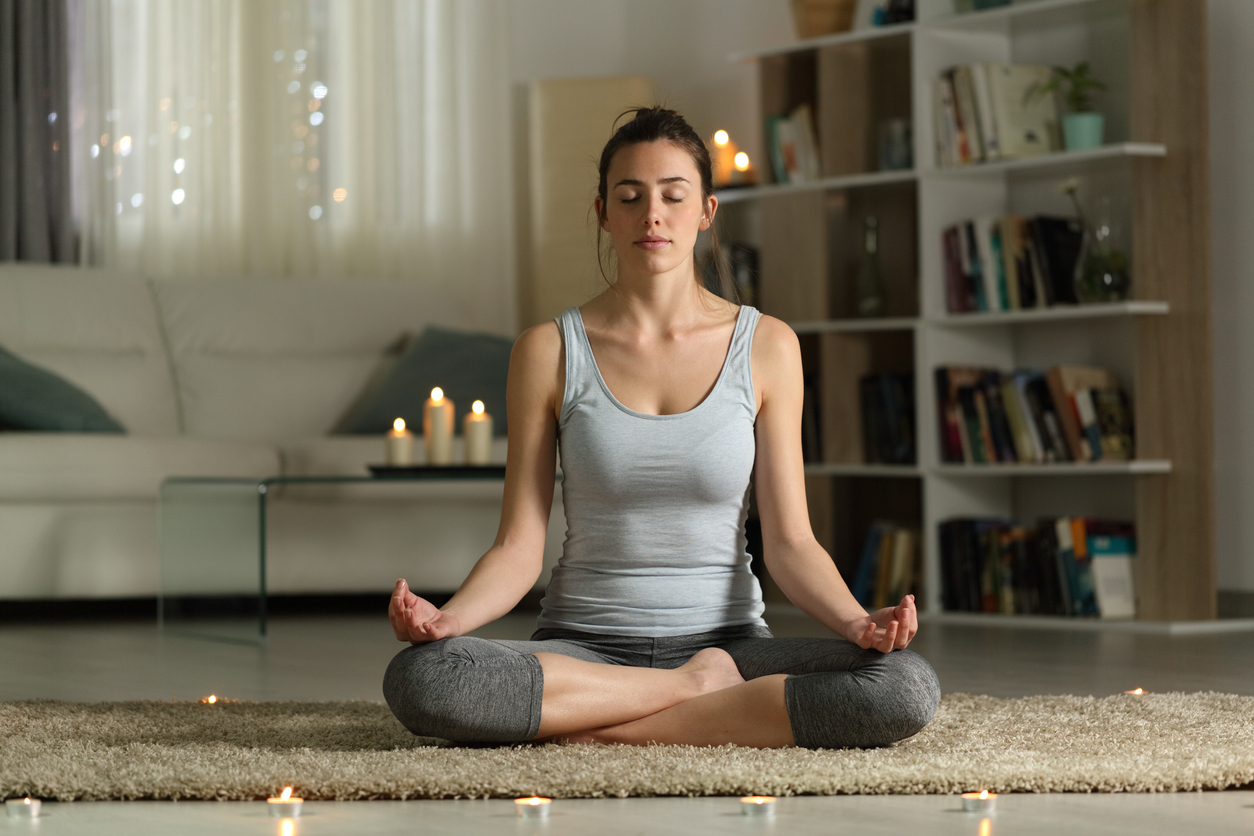
Yoga, meditation, and mindfulness are tools to calm the mind and relax the body. Moreover, they’ve all been shown to improve sleep.
Yoga encourages the practice of breathing patterns and body movements that release stress and tension accumulated in your body. Research shows that yoga can have a positive effect on sleep parameters such as sleep quality, sleep efficiency, and sleep duration.
Meditation can enhance melatonin levels and assist the brain in achieving a specific state where sleep is easily achieved.
Lastly, mindfulness may help you maintain focus on the present, worry less while falling asleep, and even function better during the day.
Practicing one or all of these techniques can help you get a good night’s rest and wake up reenergized.
It’s normal to wake up in the middle of the night. However, the inability to fall back asleep can ruin a good night’s rest.
People who wake up in the middle of the night often tend to watch the clock and obsess about the fact that they can’t fall back asleep.
Clock-watching is common among people with insomnia. This behaviour may cause anxiety about sleeplessness.
To make matters worse, waking on a regular basis without falling back asleep may cause your body to develop a routine. As a result, you might find yourself waking up in the middle of the night every night.
If possible, it’s best to remove the clock from your room. If you need an alarm in the room, you can turn your clock and avoid watching it when you wake up in the middle of the night.
Due to poor sleep at night, people with insomnia tend to be sleepy during the day, which often leads to daytime napping.
While naps of short duration have been linked to improvements in alertness and well-being, there are mixed opinions about the effects of napping on night-time sleep.
Some studies have shown that regular naps that are long (at least 2 hours), and late may lead to poor night-time sleep quality and even sleep deprivation.
In a study of 440 college students, the poorest night-time sleep quality was observed in those who reported taking three or more naps per week, those who napped for more than 2 hours, and those who napped late (between 6 p.m. and 9 p.m).
A 1996 study found that older adults who napped frequently had lower quality night-time sleep, more depressive symptoms, and more limited physical activity. They were also more likely to be overweight than those who rarely took a nap.
A recent study of high-schoolers concluded that daytime napping led to shorter sleep duration and lower sleep efficiency.
Other studies have revealed that naps don’t affect night-time sleep. To find out if naps are affecting your sleep, try either eliminating naps altogether or limiting yourself to a short nap (30 minutes or less) early in the day.
It seems that the food you eat before bed may affect your sleep. For example, research has shown that high-carb meals may be detrimental to a good night’s rest.
A review of studies concluded that even though a high-carb diet can get you to fall asleep faster, it won’t be restful sleep. Instead, high-fat meals could promote a deeper and more restful sleep.
In fact, several older and newer studies agree that a high-carb/low-fat diet significantly decreased the quality of sleep compared to a low-carb/high-fat diet.
This held true in situations where the high-carb/low-fat diets and the low-carb/high-fat diets contained the same amount of calories.
If you still want to eat a high-carb meal for dinner, you should eat it at least 4 hours before bed so you have enough time to digest it.
Music can significantly improve quality of sleep. It can even be used to improve chronic sleep disorders, such as insomnia.
A study of 24 young adults demonstrated that sedative music promoted deeper sleep.
Listening to Buddhist music may be another great tool for better sleep, as it can reduce the amount of time it takes you to fall asleep. This parameter is known as sleep onset.
Buddhist music is created from different Buddhist chants and is used for meditation.
Another 50-person study revealed that those who were exposed to soothing music for 45 minutes at bedtime had a more restful and deeper sleep compared to those who didn’t listen to music.
Lastly, if relaxing music isn’t available, blocking all noise could also help you fall asleep faster and promote uninterrupted sleep.
Physical activity is often considered beneficial to healthy sleep.
Exercise can increase the duration and quality of sleep by boosting the production of serotonin in the brain and decreasing levels of cortisol, the stress hormone.
However, it’s important to maintain a moderate-intensity exercise routine and not overdo it. Excessive training has been linked to poor sleep.
The time of the day when you exercise is also critical. To promote better quality sleep, working out early in the morning appears to be better than working out later in the day.
Therefore, moderate to vigorous exercise in the morning could significantly improve the quality of your sleep and how much sleep you get.
Get moving with activities like:
- running
- hiking
- cycling
- tennis
A comfortable mattress and bedding can have a remarkable effect on the depth and quality of sleep.
A medium-firm mattress has been shown to positively affect sleep quality and prevent sleep disturbances and muscular discomfort.
The quality of your pillow is also crucial.
It can affect your:
- neck curve
- temperature
- comfort
One small study determined that orthopaedic pillows may be better for sleep quality than feather or memory foam pillows.
Additionally, the use of a weighted blanket could reduce body stress and help improve your sleep.
Lastly, the fabric of the clothes you wear to bed can affect how well you sleep. It’s crucial that you choose comfortable clothing made of fabric that helps you keep a pleasant temperature throughout the night.
PRODUCTS TO TRYHaving more comfortable bedding may make it easier for you to fall — or stay — asleep. Shop for bedding online:
Using electronic devices late at night is terrible for sleep.
Watching TV, playing video games, using a cell phone, and social networking can make it significantly harder for you to fall — and stay — asleep.
This is partly because electronic devices emit blue light, which has been found to suppress melatonin.
Using these devices also keeps your mind in an active and engaged state.
It’s recommended that you disconnect all electronics and put away computers and cell phones so you can ensure a quiet place, free of distractions.
You’ll be able to fall asleep much faster if you practise good sleep hygiene.
If you need to use your devices late in the evening, at least consider blocking the blue light with eyeglasses or a screen filter.
Shop for blue light blocking glasses or a blue light screen filter online.
Aromatherapy involves the use of essential oils. It’s commonly practiced by those who have trouble falling asleep, as it may help with relaxation.
A systematic review of 12 studies revealed that the use of aromatherapy was effective in improving sleep quality.
Popular scents with positive effects on sleep include:
- lavender
- damask rose
- peppermint
Oil blends made with ingredients like lemon and orange were also effective at improving sleep quality.
Although there are a variety of ways to use essential oils, many sleep studies are centred on inhalation aromatherapy.
An essential oil diffuser could be helpful in infusing your room with relaxing scents that encourage sleep.
Some people have difficulty falling asleep because their thoughts keep running in circles. Research has shown that this can produce e anxiety and stress, which can generate negative emotions and disturb sleep.
Journaling and focusing on positive thoughts can calm the mind and help you sleep better.
Writing down the positive events that happened during the day — or may happen in the future — can create a state of gratitude and happiness, downgrade stressful events, and promote more relaxation at bedtime.
In fact, a study of 41 college students found that journaling resulted in reduced bedtime worry and stress, increased sleep time, and improved sleep quality.
Practise this technique by setting aside 15 minutes every night to write about your day. It’s important to focus not only on the positive events of the day but also on how you feel at the time.
A different study found that writing a to-do list, if only for 5 minutes, was even more effective than journaling at helping young adults fall asleep faster.
Caffeine is widely used among people to fight fatigue and stimulate alertness. It can be found in foods and beverages like:
- chocolate
- coffee
- sodas
- energy drinks
This stimulant can have disastrous effects on your sleep quality and sleep duration.
Although the effects of caffeine vary from person to person, it’s recommended that you refrain from consuming it at least 6 hours before bedtime.
Instead, you could drink a soothing tea like chamomile tea. It’s been shown to promote sleep and relaxation. Other bedtime teas that help sleep include passionflower and magnolia.
Good quality sleep may depend on your body position during the night.
There are three main sleeping positions:
Traditionally, it was believed that back sleepers had a better quality of sleep.
However, research has shown that this might not be the best position to sleep in, as it could lead to blocked airways, sleep apnoea, and snoring.
Although individual preferences play an important role in choosing sleep position, the side position seems to be linked to high-quality sleep.
Reading could be a good activity to help you wind down before bed. At least for kids, it seems that bedtime reading may promote longer sleep.
However, it’s important to understand the differences between reading from an e-book and a traditional paper book.
Electronic books emit blue light, which reduces melatonin secretion. Lowered melatonin levels make it harder for you to fall asleep and cause you to feel tired the next day.
Therefore, it’s recommended that you read from a physical book in order to relax and improve your sleep.
It’s believed that if you go to bed and try to force yourself to fall asleep, your chances of succeeding drop dramatically.
Instead, you can try paradoxical intention. This technique involves trying to stay awake instead of forcing yourself to sleep.
It’s based on the idea that the stress and anxiety produced by forcing yourself to fall asleep can prevent you from relaxing and snoozing.
Research is ultimately mixed, but some studies have showed that people who adopt this technique tend to fall asleep faster.
Instead of lying in bed worrying and thinking about stressful things, visualise a place that makes you feel happy and calm.
In one insomnia study, participants were able to fall asleep faster after they were instructed to use an imagery distraction.
This technique helped them occupy their mind with good thoughts instead of engaging with worries and concerns during the pre-sleep time.
Picturing and concentrating on an environment that makes you feel peaceful and relaxed can take your mind away from the thoughts that keep you up at night,
Certain supplements can help you fall asleep faster.
They’ve been shown to encourage sleep either by boosting the production of sleep-promoting hormones or by calming brain activity.
Supplements that can help you fall asleep include:
- Magnesium. Magnesium helps activate the neurotransmitters responsible for sleep. Doses of up to 500 milligrams (mg) per day have been shown to improve sleep. It should be taken with food.
- 5-HTP (5-hydroxytryptophan). The amino acid 5-HTP boosts the production of serotonin, which has been linked to the regulation of sleep. Doses up to 600 mg per day, taken either once daily or in divided doses, seem to be effective in treating insomnia.
- Melatonin. The body naturally produces the hormone melatonin, but it can also be taken as a supplement to help regulate your sleep. Doses of 0.5–5 mg taken 2 hours before your desired bedtime, which is usually around 8 to 9 p.m. for most individuals, might improve sleep quality.
- L–theanine. L-theanine is an amino acid with sedative properties. Although it hasn’t been shown to induce sleep, it could help with relaxation. Doses of 400 mg per day seem to be useful.
- GABA (gamma-aminobutyric acid). GABA is a compound produced in the brain. It inhibits certain transmitters and may help the central nervous system relax. Doses of 250–500 mg and no more than 1,000 mg are recommended.
PRODUCTS TO TRYThe supplements above can help you sleep better and feel calmer. Shop for them online:
Having trouble falling and staying asleep is not only frustrating, but it can also affect your mental and physical health.
Using the techniques above can help you fall asleep quickly, while sleeping much better and having more energy the next day.
https://www.healthline.com/nutrition/ways-to-fall-asleep
Trusted Source