Tuesday, 11 October 2022

6 Eating Habits That Can Trigger Insomnia

From eatthis.com

Find out if any of part of your diet is causing you to toss and turn when it's time to sleep 

You're lying there, staring at the clock, waiting for sleep to set in, but for some reason, you just can't seem to wind down. Was it something you ate? Possibly. There's definitely a connection between your diet and your night-time rest. A variety of eating habits can trigger an episode of insomnia—or even create chronic sleep problems.

If you're wondering whether the contents of your dinner are causing you to toss and turn at bedtime, read on to learn more about six common eating and drinking habits that can affect sleep. And for more, don't miss the 40 Best & Worst Foods to Eat Before Sleep. (After all, you're awake anyway!)

1

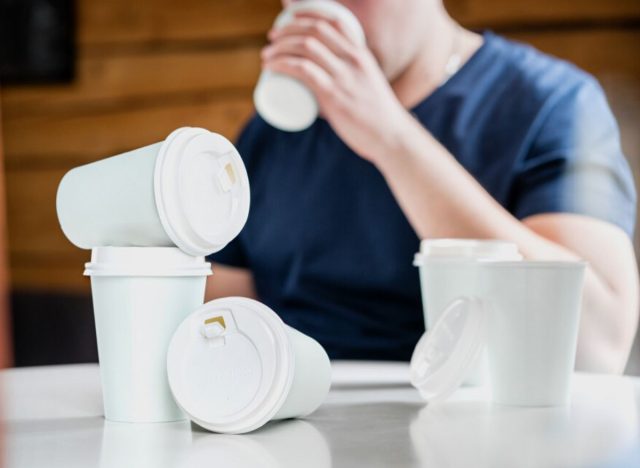
Overdoing it on caffeine

too much caffeine
Shutterstock

No surprise here! Caffeine is notorious for its stimulant effects. This natural substance—found in coffee, tea, soda, chocolate, certain supplements, and various other products—blocks the brain's receptors for adenosine, a chemical that promotes sleep. Overconsuming caffeine throughout the day (or eating and drinking caffeine-containing foods and drinks too close to bedtime) is a recipe for night-time wakefulness.

Caffeine's effects tend to peak about 30-60 minutes after consumption, but it may take some mindful attention to determine your own tolerance. Some people are so caffeine-sensitive that even their morning cup could disrupt their sleep. With trial and error, you should be able to identify your personal coffee cut-off hour.

2

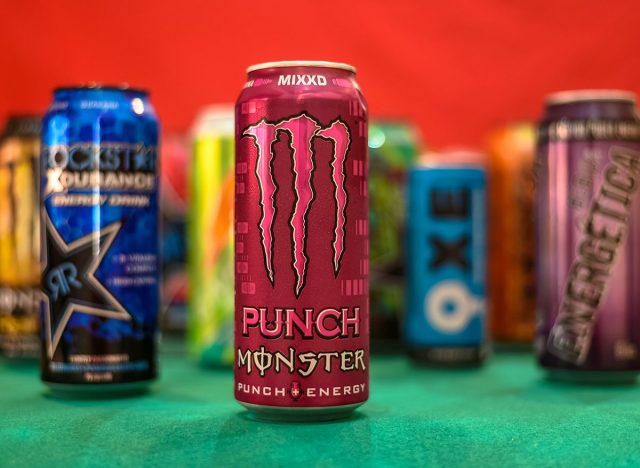
Indulging in energy drinks

energy drinks
Jorge Franganillo/ Unsplash

Not all pick-me-up drinks are caffeinated. Some, like certain herbal energy drinks, contain other substances designed to perk you up. While this can be a boon during the afternoon slump, it's not such a great idea as bedtime nears, as (like caffeine) they can keep you bright-eyed and bushy-tailed when you'd really rather sleep.

If you favour drinks with stimulant ingredients like ginseng, Rhodiola rosea, and maca root, be sure to imbibe early in the day to avoid disrupted sleep. (And find out the surprising effects of giving up energy drinks.)

3

Eating spicy foods before bed

eating spicy foods
Shutterstock

There's nothing wrong with the occasional midnight snack. But, for better rest, just don't make it a taco or a curry. Eating spicy foods can cause heartburn at any time, but especially when you lie down. Without gravity to keep stomach acid in place, it travels more easily up the oesophagus, leading to pain, sour belches, and indigestion of GERD (gastroesophageal reflux disease). Research shows that people with GERD are more likely to report sleep problems than the general population.

Of course, that doesn't mean foods with a kick are off the menu entirely! Try opting for spicy items at lunchtime and stick to milder foods for your evening meal.

4

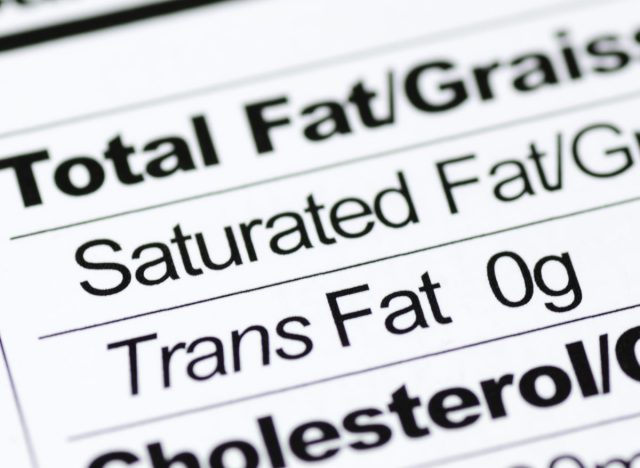
Eating too much saturated fat

Shutterstock

Some studies have raised the question of how saturated fat impacts sleep—and the results aren't good. According to 2020 research that reviewed multiple such studies, high saturated fat consumption during the day caused sleep quality to deteriorate at night. One study in the review found that people with a higher saturated fat diet were more likely to have frequent night-time wakings and less restorative sleep overall.

Fortunately, not all fat will mess with your rest. Omega-3 fatty acids have a track record of actually promoting sleep! DHA and EPA-rich oils have been shown to increase sleep efficiency and reduce the time it takes to fall asleep. To get more of these beneficial oils, reach for flax seeds, walnuts, and fatty fish like tuna and salmon.

Need a sleep-inducing bedtime snack to choose from instead? Check out the #1 best food to eat for better sleep.

5

Eating too many refined carbs

pasta with lentils
Shutterstock

A diet high in refined carbs can increase the risk of weight gain, heart disease, and diabetes. You can add one more downside to the list: insomnia.

According to a large 2019 study, older women who consumed the highest amounts of refined carbohydrates (think: white bread, pastries, and pasta) were more likely to have difficulty getting a good night's rest. They were also more likely to develop new insomnia at a three-year follow-up.

The likely explanation for the connection between refined carbs and poor sleep: these types of carbohydrates rapidly spike blood sugar. High blood sugar has consistently been linked with sleep disruptions like sleep apnoea and general insomnia. 

6

Not getting enough of certain nutrients
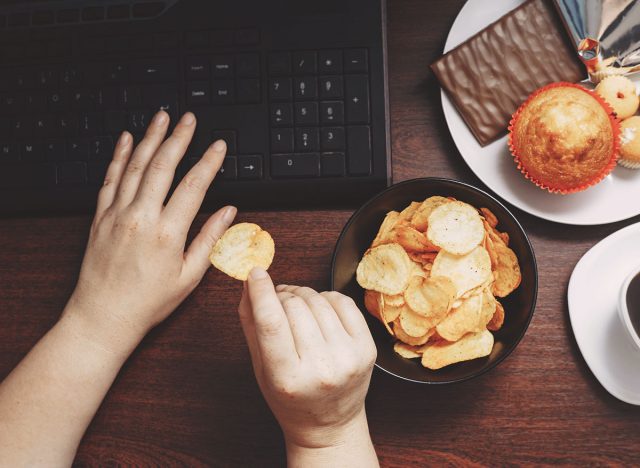
snacking
Shutterstock

The best sleeping pill just might be a multivitamin. There's a fascinating interplay between healthy sleep and the micronutrients in food. You may have heard magnesium recommended for shut-eye, but it's not the only option in your micronutrient arsenal. Research from 2019 found that people with short sleep duration had a lower-than-usual intake of various vitamins and minerals, including calcium, vitamin D, vitamin K, and (yes) magnesium. Similarly, a 2016 study associated sleep deprivation with low levels of iron, zinc, and magnesium.

The best way to ensure you're meeting your daily target of vitamins and minerals is to eat a healthy, varied diet—but talk to your doctor if you feel you could use some extra nutritional oomph from a supplement.

https://www.eatthis.com/eating-habits-insomnia/

Sunday, 9 October 2022

Quality of your relationship and sleep closely linked, studies find

From globalnews.ca

In case you didn’t get the memo: Sleep is a pretty big deal that can affect essentially every aspect of your life, including your relationship.

We spend up to a third of our life asleep. And how well you sleep is linked to how well you think your partner understands you and cares for you, suggests a new study published this week in Social Personality and Psychological Science.

It examined close to 700 married or cohabiting adults aged 35 to 86.

“Our findings show that individuals with responsive partners experience lower anxiety… which in turn improves their sleep quality,” lead author Dr. Emre Selçuk, a developmental and social psychologist at Middle East Technical University in Turkey, explained in a statement. 

Your partner’s attentiveness — a core aspect of romantic relationships — can not only lead to better sleep, but other research has shown better sleep can also make you see your partner in a more positive light.

A study in the Journal of Family Psychology last month found when 68 newlywed couples (who were heterosexual, predominately white, with an average age of 24) got above-average sleep, they were more likely to feel satisfied about their marriage the next day.

The satisfaction levels were based on factors like conflict resolution, affection, dependability, sex, and chores, as well as satisfaction in their marriage and partner overall.

While the sample may have been small, anyone who’s gotten into a fight while exhausted knows the toll tiredness can take.

We’re not as rational when we don’t sleep, sex and relationship expert Jessica O’Reilly said in 2015.

“When we’re not well-rested, we overreact to the smallest things…we don’t make good decisions.”

She added that when faced with the choice between sex and sleep, you should choose the latter — unless your partner is wide awake and prepared to do all the work, she joked.

O’Reilly believes getting more sleep is the number one thing you can do to improve your relationship.

The state of our sleep

The majority of Canadians are sleep-deprived, a state that can have major effects on both your mind and body.

Sleep expert Rachel Morehouse, a psychiatry professor at Dalhousie University, told Global News in May sleep-deprivation can make people more impatient, anxious, sad, and difficult to get along with. It can also hinder their productivity at school or in the workplace, as tiredness makes memory retention a challenge.

All those factors can contribute to you being overall less happy, which will undoubtedly trickle down to your love life.

In the long-term, fatigue can take a toll on your physical health, too. It can contribute to problems like high blood pressure, Type 2 Diabetes, heart disease, and wreak havoc on your waistline.

Those who sleep fewer than six hours a night are 30 per cent more likely to become obese than someone who sleeps seven to nine hours, research shows.

It’s been found people make bad food choices when they don’t get enough sleep.  But just like with sleep and relationships, it can go both ways. People can also improve their sleep through proper diet.

Doctors at Columbia University Medical Centre discovered when people ate more fiber, they fell into a deeper sleep. Saturated fat interrupted a person’s slumber, and a higher sugar intake was tied to a more restless night.

So aside from curbing those cravings, the next time you feel cranky with your partner, the best thing you might be able to do for your relationship is to get a good night’s sleep.

Or at least take a nap.

https://globalnews.ca/news/2890816/quality-of-your-relationship-and-sleep-closely-linked-studies-find/CLICK TO SHARE QUOTE ON TWITTER: "WHEN WE'RE NOT WELL-RESTED, WE OVERREACT TO THE SMALLEST THINGS…WE DON'T MAKE GOOD DECISIONS."


Wednesday, 5 October 2022

5 Common Causes of Insomnia & How to Help Avoid It (No. 3 Is Surprising!)

From 30seconds.com

Did you know that you could be getting the full eight hours of “sleep” a night as recommended by doctors and still have insomnia? When thinking of insomnia, most people think of the tossing and turning, and the staring at the ceiling in bed for hours that is commonly depicted in movies. However, the definition of insomnia is much broader.

Insomnia is the inability to fall asleep, stay asleep or feel rested upon awakening. Even if someone “feels” as if they slept, if they are in a very light sleep or have a lot of interruptions in their sleep, it is still considered insomnia. The effects of Insomnia can be reduced and, in most cases, stopped completely. Here are the top five common causes of insomnia and what to look out for:


  1. Food Allergies or Sensitivities: Your immune system works at night when you are deeply asleep. It requires a stable blood sugar level to perform its activities. If you are eating foods you are allergic to or sensitive to your blood sugar will tend to be more erratic resulting in food cravings and needing to eat more often. The unstable blood sugar will, during the night, result in a decreased melatonin level and a loss of deep sleep.
  2. Hormone Imbalance: Melatonin is your sleep hormone and you need it to be produced at normal levels to enjoy good sleep. A variety of lifestyle factors can interrupt melatonin production including engaging in stressful activities at the end of the day, bright light before bedtime, the lack of a darkened and cool room in which to sleep, a heavy meal before bed and more. The male and female sex hormones similarly need to be balanced to enjoy a deep and restorative sleep. Diminished hormonal levels around the menstrual cycle, during menopause along with deficient testosterone in men (for a variety of causes) all tend to cause insomnia.
  3. Hidden Infections: It is during sleep that your immune system releases cells (NK or natural killer cells) that compose your immune defence army. It is the design of your body to “clean house” and rid you of any inhospitable bacteria, viruses, toxins and cancer cells during rest. This is why if you have a bad flu or cold, all you want to do is sleep. Your immune system’s cells require a steady fuel source to accomplish their nocturnal activities. If an infection or toxicity is chronic, meaning your body has been trying to deal with it for a while, there has been a long-term drain on your immune system and its cells. The added burden to “clean house” activities from these chronic issues can create a steep drop in blood sugar during the night, forcing your body to come out of sleep. These hidden infections or toxins must be identified and treated (naturally, if possible) to unburden your overtaxed immune system and facilitate sleep.
  4. Low Blood Sugar: Your metabolic rate is designed to slow down during sleeping hours so that you do not need to eat at that time. However, factors that cause your blood sugar to dip too low during sleep (infections, poor food choices, food sensitivities, etc.) will result in your body coming out of sleep to prevent a low blood sugar “coma.” It is a protective response of your body to awaken you.
  5. Excessive Caffeine: It is estimated that about 12 percent of the caffeine contained in your morning’s cup of coffee is still present at bedtime. For many this isn’t enough to disrupt sleep, but it can be a component for some. If you have trouble sleeping, consider holding off on the caffeine for a week and notice if your sleep improves.

The content on 30Seconds.com is for informational and entertainment purposes only and should not be considered medical advice. The information on this site should not be used to diagnose or treat a health problem or disease, and is not a substitute for professional care. Always consult your personal healthcare provider. The opinions or views expressed on 30Seconds.com do not necessarily represent those of 30Seconds or any of its employees, corporate partners or affiliates.

https://30seconds.com/health/tip/28639/5-Common-Causes-of-Insomnia-How-to-Help-Avoid-It-No-3-Is-Surprising 

Monday, 3 October 2022

Can’t sleep? This surprising tip may help

From telegraph.co.uk

Here’s how to manage your anxiety and finally get a decent night’s kip, with help from a seasoned insomniac

For those of us who have trouble sleeping, the past month has brought two new scientific studies to keep us awake at night. First, there was a paper presented at the European Society of Cardiology sharing the news that seven in 10 heart attacks or strokes experienced by those over 50 could be prevented if everyone got “a decent night’s sleep”. The best scores in cardiac health were achieved by those who slept seven or eight hours a night.  

This only twisted a knife that had been plunged in three days earlier by a study from the University of California, Berkeley. Its research showed that losing just one hour’s sleep a night could dampen down the part of the brain that encourages social behaviour, making us more selfish and irritable.

“We discovered that sleep loss acts as a trigger for asocial behaviour, reducing innate desire of humans to help one another,” says Professor Matthew Walker, co-author of the study, and largely seen as the world’s leading sleep guru. 

It’s not surprising that we’re feeling grumpy and distracted. Now we can’t even look at the news without yet another expert telling us how we are racing to an early grave – as well as compounding what failures we are – because we can’t even perform this basic, primeval function.

We are, it seems, suffering from “sleep guilt”.

     Miranda Levy is the author of The Insomnia Diaries: How I Learned To Sleep Again CREDIT: Felicity McCabe

Study after study claims that, unless we reach the “magic number” of eight hours (or, in the more generous academic papers, seven) we’re in for heart problems, weight gain, type 2 diabetes and dementia. One particularly terrifying 2018 paper claimed that just one night’s missed sleep raised the risk of Alzheimer’s by increasing the level of a certain protein in the brain. 

According to research published last month by Nuffield Health, 74 per cent of British adults have reported a decline in quality sleep over the past 12 months. Of those, one in 10 poor souls are only getting two to four hours of sleep per night. 

The number of people experiencing insomnia has risen to one in four since the pandemic: Google searches for “insomnia” have soared, the majority around 3am. There’s an important difference between the involuntary sleeplessness of insomnia and the “self-neglectors” who eat into their sleep hours by surfing eBay or watching box sets. It’s the former that’s the most distressing, and self-perpetuating. But are we really sleeping less? And, crucially, is worrying about making it even worse?

As a hardcore insomniac for almost a decade in the 2010s, I can certainly testify to the hell of those “white nights”, watching the clock inexorably march from midnight to 2am to 3.45 to 6am, until the first peeping of grey light under the curtains signified ultimate defeat. Adding to my exhaustion, anxiety and mounting depression, those repeated reminders of the prospect of an early death did not do wonders for my mood. 

“There’s a risk that these studies can be interpreted in a negative way, and that they can be counter-productive,” says behavioural psychologist, Dr Sophie Bostock. “Bear in mind that the study might not be representative of the wider population. People who answer these questionnaires often have higher rates of insomnia to begin with.”

The problem is that people already suffering with insomnia can get worse if they read anything to do with sleep deprivation, says Bostock. “Their brain selectively pays more attention to information they regard as ‘dangerous’,” she says.

And what do we do when we feel bad? We try to solve the problem, as rapidly as possible. “If we’re desperate to relieve our suffering, we convince ourselves that there might be one missing ingredient,” says Bostock. “We’re seeking a quick fix.”

In what feels like the blink of a tired eye, sleep has become an industry. According to market researchers BCC Research, the global market for sleep aids is forecast to grow from £74 billion in 2020 to £104 billion in 2025.

During my eight years of sleeplessness, I tried sleeping pills, expensive lavender candles, gloopy magnesium sprays, hypnotherapy and weird electromagnetic pulses attached to my scalp. None of these worked, and my wallet became lighter. “Such products are well intentioned, but of questionable benefit,” says Bostock. “There are few clinical trials to back them up.”

            Weighted blankets have been shown to be effective sleep aids for some CREDIT: Alamy

At some point in the late 2010s someone bought me a sleep tracker. (The market for sleep trackers was worth £14 billion last year; Amazon even launched a high-tech 'sensor only' product last week.) After one night, I found this device uncomfortable, and ended up throwing it at the wall. Others, like my friend David, 60, have persevered with their sleep trackers, but find they unleash a new set of problems. “I used to sleep pretty well,” he says. “But ever since I discovered I could analyse my heart-rate, body temperature and night-time movements, I find myself anxiously peering at my smartwatch every morning. It’s almost as if these numbers are telling me how rested (or not) I should feel that day.”

There’s a scientific-sounding name for this pursuit of the perfect night’s sleep: “orthosomnia”. Guy Leschziner is a consultant neurologist who runs the Sleep Disorders Centre at Guy’s Hospital in London. He is also the author of The Nocturnal Brain: Nightmares, Neuroscience and the Secret World of Sleep.

“For starters, sleep trackers are not accurate,” he says. “They can monitor the time you have spent in bed, based on your movement. Some of the more sophisticated can tell you how long you have been asleep. But what they cannot do is tell the quality of sleep; what stage of sleep you are at, or how many times you have woken up.”

Leschziner believes these devices are unhelpful because: “anything that draws attention to sleep can make it worse. This is why people fall asleep while watching TV or reading a book. They are distracted. But if you feel you have poor quality sleep, and the tracker confirms this, it will only increase your anxiety. Sleep trackers do not contribute to the treatment of insomnia. In fact, they may do significant harm.” 

Most sleep scientists now agree that it’s the very opposite of tracking and trying that will lead to an elusive night’s sleep, as is the adoption of an approach called Cognitive Behavioural Therapy for Insomnia. The primary focus is based around changing your actions or “behaviours”, and thoughts (the “cognitive” bits) that perpetuate insomnia, with the end result that your natural “sleep pressure” takes over, and the cycle of wakefulness is broken.

Sophie Bostock is an evangelical proponent of CBTi. The most important thing, she believes, “is to just go about our daily lives, getting ‘normally’ tired, so that sleep becomes intuitive”. 

This “laissez-faire” approach has certainly transformed my sleep over the past few years, and hence, my life. Just earlier this week, I went to bed around 11. A minor family worry – amplified by the late-night stillness and dark – was stopping me from dropping off. The hours started to creep by. So, I turned my clock around to face the wall, and convinced myself I’d be fine with just five hours’ sleep – or fewer, if it came to that. My brain accepted this compromise, and shut off. 

The next morning I walked the 15 minutes to the tube, instead of taking the bus. I got through the day at work. My brain was busy. And, that night: boom – out for eight hours. Nine, actually. And all because I have taught myself not to “try”. By nixing my sleep guilt, I had found my own “magic number”.


The Insomnia Diaries: How I Learned to Sleep Again by Miranda Levy, is published by Octopus Books. 

https://www.telegraph.co.uk/health-fitness/mind/cant-sleep-insomnia-surprising-tip-may-help/

Saturday, 1 October 2022

"I’ve tried everything and finally found the perfect cure for insomnia"

From theguardian.com

By Adrian Chiles

I was wide awake again at 4am unsure what to do – then I had a brainwave

People talking in a pub.Pub chatter – the only thing that will get my friend’s baby to sleep. Photograph: SolStock/Getty Images

Also on the same EP – yes really, an EP – is a track called “Inside a British pub”. I’m not sure why this would differ greatly from “British pub chatter”, but it was a little louder, with conversation more of a group activity featuring more multiple voices in competition. “Babbling tavern chatter” wasn’t much different, although it did feature a wheezy laugh that may have been a cough. Finally, there was “Relaxing inn”, which had nothing to distinguish it from the other three. It was a bit like listening to an album by a band whose music you’re not into and therefore each track sounds the same.

These sounds were familiar and comforting, but far too interesting to get me off to sleep. I tried them for my next nightly 4am wide-awake-for-no-reason episode. I couldn’t help eavesdropping, trying to work out what was going on. So I reverted to my go-to-sleep inducer: From Sleep by Max Richter. There are seven pieces in one hour; I’ve never got beyond track two, Path 5 (delta), whatever that might mean.

It turned out that the title From Sleep is a reference to another longer work called merely Sleep. Being a devotee of Mr Richter, I downloaded the real thing. It is an astonishing eight hours and 24 minutes long. If you’re not asleep after that lot, either your insomnia is beyond control or Sleep isn’t doing what it says on the tin. Great work, Mr Richter, but the abridged version does me just fine.

For many people, audiobooks can have the desired soporific effect and strike you out cold in less than a couple of minutes. I suspect this happens to those who were read to sleep as kids, and the feeling is too hard-wired to shift. For some reason, audiobooks have the opposite effect on me; I tend to be so absorbed that sleep will never come. Until now.

For years I kept a copy of the most boring novel ever written next to my bed, to switch the light on and read if things got really desperate. In the early hours of this morning, away from home without my trusty Penguin Classic paperback, I had a brainwave. Could anyone, possibly, have attempted to record an audiobook of The Golden Bowl by Henry James? Surely not. But they have! Juliet Stevenson, no less. I was concerned that the brilliance of her delivery would render it less soporific. I needn’t have worried. Not what she intended, I’m sure, but it is the solution to all my nocturnal issues. I doubt, frankly, that I’ll ever make it beyond the first chapter, but it’s still probably the wisest purchase I’ve ever made.

https://www.theguardian.com/commentisfree/2022/sep/28/ive-tried-everything-and-finally-found-the-perfect-cure-for-insomnia 

Wednesday, 28 September 2022

5 Fool-Proof Tips to Get Your Anxiety in Check Before Bed

From cnet.com

Laying awake at night from anxiety? These five tips may be able to help

Sleep disturbances are relatively common among those who have anxiety disorders. When feeling anxious, our autonomic nervous system releases the primary stress hormone cortisol to mediate things. It's a great plan, but cortisol actually keeps us awake. 

Anxiety and insomnia can form a vicious cycle of sleepless nights. Anxiety can keep you up, and insufficient sleep can amplify anxiety symptoms. Some days it's a catch-22 that you can't seem to shake. Try using these five tips to manage your anxiety at night, so it doesn't keep you up at night. 

1. Ritualize your nighttime routine

CNET Sleep Tips logo

Not only does a routine help you relax enough to fall asleep, but it also helps combat stress and reduces symptoms of anxiety. Your night-time routine will help keep you focused on relaxation and sleep. Everyone's routine is going to look different. Maybe yours includes light yoga or an hour of journaling to reflect on your day. Whatever it is, it's important to stick to your nightly routine when you find it -- do it at the same time and in the same order each night. Completing tasks in your nightly routine will signal to your brain that it's time to start winding down for sleep.

Another mini tip within this tip: Don't lay in bed awake. If you climb into bed and find that you're not falling asleep, don't stay in bed. Instead, get up and do something relaxing, like read a book or take a bubble bath. The last thing you want to do is associate your bed with scrolling through social media or watching TV.

2. Watch what you drink

I know this one can be a bit of a bummer, but what you eat and drink can affect your anxiety and how you sleep. Caffeine relates to anxiety and sleep in two ways. First, too much caffeine can exacerbate feelings of anxiety. The second is the obvious one; caffeine keeps you awake. As a rule, you should avoid drinking caffeine for six hours before you go to bed. 

Alcohol can also affect your anxiety symptoms and sleep by throwing off your circadian rhythm. Even if you find it easier to fall asleep after a few cocktails, many people wake up a few hours later when their body metabolizes the alcohol. Avoid drinking alcohol at least four hours before you go to sleep.

3. Try a meditation app

Meditation apps are a quick and easy way to help yourself relax and fall asleep. Research shows that meditation can reduce stress and anxiety levels. It also reduces your blood pressure and heart rate. With the best meditation apps, you choose from guided meditations, deep breathing exercises or calming stories. There are a ton of options out there. Top meditation apps even have guided segments from celebrities like Harry Styles or Idris Elba.

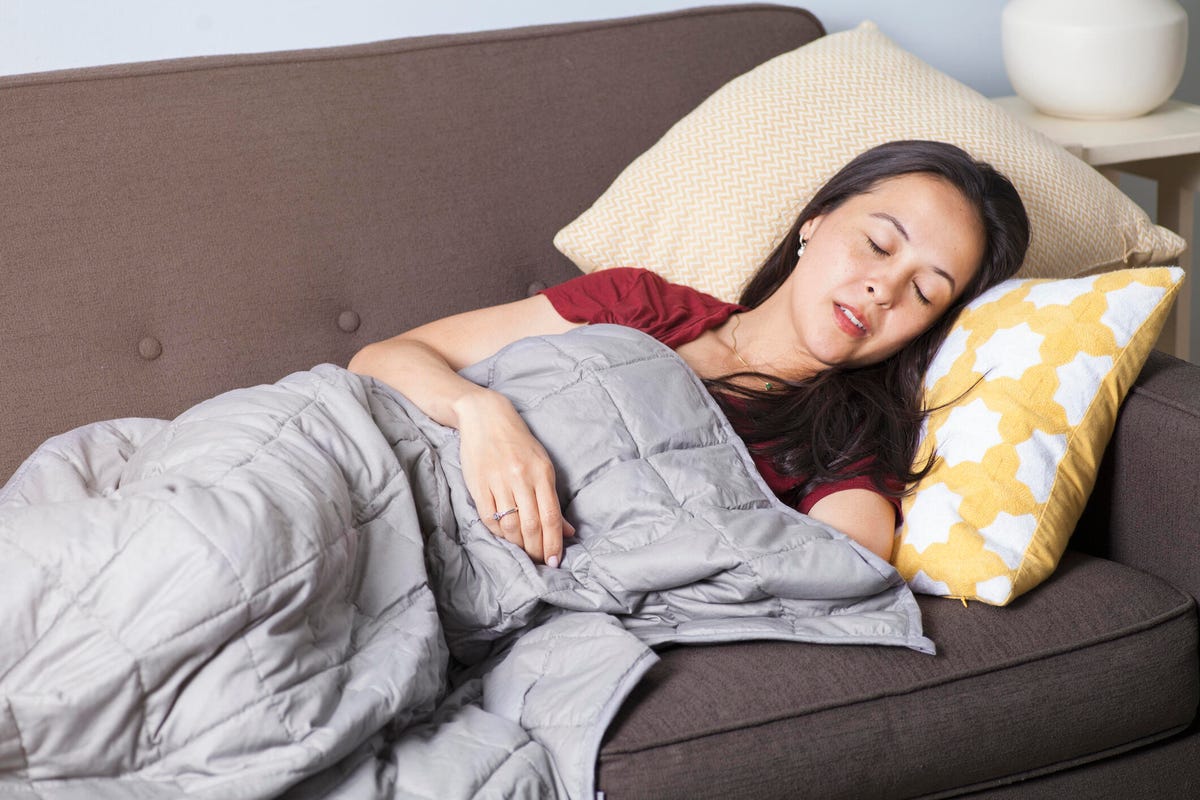
Woman sleeping on a couch with a weighted blanket
Katelin Kinney/Getty Images

4. Sleep with a weighted blanket

Weighted blankets have been found to be an effective way to help calm anxiety and help you fall asleep, thanks to what's called deep-pressure stimulation. A 2020 study found that people who use a weighted blanket have lower rates of insomnia and anxiety. Using a weighted blanket isn't the only thing you should do, but it is an easy way to integrate comfort into your nightly routine. You can choose from the hundreds of options on the market or even make your own weighted blanket. 

5. Don't ignore your anxiety

All the tips in the world won't help you sleep easier with anxiety if you don't acknowledge you're feeling anxious. Whatever you're feeling -- stressed, scared or worried -- accept it so you can address it. 

It's a good idea to try to incorporate stress-relieving activities into your daily routine to help keep things from building up at night. Try a daily walk or other exercises to reduce anxiety. There's no set time frame for when you'll start falling asleep faster -- it likely won't be instantaneous. However, if you find that your anxiety is continually getting the best of your sleep, it may be time to talk to someone.  

The sleep advice doesn't end here. Also see the 7 natural sleep aids for insomnia, which foods to eat to make you tired and why you should prioritize your sleep needs. 

The information contained in this article is for educational and informational purposes only and is not intended as health or medical advice. Always consult a physician or other qualified health provider regarding any questions you may have about a medical condition or health objectives.

https://www.cnet.com/health/sleep/is-anxiety-ruining-your-sleep-5-tips-to-relieve-anxiety-before-bed/

Sunday, 25 September 2022

Restless legs syndrome: home care tips

From silversurfers.com

Some people have the symptoms of restless legs syndrome occasionally, while others have them every day and the symptoms can vary from mild to severe

People of all ages can develop restless legs syndrome, although women are twice as likely to be affected as men, and the most severe symptoms are mainly found in older adults.

Symptoms, which tend to be worse when inactive, relaxing, or lying down, include tingling, itching, prickling or crawling sensations in the feet, calves and thighs and create an overwhelming urge to move the legs. These symptoms usually strike at night and so invariably disrupt sleep.

In the majority of cases, there’s no obvious cause of restless legs syndrome although some neurologists (specialists in treating conditions that affect the nervous system) believe the symptoms of restless legs syndrome may have something to do with how the body handles the chemical dopamine. Restless leg syndrome is also known to run in families.

Restless Legs Syndrome: tips that may help

Mild cases of restless leg syndrome may be helped by making a few lifestyle changes.

  • Stress and anxiety – stress reduction techniques like deep breathing or yoga may help.
  • Exercise – gentle regular exercise during the day can help ease restlessness at night but avoid any rigorous exercise in the hour before you go to bed as this could have opposite effect in some people.
  • Sleeping – following a regular bedtime ritual and sleeping regular hours can help.
  • Nicotine – if you smoke then quitting should help.
  • Alcohol and Caffeine – avoiding alcohol and caffeine late at night can also help with a good night’s sleep. Try cutting out coffee, tea, colas, sports drinks, and even chocolate to see if your symptoms improve or worsen.
  • Massage and hot baths: Using massage and hot baths to stimulate the legs may also help.
  • Medicines – certain medicines can make restless legs syndrome worse. In particular, antihistamines, anti-nausea drugs and certain antidepressants. Consult your doctor if you think your restless legs symptoms worsen after taking new medication.
  • Sleep diary – keeping a diary can be a useful tool to pinpoint your personal triggers and gauge the severity of your symptoms

Restless legs symptoms are also seen in some people with kidney failure and diabetes. Treating these conditions will often calm the restless legs.

Always tell your doctor if your symptoms get noticeably worse.

The charity Restless Legs Syndrome UK provides information and support for people affected by restless legs syndrome.

https://www.silversurfers.com/health/restless-legs-syndrome-home-care-tips/