Tuesday, 5 March 2024

Over-the-counter sleep aids: an overview

From parkview.com

By Jennifer McCarthy, PharmD, MS, Parkview Health

How did you sleep last night? Chances are that your answer falls somewhere in the realm of ‘not nearly enough.’ You are not alone. The Centres for Disease Control and Prevention suggests the average adult needs between 7-9 hours of sleep each night, however, when surveyed approximately 35% of adults in the U.S. reported a short sleep duration.  


Many adults find themselves caught in the commotion of daily life, often balancing work, family responsibilities and social commitments. Factors such as stress, anxiety and frequent stimulation from technology can disrupt the natural sleep pattern, making it even more difficult to relax and unwind.   

Insomnia, categorised as trouble sleeping or staying asleep, is often associated with daytime consequences such as drowsiness, as well as worsening the symptoms of other chronic illnesses. Occasional short-term insomnia, lasting fewer than three weeks, affects 30-50% of the U.S. population. This can be a tricky cycle to break. Below, we’ll review how utilizing over-the-counter sleep aids in addition to improving sleep hygiene can get you back on track for a good night’s rest.  
 

Sleep hygiene   

While over-the-counter sleep aids can be useful in the short term, the most effective method to improve your rest is establishing and maintaining your sleep hygiene. Steps for doing so include:  

  • Establishing a consistent schedule even on the weekends.  
  • Creating a sleep-conducive environment that is quiet, dark, and at a comfortable temperature.  
  • Engaging in relaxing activities before bedtime, avoiding electronic devices.
  • Exercising regularly but avoiding vigorous activity within 2-4 hours of bedtime. 
  • Refraining from consuming meals within 2 hours of bedtime, and caffeine, alcohol, or nicotine at least 4-6 hours before bedtime. 
  • Swapping out a daytime nap, for another relaxing activity such as gentle stretching or practising deep breathing exercises. 

Common over-the-counter sleep aids  

Melatonin is a natural hormone that is produced in the body at night and regulates your natural sleep pattern. Production of melatonin is reduced by light. It is commonly used for issues such as jetlag or shift work-related sleep disruptions.   

 
Dosage: 0.3 to 5 mg at bedtime 

Side effects:  
 

  • Nausea or vomiting
  • Headache 
  • Fast heart rate
  • Irritability
  • Mild depression
  • Worsening of depressive symptoms
  • Morning dizziness or confusion 


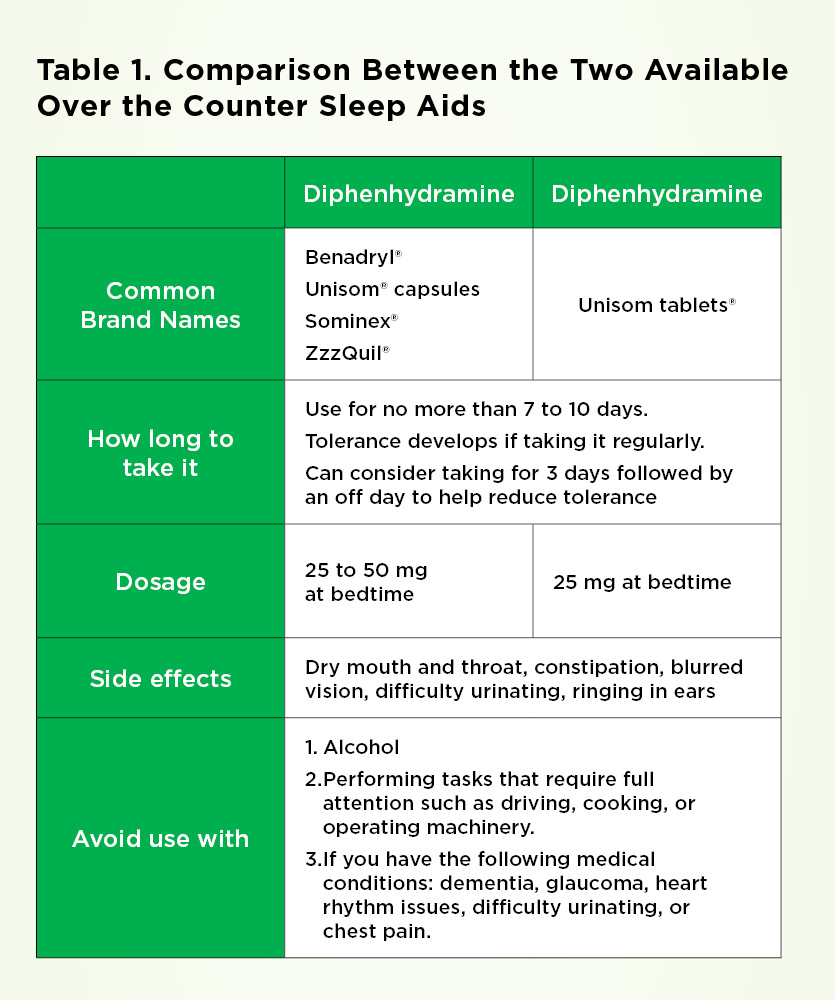
Antihistamines are medications used to treat allergy symptoms by blocking the effects of histamine, which is naturally produced in the body and plays an important role in feeling awake. When this production is reduced, this can make you feel drowsy or sleepy. If using antihistamines, it’s important to read the package label as some products contain different amounts of the drug.


When to see your provider
 

There are certain circumstances of insomnia where you should not use over-the-counter treatment, and you should contact your doctor first to ensure that the use of these medications is safe and rule out other potential conditions you may have. These include if you are: 

  • Younger than 12 years old
  • Over the age of 65 
  • Are pregnant or are trying to become pregnant  
  • Waking up a lot during the night 
  • Waking up early in the morning without being able to fall back asleep  
  • Experiencing insomnia that lasts greater than 3 weeks 
  • Sleep problems secondary to a medical condition 

Achieving restorative sleep is essential for overall health and wellbeing. By prioritizing effective sleep hygiene practices and when needed incorporating over-the-counter sleep aids, individuals can proactively improve their sleep quality. Investing in your sleep is investing in your health and vitality and seeking professional guidance ensures that your sleep regimen aligns with your individual needs and circumstances.  


https://www.parkview.com/blog/over-the-counter-sleep-aids-an-overview

Friday, 1 March 2024

Restless? One of these 7 common conditions could be affecting your sleep

From peacehealth.org

Maybe you’ve turned down the lights, tucked in for the night, but find your brain won’t quiet down. Or perhaps you’ve picked up your phone at bedtime and started scrolling through social media feeds, only to emerge hours later, bleary eyed but unable to sleep.

We know a good night's sleep matters to our overall health. Yet most of us have trouble sleeping at some point. In fact, about 1 in 3 U.S. adults say they aren’t getting enough rest or sleep every day, according to the U.S. Centers for Disease Control and Prevention.

Losing out on a restful night here or there can be remedied by brushing up on your sleep habits, says Donald Berry, MD, a pulmonologist and sleep-medicine expert at PeaceHealth in Bellingham, Washington. But some people have more persistent sleep deprivation.

If that’s the case for you, Berry says it’s important to have a conversation with your healthcare provider. Research shows that long-term lack of sleep raises the risk of a number of health conditions. These include heart disease, kidney disease, high blood pressure, diabetes, stroke and depression. 

There are lots of factors that affect how well you sleep. Your primary care provider or a sleep specialist can help you find the cause and take steps to address it.

7 common sleep-related conditions

If you consistently have a hard time sleeping, take note of what’s keeping you up. It could be one of these common conditions:

  1.  Sleep apnea: People with this condition experience pauses in breathing when asleep, often with loud snoring. This leads to disrupted sleep and decreased oxygen levels. CPAP (continuous positive airway pressure) machines can help by regulating your breathing while you sleep.
  2. Insomnia: People with insomnia regularly have a hard time falling asleep or staying asleep. This lack of rest can affect your ability to function during the day.
  3. Restless leg syndrome: This condition causes an uncomfortable feeling in the leg and an irresistible urge to move them. It usually gets worse in the evening or at night.
  4. Parasomnias: This includes a range of unusual behaviors that happen during sleep. Sleepwalking, night terrors and sleep-related eating disorders are all parasomnias.
  5. Circadian rhythm disorders: This happens when disruptions in your body's internal clock make it hard to fall asleep when you want to. It can lead to excessive sleepiness at inconvenient times.
  6. Shift work sleep disorder: If you work irregular hours, it can disrupt your sleep-wake cycle. This can make it hard to get restful sleep during the day.
  7. Narcolepsy: This is a condition of the nervous system. It causes severe sleepiness, sometimes accompanied by muscular weakness. These symptoms usually arise from emotional situations.

Care for sleep-related conditions

When you get care for a sleep-related concern, your provider will work with you to gather more information about what's keeping you awake. They may recommend doing sleep study to identify your patterns of wakefulness. If that’s the case, you may have the option of doing the study at home or at a sleep center. 

PeaceHealth’s sleep centers include experts such as:

  • Pulmonologists: Respiratory health doctors.
  • Neurologists: Doctors who focus on the brain, spine and nervous system.
  • Polysomnographic technologists: Professionals who carry out, review and analyze sleep study results. They also work with patients and CPAP machine manufacturers to make sure CAP masks fit well and are not hard to use.

These providers work with you to understand your needs and priorities, so you can get the rest you’ve been missing. Depending on your diagnosis, treatment may include medication, lifestyle changes and/or devices like CPAP machines.  

The bottom line is, you don’t have to go it alone when it comes to getting a good night’s rest. Setting up good habits at home can go a long way — and so can partnering with your healthcare team for solutions tailored to your condition.

https://www.peacehealth.org/healthy-you/restless-one-these-7-common-conditions-could-be-affecting-your-sleep 

Thursday, 29 February 2024

Sleep and circadian rhythm problems linked with poor mental health – new research

From theconversation.com

By 

Every cell in the body has a circadian rhythm. This rhythm follows a near 24-hour cycle that is synchronised to day and night. These circadian rhythms are critical for health and wellbeing.

But our circadian rhythm can become disrupted when our lifestyle does not correspond with this natural day-and-night cycle – for example, if we work night shifts or experience jet lag. Factors such as ageing, genetics and certain medical conditions (such as autoimmune diseases and Alzheimer’s disease) are also linked with long-term circadian rhythm disruptions.

Sleep and circadian rhythm disturbances can also predict the onset and relapse of certain mental health disorders – including depression, anxiety, bipolar disorder and schizophrenia. The more severe the sleep and circadian disruptions are, the worse a person’s mood, risk of relapse and mental health treatment outcomes are.

But despite evidence showing this link, why it exists remains largely unknown. This is what research conducted by myself and my colleagues sought to understand.

We found that sleep and circadian rhythm disruptions appear to trigger or worsen a range of mental disorders – including bipolar disorder and depression. We also uncovered some of the specific biological mechanisms which may underpin this link.

Our review assessed all research published in the past ten years on different mental disorders – including depression, anxiety and psychosis. We mainly focused on adolescents and young adults.

We found that the majority of young people diagnosed with a mental health condition also had sleep problems – such as insomnia (trouble falling asleep and staying asleep), delayed sleep timing and worsened daytime alertness. We also found that one-third of people with bipolar disorder (and other mental disorders) had a disrupted circadian rhythm, where they go to sleep and wake up later than usual.

Our study also pinpointed some of the mechanisms that may explain the link between sleep problems and mental health disorders. Among these mechanisms are an increased vulnerability at the genetic or molecular level to circadian rhythm disruption.

We also found that some participants experienced changes in their brain activity caused by chemical signalling problems that can affect sleep and mood levels. Inappropriate light exposure (such as getting too little natural daylight or too much artificial light at night) and eating too late in the evening or at night may also trigger sleep and circadian rhythm problems.

                                Getting too much artificial light at night may be one of the mechanisms behind circadian rhythm disruption. 
                                                                                                      junpinzon/ Shutterstock

Importantly, we showed that most studies to date have only looked at the effect of sleep on mood or the effects of circadian disruption on mood separately. Both were rarely studied in conjunction, as assessing sleep is far more common (and easier) than assessing circadian rhythms. This is one of the current key research limitations that needs to be addressed in future studies.

Circadian misalignment

One in seven ten to 19-year-olds experience a mental disorder worldwide. Depression and anxiety are among the leading causes of illness and disability among adolescents, with suicide being the fourth leading cause of death among 15 to 29-year-olds. Moreover, not addressing adolescent mental disorders can cause these problems to extend into adulthood.

Adolescence is not only a particularly vulnerable time for developing mental disorders – it’s also a time when sleep and circadian rhythms change. Adolescents often sleep later, due to a delay in their circadian rhythm caused by their development, but have to wake up early due to school. As a consequence, they often experience shorter sleep than needed, which can further worsen their mental health.  

Our review highlights how important it is to pay attention to circadian rhythm disruptions in young people – especially when it comes to risk of certain mental health problems. Our review also highlights the need to consider sleep and circadian problems when someone experiences mental health problems. By addressing such problems, it may be possible to improve one’s mental health and quality of life.

Sleep and circadian interventions

At the moment, treatments for sleep problems (such as insomnia) involve cognitive behavioural therapy and sleep restriction. These focus on improving sleep – while mental health problems due to circadian rhythm disruption are not directly addressed.

Our review highlighted treatments that may help improve mood and sleep quality and align circadian rhythms. This included timing medication intake, exposure to natural daylight (and reducing night time light) as well as eating and being physically active during the day. More research will be needed, however, to better understand the benefits of these treatments in real-world settings.

https://theconversation.com/sleep-and-circadian-rhythm-problems-linked-with-poor-mental-health-new-research-223895

Monday, 26 February 2024

What happens to our mental health when we don’t get enough sleep

From amp.theage.com.au

It started with mild anxiety. Emily, who asked to be identified only by her first name because she was discussing her mental health, had just moved to New York City after graduate school to start a marketing job at a big law firm.

She knew it was normal to feel a little on edge. But she wasn’t prepared for what came next: chronic insomnia.

Operating on only three or four hours of sleep, it didn’t take long for her anxiety to ramp up: at 25, she was “freaking nervous all the time”.

When a lawyer at her firm yelled at her one day, she experienced the first of many panic attacks. At a doctor’s suggestion, she tried taking a sleeping pill, in the hopes that it might “reset” her sleep cycle and improve her mood. It didn’t work.

According to the Australian Institute of Health and Welfare, 48 per cent of Australian adults report at least two sleep-related problems. And it is having a profound effect on mental health.

An analysis of 19 studies found that while sleep deprivation worsened a person’s ability to think clearly or perform certain tasks, it had a greater negative affect on mood. And when the US National Sleep Foundation conducted a survey in 2022, half of those who said they slept less than seven hours each weekday also reported having depressive symptoms. Some research even indicates that addressing insomnia may help prevent postpartum depression and anxiety.

Clearly, sleep is important. But despite the evidence, there continues to be a shortage of psychiatrists or other doctors trained in sleep medicine, leaving many to educate themselves.

So what happens to our mental health if we aren’t getting enough sleep, and what can be done about it?

How does poor sleep affect your mood?

When people have trouble sleeping, it changes how they experience stress and negative emotions, says Aric Prather, a sleep researcher at the University of California, San Francisco, who treats patients with insomnia. “And for some, this can have a feed-forward effect – feeling bad, ruminating, feeling stressed can bleed into our nights,” he says.

Carly Demler, 40, a stay-at-home mother in North Carolina, says she went to bed one night and never fell asleep. From that point onward, she would be up at least once a week until 3 or 4 am. It continued for more than a year.

She became irritable, less patient and far more anxious.

Hormone blood work and a sleep study in a university lab offered her no answers. “It was like my anxiety was a fire that somehow jumped the fence and somehow ended up expanding into my nights,” she says. “I just felt I had no control.”

In the end, it was cognitive behavioural therapy for insomnia that brought Demler the most relief. Studies have found that CBT-I is more effective than sleep medications are over the long term: as many as 80 per cent of the people who try it see improvements in their sleep.

Demler learned not to “lay in bed and freak out”. Instead, she gets up and reads so as not to associate her bedroom with anxiety, then returns to bed when she’s tired.

“The feeling of gratitude that I have every morning, when I wake up and feel well rested, I don’t think will ever go away,” she says. “That’s been an unexpected silver lining.”

Adults need between seven and nine hours of sleep a night, according to the US Centres for Disease Control and Prevention. Teenagers and young children need even more.

It’s not just about quantity. The quality of your sleep is also important. If it takes more than 30 minutes to fall asleep, for example, or if you regularly wake up in the middle of the night, it is harder to feel rested, regardless of the number of hours you spend in bed.

But some people, “have a tendency to think they’re functioning well even if they’re sleepy during the day or having a harder time focusing,” says Lynn Bufka, a clinical psychologist and spokesperson for the American Psychological Association.

Ask yourself how you feel during the day. Do you find that you’re more impatient or quick to anger? Are you having more negative thoughts or do you feel more anxious or depressed? Do you find it harder to cope with stress? Do you find it difficult to do your work efficiently?

If so, it’s time to take action.

How to stop the cycle.

We’ve all heard how important it is to practise good sleep hygiene, employing the daily habits that promote healthy sleep. And it’s important to speak with your doctor, in order to rule out any physical problems that need to be addressed, like a thyroid disorder or restless legs syndrome.

But this is only part of the solution.

Conditions like anxiety, post-traumatic stress disorder and bipolar disorder can make it harder to sleep, which can then exacerbate the symptoms of mental illness, which in turn makes it harder to sleep well.

“It becomes this very difficult to break cycle,” Bufka says.

Certain medications, including psychiatric drugs like antidepressants, can also cause insomnia. If a medication is to blame, talk to your doctor about switching to a different one, taking it earlier in the day or lowering the dose, says Dr Ramaswamy Viswanathan, a professor of psychiatry and behavioural sciences at State University of New York Downstate Health Sciences University and the incoming president of the American Psychiatric Association.

The cycle can afflict those without mental health disorders too, when worries worsen sleep and a lack of sleep worsens mood.

Emily, who worked in the big law firm, would become so concerned about her inability to sleep that she didn’t even want to get into bed.

“You really start to believe ‘I’m never going to sleep’,” she says. “The adrenaline is running so high that you can’t possibly do it.”

Eventually, she came across Say Goodnight to Insomnia by Gregg D Jacobs. The book, which uses CBT-I techniques, helped Emily to reframe the way she thought about sleep. She began writing down her negative thoughts in a journal and then changing them to positive ones. For example: “What if I’m never able to fall asleep again?” would become “Your body is made to sleep. If you don’t get enough rest one night, you will eventually.” These exercises helped her stop catastrophising.

Once she started sleeping again, she felt “way happier”.

Now, at 43, nearly 20 years after she moved to New York, she is still relying on the techniques she learned, and brings the book along whenever she travels. If she doesn’t sleep well away from home, “I catch up on sleep for a few days if necessary,” she says. “I’m way more relaxed about it.“

https://amp.theage.com.au/lifestyle/health-and-wellness/what-happens-to-our-mental-health-when-we-don-t-get-enough-sleep-20240222-p5f73q.html 

Friday, 23 February 2024

How chronic poor sleep adversely affects the body and brain

From veronews.com

Written by: 

If you’re having sleep difficulties, you’re not alone. The American Sleep Apnea Association reports that about 50 million to 70 million Americans have sleep disorders, and 1 in 3 adults (about 84 million people) do not regularly get the recommended amount of uninterrupted sleep they need to protect their health.

Sleep is comprised of two Q’s: quantity (duration of sleep) and quality (depth of sleep), according to Dr. Mark J. Pamer, a pulmonologist who treats patients with sleep problems.

He says, “When individuals fail to obtain adequate duration or quality of sleep, daytime alertness and function suffer.

“Chronic sleep insufficiency is very common in our modern society and may result from things like work demands, social and family responsibilities, medical conditions and sleep disorders. As sleep debt accumulates, a person may experience reduced performance, be at increased risk for accidents and death, and experience detrimental effects on both psychological and physical health,” he adds.

Sleep specialists say that one of the tell-tale signs of sleep deprivation is feeling drowsy during the day. In fact, even if a daytime task is boring, you should be able to stay alert during it if you are not sleep-deprived.

Dr. Pamer agrees, stating that there are three levels of sleep deficit, and each brings escalating life-affecting problems:

  • Sleep insufficiency exists when sleep is insufficient to support adequate alertness, performance and health, either because of reduced total sleep time (decreased quantity) or fragmentation of sleep by brief arousals (decreased quality).
  • Acute and accumulated sleep deprivation results in measurable changes in cognitive performance, alertness and neurobehavioral function. Susceptibility to such changes varies among individuals and is based on circadian factors. Circadian rhythms are 24-hour cycles that are part of the body’s internal clock, running in the background to carry out essential functions and processes. One of the most well-known circadian rhythms is the sleep-wake cycle. When properly aligned, a circadian rhythm can promote consistent and restorative sleep. But when this circadian rhythm is thrown off, it can create significant sleep problems, including insomnia.
  • Chronic sleep insufficiency has been associated with a variety of adverse outcomes in observational studies. Potential consequences include reduced performance, increased risk for accidents and death, and detrimental effects on both psychological and physical health.

The Columbia University Department of Psychiatry says that there is a strong link between insufficient sleep and mental health disorders. While insomnia can be a symptom of psychiatric disorders such as anxiety and depression, it is now recognized that sleep problems can also contribute to the onset and worsening of mental health problems, including depression, anxiety and even suicidal ideation. Sleep deprivation studies show that otherwise healthy people can experience increased anxiety and distress levels following poor sleep.

Dr. Pamer adds, “Sleep deprivation may result in a mental status that resembles depression or anxiety, with patients reporting poor mood, irritability, low energy, decreased libido, poor judgment and other signs of psychological dysfunction. These symptoms often disappear when normal sleep is restored.”

The Sleep Foundation states that getting enough hours of high-quality sleep fosters attention and concentration, which are prerequisites for most learning, as well as supporting numerous other aspects of cognition, including memory, problem-solving, creativity, emotional processing and judgment.

Levels of brain activity fluctuate during each stage of sleep – including both rapid eye movement (REM) and non-REM (NREM) sleep – and evidence increasingly suggests that sleep enhances most types of cognitive function. Even people who are sleep deprived for only a few nights will suffer from cognitive impairment.

For people with sleep deprivation, insomnia, sleep apnoea or other conditions that prevent adequate rest, short-term daytime cognitive impairment is common. Improving sleep quality can boost cognitive performance, promote sharper thinking, and may reduce the likelihood of age-related cognitive decline.

Adds Dr. Pamer, “even when sleep-deprived subjects perform at a normal level, they often report the need for greater effort to maintain performance.”

Chronic poor sleep puts us at increased risk of serious medical conditions, such as obesity, heart disease and diabetes. During sleep, the body secretes hormones that help control appetite, metabolism and glucose processing.

Poor sleep can lead to an increase in the body’s production of cortisol, also known as the stress hormone. In addition, skimping on sleep seems to throw other hormones out of whack. Less insulin is released after you eat, and that, along with the increased cortisol, may lead to too much glucose in the bloodstream and thus an increased risk of type 2 diabetes.

How much sleep is enough? The Centres for Disease Control and Prevention recommends that adults should get between seven and nine hours of sleep each night, although so-called “short sleepers” require much less and many individuals find they need up to ten hours to function at their best.

Medical experts say you should see a sleep specialist if problems persist for more than three months and are affecting your daily life. A sleep specialist can diagnose and treat sleep disorders like sleep apnoea, insomnia, narcolepsy, restless leg syndrome and others.

They are most often neurologists, pulmonologists or psychiatrists who have completed additional training in sleep medicine.

Dr. Pamer says that individuals frequently report that their quality of life suffers due to lack of sleep. They often cut back on activities they enjoy, claiming that they do not have enough energy to perform the activity.

Inappropriate drowsiness and unplanned naps may be a source of embarrassment and friction, both at home and at work. Patients who fall asleep at work or whose productivity suffers due to sleepiness may be reprimanded, denied advancement or fired. Falling asleep at home may cause resentment and marital discord.

Dr. Mark J. Pamer is a pulmonologist who treats sleep, pulmonary and allergy issues. He received a D.O. degree from Nova Southeastern University, did a rotating osteopathic internship at Palmetto General Hospital, completed a residency in internal medicine at the University of Florida, and a fellowship in pulmonary/critical care medicine at Rush University Medical Center. He has board certification in internal medicine, pulmonary disease and critical care. His office is located at 573 NW Lake Whitney Place, St. Lucie West. The phone number is 772-785-5864 and his website is MarkPamerDO.com.

https://veronews.com/2024/02/22/how-chronic-poor-sleep-adversely-affects-the-body-and-brain/

Thursday, 22 February 2024

How lack of sleep could increase heart disease risk among women

From lifestyle.livemint.com

A new study shows that persistently high insomnia symptoms are linked to a 70% increased risk of cardiovascular disease


It’s well-known that lack of sleep affects mood and overall well-being. Now, a new study shows that sleep patterns during midlife may strongly influence the risk of heart disease later in life, especially among women. 

Cardiovascular disease is the leading cause of death in women and lack of or disturbed sleep is a concerning health issue among women, especially in their midlife. Expanding on the association between the two, the new study, conducted by researchers from the University of Pittsburg, shows that regularly sleeping less than seven hours a night as well as disturbed sleep can increase the risk of stroke, heart attack, and myocardial infarction. 

The scientists analysed data collected from 2,517 women whose sleep was assessed up to 16 times over 22 years during midlife. In a press statement, researchers elaborated that consistently high insomnia symptoms—which were reported by almost a quarter of the participants—were associated with a 70% increased risk of a cardiovascular disease event.

The study found that an average sleep duration of less than five hours every night was associated with a 72% increased risk of strokes, heart attacks, heart failure and coronary artery disease among women, Earth.com explained. The findings were published in the journal Circulation.

Furthermore, women who had persistently high insomnia which was also accompanied by short sleep had an even greater increased risk (75%) of cardiovascular disease events, the statement explained. The impact on the heart could also be due to insufficient sleep which can raise blood pressure and disrupt the body’s rhythm.

Women who had persistently high insomnia which was also accompanied by short sleep had an increased risk (75%) of cardiovascular disease events. (Pexels)

“These findings underscore both the prevalence of insufficient sleep at midlife in women as well as the importance of insomnia to women’s cardiovascular health over midlife. These data further suggest the potential value of treating insomnia to support women’s heart health,” said co-author Rebecca Thurston said in the statement.

Previous studies have also shown strong links between sleep and cardiovascular disease. For instance, a study published in the journal Sleep Medicine in December 2023, showed that artery calcification—refers to a condition wherein fatty deposits accumulate on the inside of the arteries—is almost twice as common in night owls compared to early birds.

https://lifestyle.livemint.com/health/wellness/sleep-issues-heart-disease-risk-women-111708513559883.html

Monday, 19 February 2024

How Patients With Diabetes Should Manage Their Sleep

From codeblue.galencentre.org

Getting enough quality sleep is important for good health and wellbeing, but sleep problems plague many people with diabetes 

KUALA LUMPUR, Feb 19 – Imagine sleep as the body’s nightly orchestra, conducting vital processes that repair tissues, build muscles, and optimise metabolic functions.

For those navigating the complexities of diabetes, the significance of these nocturnal processes becomes even more critical, especially in regulating blood sugar levels.

During sleep, the body releases growth hormone, which helps regulate glucose metabolism. As such, having adequate sleep is important as it helps improve insulin sensitivity, making it easier for the body to use insulin effectively.

Poor sleep patterns, such as insufficient sleep or disrupted sleep, can lead to insulin resistance, a key factor in the development and management of type 2 diabetes.

In 2021, an estimated 529 million people were living with diabetes and it is predicted to increase to 1.3 billion by 2050.

Not getting enough rest and sleep can have a negative impact on people with diabetes. One outcome of sleep deprivation is an increase in the hormones ghrelin and reduced leptin levels that regulate appetite and hunger.

This imbalance caused by sleep deprivation may lead to higher calorie intake during the day. 

This coupled with a poor sleep pattern can lead to fatigue and reduced energy levels. This can discourage physical activity and exercise, which are essential for managing diabetes.

It is therefore important to keep a consistent sleep pattern and maintain a regular sleep schedule. 

                                          Poor sleep throws off appetite hormones, making it harder to manage. (Shane/Unsplash)


Various interventions are being explored to improve sleep quality in people with diabetes. These may include behavioural interventions like cognitive behavioural therapy for insomnia (CBT-i), lifestyle modifications, and in some cases, drugs. 

In CBT-i, a trained provider helps to identify thoughts, feelings and behaviours that make their sleep problems worse and replace them with habits that can support sound sleep. The goal is to address both the quantity and quality of sleep to positively impact metabolic health and diabetes management.

While most of us are aware that having insufficient sleep is bad as it can lead to sluggishness and irritability, having too much sleep can be detrimental in many ways.

Studies have shown that there is a “J-shaped” relationship, which refers to the observed association between extremes of sleep duration (too much or too little) and an increased risk of developing diabetes, with an optimal sleep duration appearing to be in the range of seven to nine hours per night. 

This is because too little or too much sleep may disrupt metabolic processes, potentially contributing to insulin resistance and an elevated risk of diabetes. As such, achieving a balanced and regular sleep pattern is essential for overall health and diabetes prevention.

While many people may find themselves sleeping more as they get older, this should not change their sleep patterns as most adults usually need the same amount of sleep throughout their adult years. 

As such, if a person still feels tired and sleepy after nine hours of sleep, it might be a sign that they have other health conditions such as diabetes or heart disease. Going for a sleep study or sleep test is recommended to rule out any other possible sleep disorder.

Shaun Lee is a professor at Monash University Malaysia’s school of pharmacy

https://codeblue.galencentre.org/2024/02/19/how-patients-with-diabetes-should-manage-their-sleep/ 

Sunday, 18 February 2024

The Impact of COVID-19 on Mental Health: A Focus on Insomnia

From medriva.com

COVID-19 and Insomnia: A Closer Look

A survey conducted among 1,056 people in Vietnam who had contracted a mild form of COVID-19 revealed that a staggering 76.1% experienced insomnia after their recovery. The study further highlighted that 22.8% of the participants reported experiencing severe insomnia. The data indicated that individuals who had been diagnosed with anxiety or depression were more likely to suffer from sleep disturbances. This aligns with previous research that has associated sleep disturbance with symptoms of long COVID. The researchers involved in the study have recommended the implementation of interventions to mitigate the potential long-term negative impacts of the infection.

Connecting Mental Health Disorders and Insomnia

The study revealed a more disturbing trend among those individuals who were dealing with anxiety or depression. It found that people with depression were more than three times as likely to experience insomnia, while people with anxiety were nearly four times more likely to suffer from sleep disturbances. These findings emphasize the need for public health agencies to consider targeted interventions for those who have had milder cases of COVID-19 to mitigate the potential long-term negative impacts of the infection.

Trajectory of Mental Health Changes Post-COVID-19

A longitudinal study conducted to investigate the trajectories of mental health changes in individuals infected with COVID-19 found notable changes in mental health outcomes over time. Depression showed significant improvement, while anxiety and insomnia did not exhibit significant changes. The study identified younger individuals and those who experienced severe COVID-19 infection as high-risk groups with worse mental ill health. The main predictors of these changes in mental health outcomes were fatigue and post-COVID impairments. This emphasizes the need for ongoing assessment, support, and tailored interventions for the evolving mental health needs of individuals following a COVID-19 infection.

Prevalence of Anxiety and Depression Post-COVID-19

Another study reviewed the changes in the prevalence of anxiety and depression among COVID-19 patients during a two-year recovery period. The highest prevalence of anxiety was found at 3-6 months post-recovery, while the highest prevalence of depression was reported within the first month of recovery. The study also noted regional differences in the changes in prevalence of anxiety and depression, with anxiety prevalences in Asian countries being lower than non-Asian countries, and depression prevalences in Asian countries being higher than non-Asian countries.

Insomnia among Healthcare Workers during COVID-19

The impact of the COVID-19 pandemic on the mental health of healthcare workers has also been a subject of concern. A study of 1038 healthcare workers found significant associations between insomnia, resilience, COVID-19 anxiety, and social support. Insomnia was identified as a significant predictor for anxiety and depression, and was associated with various health issues. The study provides a theoretical framework for understanding insomnia among healthcare workers, including predisposing, precipitating, and perpetuating factors.

https://medriva.com/health/mental-health/the-impact-of-covid-19-on-mental-health-a-focus-on-insomnia/