Thursday, 18 January 2024

How to Sleep Well: Tips from an Expert

From idler.co.uk

By Tom Hodgkinson

Though I’ve never really been much good at anything in particular, I do have one skill of which I am very proud, and that is sleeping. I’m really very good at it. I’m an expert dozer.

I found a talent for sleeping from a very young age. My parents called me a dormouse as I was always dropping off and found it very difficult to get out of bed in the morning. At school I would enjoy the nectar of oblivion after lunch during lessons, and teachers would whack the desk to wake me up. At my first job in journalism, I perfected a technique for napping where I would doze while cradling my head in my hands.

Most nights I sleep for nine and a half hours. In general I go to bed at around 10, read for an hour, and wake at around 8.30am. At weekends I lie in bed till ten or eleven.

Socrates reckoned that if you wanted to do something well, then you should get advice from someone who was very good at it. Hence in the Oeconomicus, he gets householding advice from a young man who is known for running an efficient household. (Socrates was suspicious of democracy, because he felt that he was entrusting the running of the city to a bunch of amateurs and chancers.)

In the same spirit, I’d like to pass my sleep expertise on to you. Of course I’m aware that some people have serious insomnia, and those people, I cannot help. It’s one for the doctors. 

But here for what it’s worth are my utterly unscientific top tips. 

  1. Be tired in the first place. This means plenty of mental and physical exercise during the day. I cycle six to ten miles each day, and aim to play tennis three or four times a week.
  2. Drink lots of beer. Three pints of good ale each evening guarantees me a good night’s sleep.  Good beer is a sleeping draught. I’m always surprised by sleep guides which say “avoid alcohol”.
  3. When you cannot get to sleep, lie on your back staring at the ceiling, and attempt to think nice thoughts. For example, imagine friends and family smiling at you.
  4. Read for an hour before attempting to sleep.
  5. Absolutely no screens.
  6. Go to bed early, some time around 10pm.
  7. Aim for nine hours.
  8. Don’t be a farmer or work for Clifford Chance or Goldman Sachs.
  9. Be happy. Clearly stress and worry interrupt sleep.
  10. Avoid sleeping pills. The drugs don’t work, they just make it worse.
  11. Absolutely no coffee after noon. Coffee hangs around in your system for eight hours or more. Author Michael Pollan calls caffeine “the enemy of good sleep”. After weaning himself off coffee, he said he “was sleeping like a teenager again.”
  12. If you can’t sleep, consider doing something useful rather than worrying. When struck by insomnia, Lewis Carroll would put the light on and work on a maths problem. “I believe that an hour of calculation for me is better than an hour of worry,” he said.

Live well,

Tom 

Tuesday, 16 January 2024

Low quality sleep: “I sleep for 8 hours but still feel tired – how can I make my sleep more restorative?”

From stylist.co.uk

About me

Age: 32

Occupation: editor

Number of hours sleep you get each night: approximately 8

Number of hours sleep you wish you got each night: I’m happy with 8, although I do always struggle to get up in the morning, even after a good night.

Any officially diagnosed sleep-related problems (insomnia/sleep apnoea): no

Do you grind your teeth/have nightmares: I grind my teeth.

Do you measure your sleep in some way (e.g. using your phone or wearable): no

How much water you drink on average per day: about 2.5 litres.

How much caffeine you drink on average per day: one cup of tea max, but I try to avoid caffeine and drink decaf coffee (and decaf tea if I have more than one).

How much exercise you do on average per week: not as much as I should! I do have a dog though, so I always walk for an hour every morning, often longer on weekends. 


Day 1

It’s Friday and my partner is away for the weekend, so I’m having a quiet night in with the dog. I finish work at 5.30pm and take the dog out for a 20-minute walk (she had a longer one this morning so isn’t very excited to go out). I have dinner about 7pm and then get into bed to watch some TV.

I intend to go to bed earlier but end up watching the new series of Married At First Sight until 11.30pm. I set my alarm for 7am and anticipate it taking me a while to get to sleep (I always struggle when my partner is away), but I set the timer on my audiobook for 45 minutes and I’m asleep before it turns off.

I wake up at about 2am but manage to get back to sleep quite quickly until my alarm wakes me up at 7am. I usually don’t set a weekend alarm and rarely sleep in beyond 8am. I lie in bed until 7.30am and listen to the radio before getting up and showered.

I don’t walk the dog as I’m going to be out all day and she’s coming with me, so I just get dressed and then we walk down to the station for the train at 9.30am, grabbing a coffee on the way (I forgot to order decaf so the caffeine makes me feel jittery). I don’t have breakfast as I’m meeting my mum and sister for brunch.

Day 2

I get home from my day out about 5.30pm and have a quiet night in. I’m in bed by 10.30pm and listen to my audiobook. Again, I set the timer for 45 mins and I’m asleep before it turns off.

I wake up naturally at 7am but stay in bed until 8am. I get up and take the dog for a walk for about an hour before getting back to make breakfast. 

A woman walking her dog

Day 3

I’ve been painting my spare room all day but stop at 6pm to have dinner at and a shower. My partner is home now, and we’re both tired so go to bed at about 9.30pm. I only set my audiobook timer for 30 minutes tonight.

My Monday morning alarm goes off at 7am and I find it difficult to get up. I got woken up by something at 3am and struggled to get back to sleep. Usually, my partner is better at getting up in the morning than I am, but he’s tired too, so we end up snoozing the alarm longer than we should.

Once we’re up, we quickly take the dog to the beach before getting back, having a bowl of porridge and starting work at 9am.

Day 4

I finish work at 5.30pm and make dinner straight away. More painting needs to be done so we have a quick dinner and then get to work for a couple of hours before I shower and get ready for bed. There’s football on TV tonight, which my partner loves to watch (me not so much), so I read until about 10.30pm then get into bed.

Day 5

My alarm wakes me at 7am and I get up straight away and take the dog out as I’m going into the office today and need to catch my train. Once I’m back I have a quick shower and get ready for the day before having a decaf coffee and a slice of toast. My partner then drops me at the station just after 8.30am and I start work on the train.

I get home at about 7.30pm and have dinner and watch TV. I’m in bed by 10.30pm. 


So, what does it all mean? Sleep expert Dr Nerina Ramlakhan shares her thoughts…

“According to your diaries you seem to be getting enough sleep – eight hours most nights – and don’t seem to have problems getting to sleep or staying asleep, the two most common sleep problems,” the sleep expert and physiologist Dr Ramlakhan says. “Despite this you still wake up feeling tired most mornings. It’s hard for me to say exactly what’s causing the tiredness, but I have some suggestions.

“It’s important to aim to sleep for eight hours or so every night but it’s not just a numbers game. We need to be getting deep, refreshing sleep – the kind of sleep that restores us physically, mentally, emotionally and spiritually so that we wake up with good energy for whatever lies ahead in our day.”

She continues: “Our energy levels are not only dependent on the quality and quantity of our sleep but also many other important lifestyle factors such as nutrition (you don’t eat breakfast, but perhaps you should: see here for my five non-negotiables for good sleep), movement, healthy support, good work/life balance and boundaries with technology and more. Being a perfectionist – a key trait of those who grind their teeth at night – is also a big drain on energy levels.

“Energy also comes from inspiration and happiness – I want to ask you what is making you happy? What lights you up? What are you looking forward to? These are all huge sources of energy and their absence can be draining. There’s nothing like having a strong sense of purpose to make you spring out of bed in the mornings.

“On a practical level, if the tiredness persists it might be worth a trip to your GP for a blood test to measure your thyroid function, vitamin D and iron levels.” 

https://www.stylist.co.uk/health/sleep/restorative-rest-tips/854846

Saturday, 13 January 2024

How To Beat Sleeplessness With ‘Paradoxical Intention’

From forbes.com

By Mark Travers

Many people come to therapy seeking solutions for their sleep problems. They may say things like:

  • “I’ve done everything right—I keep my room dark and quiet, I avoid screens before bed and I even use a white noise machine. But no matter what I do, I just can’t seem to fall asleep.”
  • “I’m constantly worried about not getting enough sleep, and the anxiety keeps me awake.”
  • “I wake up multiple times during the night and then struggle to fall back asleep.”

Unfortunately, the heightened anxiety around bedtime for people who have difficulty falling asleep can lead to a self-fulfilling prophecy. Just like a musician might find it harder to play when focused on getting every note “just right,” individuals might find it harder to sleep when they’re focused on every moment of wakefulness.

In psychology, this is called “performance anxiety”—a state of heightened stress and worry when performance and outcome are of utmost importance. This is where the concept of “paradoxical intention” comes into play. Paradoxical intention is a strategy that involves doing the opposite of what you’re trying to achieve. 

A 2021 meta-analysis published in the Journal of Sleep Research that explored the benefits of paradoxical intention to treat insomnia found that it significantly reduced the performance anxiety people develop around sleep. This means that by trying to stay awake instead of forcing sleep, people were able to relax their minds, let go of the stress about not sleeping and, paradoxically, fall asleep faster. This technique showed promising results even when compared to other sleep interventions, making it a valuable tool for those struggling with sleeplessness.

Here are two practical strategies to use paradoxical intent to tame your sleep troubles.

Have you noticed how the more you try to force yourself to sleep, the harder it becomes? Here’s how performance anxiety may be to blame.     GETTY

1. Do Something You’ve Been Putting Off, But Pick Wisely

If you struggle to fall asleep every night, it can be quite scary to “give in” to your insomnia and allow yourself to stay up. But the solution lies in reframing what your insomnia means to you.

Think of it this way: everyone has 24 hours in a day, but because of your difficulty falling asleep, you’ve been given the gift of extra time. This shift in perspective can help reduce the stress and anxiety associated with insomnia. Instead of viewing these extra waking hours as a problem, see them as an opportunity to do something productive that you’ve been putting off.

However, it is crucial you pick an activity that isn’t too stimulating. Don’t, for example, use this time to catch up with a friend in another time zone. This is likely to keep your mind active and alert, making it even harder for you to fall asleep. The goal isn’t to tire yourself out either. So, don’t choose activities that require a lot of physical exertion, like intense workouts or heavy cleaning.

What you can do, instead, is choose an activity that you’ve been dreading to do because it is mundane, repetitive or, in other words, “boring.” This may include activities like:

  • Reorganizing your bookshelf by alphabet
  • Reading up on new topics for a class you don’t particularly enjoy
  • Doing laundry

Activities like these can help distract your mind without causing too much excitement or stress. The key is to engage in an activity that requires some level of attention but is not overly stimulating or enjoyable to the point where it keeps you awake. These tasks can help shift your focus away from the pressure to sleep and may even make you feel drowsy, helping you to fall asleep more naturally.

2. Slip Into A Daydream, But At Night

Instead of focusing your mental energy on a rigid structure designed to fall asleep (like guided meditation to fall asleep, for instance), allow yourself to “freestyle” by creating calm and soothing mental images in your mind.

This can help your mind relax and drift away from the pressures of the day. The goal is not to get lost in complex thoughts that might stimulate your mind too much, but to gently nudge your mind away from the fact that it isn’t falling asleep.

Here’s an example of how this can be used to great effect:

Get into bed, find a comfortable position and close your eyes. Now, try to imagine what your neighbourhood looked like hundreds of years ago. Where do you imagine the centre of the town was? What were people selling there? What did language sound like? If there is a beach in your city or town, how different do you think it looked back then?

The idea is to not worry about your day or even yourself, really. While daydreaming at night, try to visualize scenarios that are interesting enough that you would be distracted by it, but not so interesting that you would want to stay up just to continue the daydream.

Conclusion

Struggling to fall asleep is a common experience for many people. By embracing the paradoxical intention approach, you can break free from the cycle of performance anxiety, leading to a more relaxed mindset and faster sleep onset. Embracing practical strategies like utilizing the “extra” time wisely and employing a “freestyle” approach to relaxation can be transformative steps toward overcoming sleeplessness.

If you’d like to find out how your sleeplessness is affecting your daily life and sleep patterns, take the Insomnia Severity Index here: Insomnia Severity Index

https://www.forbes.com/sites/traversmark/2024/01/12/how-to-beat-sleeplessness-with-paradoxical-intention/

Friday, 12 January 2024

I'm a Sleep Scientist and These Are the Top 5 Unhealthy Habits I Avoid

From bestlifeonline.com

By Abby Reinhard

IF YOU WANT TO GET QUALITY REST EVERY NIGHT, MAKE SURE YOU SKIP THESE BEHAVIOURS 

We all need sleep, but quality shut-eye is sometimes elusive. It can be downright distressing when you feel like sleep is evading you, especially when it begins to affect your focus or your mood. And while you might attribute your lack of sleep to occasional insomnia or anxiety, certain habits could be impacting how well you rest every night. According to Vanessa Hill, sleep scientist and PhD researcher at Central Queensland University in Australia, there are five unhealthy sleep habits that she avoids. Read on to find out what she never does when it comes to her sleep.

1
I never ignore loud snoring.

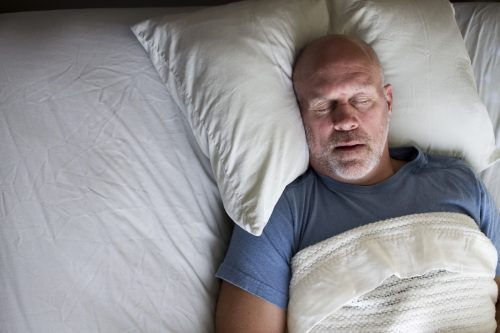
Overhead photo of a man sleeping in a bed.
iStock

In a Sept. 2022 TikTok video, Hill laid out the habits she avoids, with the first being ignoring loud snoring.

"I would never let loud snoring go unchecked in either myself or my partner," Hill says in the video, stressing that it's a serious issue and not something to laugh at.

"A lot of people come and tell me like it's a joke and really funny that they need to go and sleep in the other room because their boyfriend or partner or husband snores really loudly—and I'm like, mate, they need to go to a [sleep] clinic," she says.

According to Hill, loud snoring can signal sleep apnoea —a condition where breathing starts and stops, per the Mayo Clinic.

"Untreated sleep apnoea can have really bad health consequences like diabetes or stroke, or even heart failure," Hill notes.

2
I never skip trips to a sleep specialist.

woman at sleep psychologist
PeopleImages.com – Yuri A / Shutterstock

Hill stresses that if you're having issues sleeping and seek out your general practitioner (GP), don't stop there.

"If I saw my GP or primary care doctor about a sleep problem—even if I was just having consistent trouble falling asleep, or if I kept waking up during the night—I would really push to be referred to a sleep psychologist or a sleep specialist," she says.

According to Hill, primary care physicians don't receive comprehensive training in the best approaches to sleep. (Harvard Medical School points to a recent survey of four-year medical school curriculum that revealed less than two hours of formal education is directed at sleep, on average.)

"It is absolutely no fault of their own, but primary care doctors receive an absurdly small amount of training on sleep, and getting the right treatment, which includes special sleep therapy from a sleep psychologist, can have long-lasting, positive effects on your sleep and your overall health," Hill explains.

3
I never have caffeine in the evening.

woman drinking coffee in the evening
Pixel-Shot / Shutterstock

While it's common knowledge that caffeine will keep you awake, sometimes we do indulge in a soda in the evening or perhaps an after-dinner espresso. But according to Hill, this is something you should never do if you value your sleep.

"I would never have caffeine in the evening. It's just not worth it when there's so many good caffeine-free options available," she says.

Illustrating this, a Nov. 2013 study published in the Journal of Clinical Sleep Medicine, found that having caffeine up to six hours before you hit the hay has "important disruptive effects on sleep." So, if you regularly indulge in that 4 p.m. cup of coffee to push through the workday and then try to sleep at 10 p.m., reconsider your approach.

4
I never keep bright lights on in the bedroom.

beside light
Sebw / Shutterstock

Another sleep hygiene no-no is keeping bright lights turned on before bedtime.

"I would never keep bright, fluorescent lights on all the way up until I go to bed," Hill shares. "It suppresses your natural production of melatonin."

Hill specifically recommends dimming your lights—and so does the National Sleep Foundation (NSF).

Per the foundation's website, dim, dark environments help you sleep, so you should limit your light exposure in the evening. This includes lighting from your phone, TV, or laptop, which may be interrupting your brain's melatonin production, the NSF adds.

Wondering what time to wind down? According to the NSF, your circadian rhythm (your body's internal clock) is most sensitive to light one hour after you usually get up, and roughly two hours before your bedtime through the night.

5
I never force myself to get up early.

sleepy man waking up early and pressing alarm
fizkes / Shutterstock

Hill's final suggestion is to avoid forcing yourself to be up and at 'em too early.

"I would never force myself to get up super early, like at 5 a.m., for some ultra-productive, 'that girl' morning routine," she says. "Honestly, your sleep and your health are way more important than your productivity."

However, if you're a habitual early riser, you don't necessarily have to switch up your routine.

In response to a commenter who wrote that they go to bed between 8:30 and 9 p.m. and wake up at 4:30 a.m., Hill responded that it's "whatever works for you!"

"Sometimes I am jealous of natural early birds because sunrise is so peaceful and I never see it," she wrote in a reply.

https://bestlifeonline.com/unhealthy-sleep-habits-sleep-scientist/

Thursday, 11 January 2024

Vegetarians Are Less Likely to Have Insomnia, Study Suggests

From verywellhealth.com

Key Takeaways

  • Chronic insomnia is linked to negative health outcomes, including an increased risk of cardiovascular conditions.
  • While there are many causes of insomnia, researchers have recently learned more about how diet may impact insomnia.
  • New data suggests following a plant-based diet may reduce insomnia incidence, but more data is needed to confirm this link.

Insomnia is a frustrating condition to deal with. It can be especially frustrating to pinpoint the root cause, which varies from person to person. For some, insomnia may be a result of stress, caffeine, or excessive screen time. For others, it may be a symptom of an underlying condition that should be diagnosed by a healthcare provider.

One modifiable risk factor that researchers are learning more about is what you eat.

New data published in the European Journal of Clinical Nutrition suggests that the dietary pattern you follow may impact your sleep habits.

                                                               Kseniya Ovchinnikova / Getty Images

What Is Insomnia?

Insomnia is a common sleep disorder characterized by persistent difficulty in falling asleep, staying asleep, or both. People with insomnia often experience symptoms such as daytime sleepiness, mood disturbances, or cognitive impairments. There are two types of insomnia: primary insomnia, which is not linked to any other health condition, and secondary insomnia, which is associated with other health issues like asthma, depression, or heartburn.

Data Shows Eating Habits May Impact Insomnia Risk

Preventing and treating insomnia isn’t just important for the sake of daily functioning. Chronic insomnia is linked to many negative health outcomes, including an increased risk of high blood pressure, diabetes, obesity, depression, heart attack, and stroke.

To learn more about what causes insomnia and what might prevent it, researchers in Taiwan recruited 5,821 participants who did not have insomnia and evaluated their dietary choices and insomnia incidence.

Results showed that 464 of the study participants developed insomnia, and of those, the risk was lower in vegetarians versus meat eaters. Males who followed a more healthful plant-based diet had a reduced incidence of insomnia. This relationship was not seen among females.

The authors of the study, who did not respond to requests for comment, suggest a vegetarian diet may positively affect sleep because many plant-based foods are rich sources of sleep-supporting compounds, like melatonin.

Past data published in the Annual Review of Nutrition has highlighted this potential relationship between healthy sleep and a diet rich in fruits, vegetables, legumes, and other sources of dietary tryptophan and melatonin.

Prior research also suggests that vegetarian diets may help reduce chronic inflammation, an effect that may positively impact sleep. Specifically, the Mediterranean dietary pattern, known for its anti-inflammatory effects, is linked to improved sleep and reduced insomnia.

The link between sleep and plant-based eating might not necessarily be direct. For instance, data published in Scientific Reports links a vegetarian diet to improved mood, which might improve sleep quality by moderating mental health, including depression condition.

It is important to note that the available data linking diet to insomnia are mostly observational in nature, and correlation does not mean causation.

If you’re following or thinking about following mainly a plant-based diet, be mindful of your food choices. Nutrient-dense foods like fruits, vegetables, and nuts will support your sleep health and your overall health more than choices like plant-based protein nuggets, which are ultra-processed.

How to Support Quality Sleep

According to Karman Meyer, RD, author of “Eat to Sleep: What to Eat & When to Eat It for a Good Night’s Sleep,” looking at what someone eats during the day is a crucial step in determining why they can’t sleep at night.

“What I often find working with clients is that a few small dietary changes are needed to help with better sleep,” Meyer told Verywell.

Some steps she encourages her clients to try include:

  • Adding more leafy greens, nuts, and seeds for magnesium
  • Incorporating melatonin-rich foods (like walnuts) rather than relying on melatonin supplements
  • Backing off caffeine, alcohol, and refined carbohydrates, which can disrupt quality sleep

Still, dietary changes should not be the only line of defence when trying to combat insomnia.

“Currently, the American Academy of Sleep Medicine recommends cognitive behavioural therapy for insomnia (CBT-I) as the first line of treatment rather than sleeping medications,” Meyers said. “This type of therapy can help improve sleep habits and behaviours by reshaping thoughts around sleep and current practices that could affect a person’s ability to sleep well.”

Meyers added that combining CBT-I with a healthy, balanced diet and regular physical activity can make a huge difference in overall health and sleep patterns.

What This Means For You

While new research suggests a plant-based diet may be linked to fewer instances of insomnia, diet is not the only thing that affects sleep quality. If you are experiencing chronic insomnia, talk to a healthcare provider. Your sleep challenges may be a sign of an underlying condition that you can treat with your physician.

https://www.verywellhealth.com/plant-based-diet-insomnia-8424485